The "Boys" To Brazil
(Donohoe, Miller, Scott, Hamilton, McLean and Hutchison)
or How Six Scots Made Brazilian Football
Six Boys to Brazil is a simple concept. It takes the two tales, the tropes of Scottish involvement in the arrival of football in Brazil repeatedly and indolently regurgitated by the Press, written and visual, neither of which is fully understood in Scotland and only one appreciated in the form of the bust of one, Tommy Donohoe, in his home village of Busby that replicates the civic prime with which he is still viewed a century after his death in his adopted, Brazilian home of Bangu. It then adds the two more tales that are sometimes touched upon but never understood in terms of their pivotal contributions to what became not just Brazil's on-field football but that country's Beautiful Game. And finally it tells two more stories of a pair more equally important Scots, so six in all over thirty-six years from 1894 and the arrival of the game to 1930 and its professionalisation; six "boys", with one more perhaps still to come, who we at the SFHG have, unlike others, taken the time to research thoroughly. One tale is of a man, who created not one but three clubs including of the oldest one in Brazil still playing, the doyen, and still in the top-flight, a club that in the 1900s was also the pioneer of multi-racial football in a country that did not abolish slavery until 1888. The other is of someone, who for a half dozen years not just moulded a club with his coaching but became, setting the standards, one of the country's, if not certainly Sao Paulo's and perhaps the country's leading referee.

The Brazilian Circuit
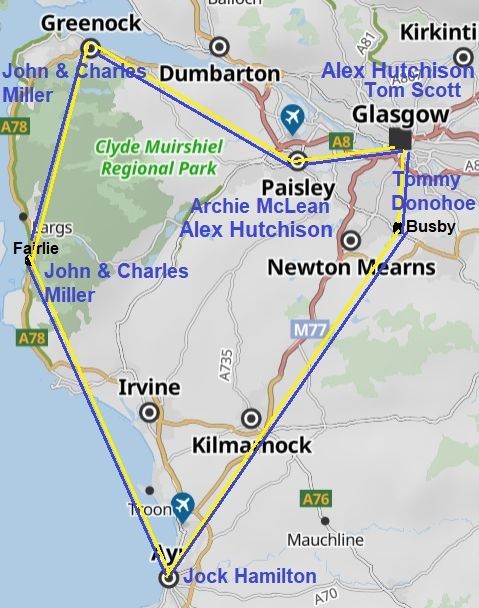
And the six stories have been combined to form The Brazilian Circuit, a Scottish route, actual or virtual, that takes in the already marked origins in Busby of Tommy Donohoe but adds the so far unmarked ones of Tom Scott and Alex Hutchison in Glasgow, of Jock Hamilton in Ayr, Charles Miller in Fairlie and Greenock, and Archie McLean, and Hutchison once more, in Paisley.
The circuit is one hundred and twenty miles in length, can be done in either direction and easily in a day, showing you aspects of Central Belt Scotland, new and some old, rough and bonny. And in doing so it will also give a deep insight into the background of the driving forces, mostly harshness of life, the poverty, that took these pioneers, your forebears, their and your football and all, into South America's Scottish Diaspora with four of them never to return. Emigration is a part of so many Scottish families, but that so often it was football, our football which was carried too, which makes Brazil not unique but especially emblematic.
But there is more. The golden statue of Tommy Donohoe in Brazilian Bangu set the standard. That Busby followed suit is to be praised but the stopping-points on the Circuit provides the opportunity for the other pioneers to be similarly marked. And in each case SFHG has looked at where a plinth with perhaps not a bust but a more simple plaque or a plaque alone might be placed by the community, Councils looking to encourage football tourism, by government-funded historical entities or even by Scottish football itself in the form of the Scottish Football Museum and/or the SFA. The locations for Brazil are there. The possibilities for making Scottish involvement in the introduction of football in other places and countries are legion. All it needs is pride and will.
But now specifically to a full and accurate Brazilian football story:
_______________________________________________________________________________________
The "Beautiful Game" Arrives
For football to be found in any place it is axiomatic that first the game itself has to arrive. And in that Brazil simply got lucky, Scots-lucky and twice over. The first was when the seas along its Northern Shore were cleared of Portuguese naval power by the ships of privateer, the "pirate", the "Sea Wolf", Admiral Thomas Cochrane, 10th Earl of Dundonald, whose statue stands by the Forth at Culross. He had just done it in the the Pacific for Chile against the Spanish. Now on his way home he replicated it for Pedro I, the self-proclaimed Emperor of Brazil, against his own father, the King of Portugal.It was at that point Brazil ceased to be a colony, albeit when he wasn't paid Cochrane extracted his own price. He sacked the North Brazilian, coastal city of Sao Luis before sailing back to Britain.
It was therefore to an independent country that seventy years later more Scots arrived this time bearing a gift or, at least to begin with,the idea of gift, round-ball football, specifically our football. Seven men are mainly credited with taking the game to South America's largest country; more if the McNairs of Salvador and William Gordon of Manaus are included. Six of the seven were Scots or Scots-Diasporans, the only exception being Oscar Cox, an Anglo-South American, who was born in Brazil and his father in Ecuador. And even Cox would not learn the game in England but at school in Lausanne on the banks of Lac Leman in Switzerland. Football of some sort is said to have arrived in the country by the second half of the 19th Century. Association football was there from the 1880s. The Swiss Football Association was formed in 1895, FC Lausanne-Sport in 1896 with Cox returning to Brazil at the turn of the century.
So what of the six and their where and when. In the last years of the nineteenth century Southern Brazil had two points of entry, both by sea. The first was the country's then capital Rio de Janeiro with its immediate hinterland and the second, Santos, three hundred miles down the coast, with no easily passable inland routes at the time, the gateway to the growing town of Sao Paulo forty-five miles inland and its own hinterland of Sao Paulo State. Rio had a population of about a half a million and Sao Paulo city just a tenth of that.
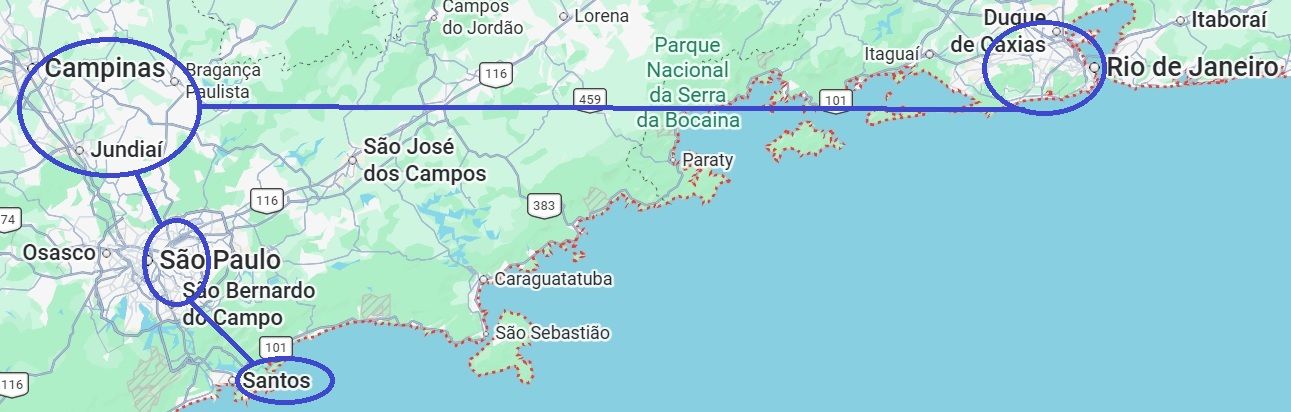
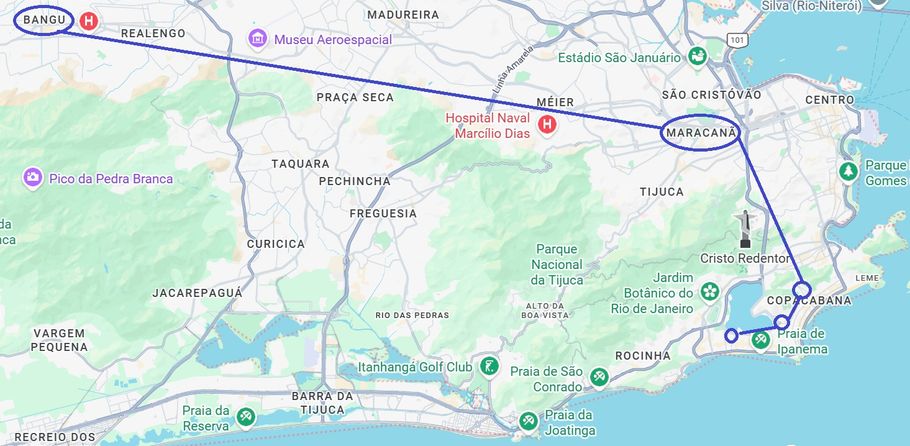
It was Oscar Cox, who in 1901is said to have organized "the first football match in the history of the state of Rio de Janeiro". It is not true. It might be justifiable to maintain introduction to the city but not the state, the reason being Thomas Donohoe and fully six years earlier. Scots-born in the village of Busby south of Glasgow, of Irish parents and a player of note in his prime, a very tall, no doubt suitably robust centre-forward alongside future Scottish internationalists with local senior club, Cartvale, he had already kicked it all off in Bangu, a village then outwith the city but very much in state and now a Rio suburb.
However, despite Donohoe clearing an area for a pitch of sorts and constructing goals these were ad-hoc games that were probably no more than six-a-side, simply because at the textile-factory, where he was just arrived to supervise the start of the dyeing processes but where he would remain for the rest of his life there were was just then only a limited number, all incomers, who had any inkling of what to do. In fact formal football at Bangu would not come for anther decade with formation of the Bangu club. Thus it would fall to Oscar Cox to be the introducer to Rio and it surrounds of the 11-a-side, when in 1901 he hosted a team from Sao Paulo in what might be called the country's first inter-state match. Moreover, the visitors were captained by a certain Charles Miller, said by many to have been Anglo-Brazilian but was nothing of the sort. He was Scots-Brazilian and, whilst he might have learned his football having been sent to school in Southampton his connections to Scotland were strong even from his Sao Paulo birth-place and early childhood, and with events back in the Old Country would have continued until his final permanent return to Sao Paulo at twenty.
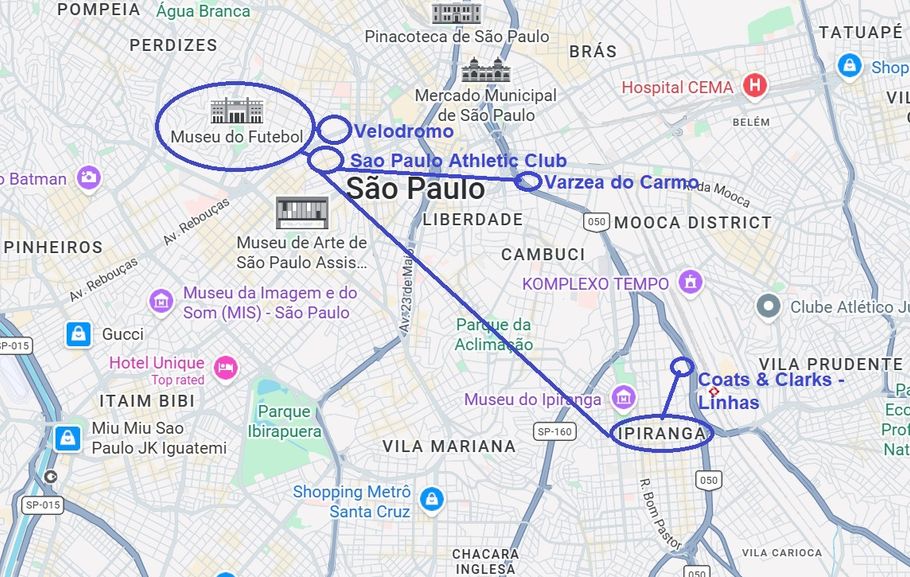
Football in Sao Paulo would at first be concentrated in what is now the core of a huge city of twenty six million, centred, literally, on Sao Paulo Athletic Club (SPAC), the multi-sports club (but no longer football). It remains located just off one of the city's still main thoroughfares, Consolacao, and had been founded in 1888 by not simply English but British immigrants, amongst them Miller's father and uncle, perhaps uncles, and which Miller himself had on his return with basic equiment and rules to persuade to play the round-ball game rather than just the oval ball one. It took him a little time and early discouragement but succeed, albeit temporarily, he eventually did.
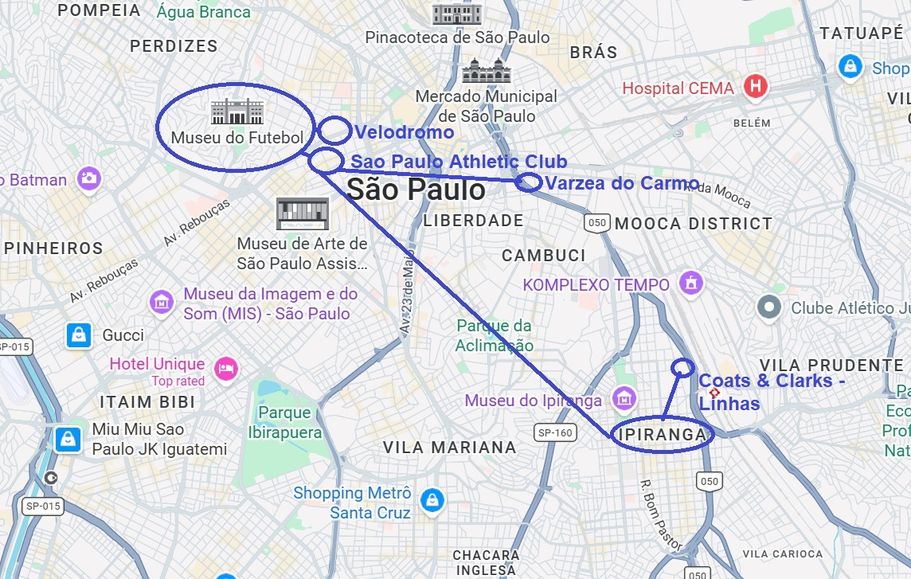
But all that would be in the context of an urban population that in the decade of his departure for England in 1884 had doubled from 30,000, by 1900 quadrupled again, by 1910 was 350,000 and in 1920 not far off double that once more with football teams coming and going but multiplying commensurately. And during that entire period Miller was indisputably at the forefront. Even when in 1912 SPAC ceased to play the top-flight Association game, he having been in the team at captain and centre-forward throughout, he would first fill in as ad hoc goal-keeper and then become a noted referee. And it is probably correct that he should be credited with organising Brazil's first notionally 11-a-side football match. It took place in April 1895, so between the Sao Paulo Railway Company, for which he worked, and the Sao Paulo Gas Company. The word notionally is used because it is said the pitch was a improvised one at Varzea do Carmo, now the Parque Dom Pedro, in the floodplain of the Tamanduateí River, which marked the extent of Sao Paulo at the time and several of the players had no idea of what they were supposed to do and several more tired so quickly that they were passengers.
But the city was not the only place in Sao Paulo State, where football would be embedded; indeed after Donohoe and Miller but before Cox. The extension of the railway network north-east and -west had seen the construction of the main junction at Campinas. By 1900 the town itself was already the same size as Sao Paulo with a population of 67,000. Today is it 1.2 million. And in 1900 itself or little before it had seen the arrival of a Glaswegian, his Glaswegian wife and family. His name is Thomas Scott. He was a railway-man, brought up around and in Springburn, had arrived in the country probably between 1886 and 1888 and again probably been based initially in Sao Paulo. The family retained strong ties to the city and still does.
Now it may well have been that Tom Scott had been involved in football in Glasgow or in Sao Paulo, possibly even with Charles Miller. He had been born in 1865 so had been in his early twenties on arrival in Brazil but by 1900, he well into his thirties the family had transferred to Campinas, where in 1901 he was instrumental in the foundation of the Ponte Preta club, probably the oldest club in Brazil still playing, the doyen, and, if not and only on somewhat tenuous evidence, the second oldest by three weeks.
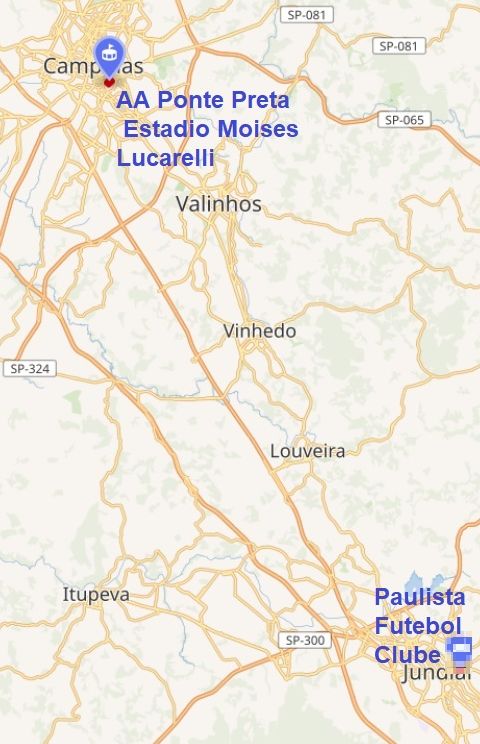
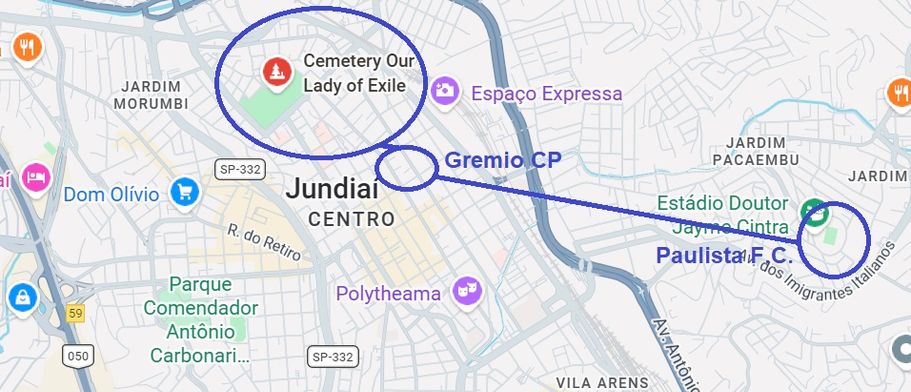
Moreover, when yellow fever hit Campinas in 1902 the family was transferred twenty-five miles to Jundiai. It was then a town of 15,000-20,000, now almost half a million, and there it is said he had already helped to start up first a still-existing sports club, Gremio CP, and then not just the city's initial football club but its first two.
Meanwhile, back in the city of Sao Paulo and to a large degree on the back of that first inter-state match effectively what was league football, perhaps better described as organised, amateur-friendly, championship football had been introduced. which gradually became more competitive. In that first season five teams took part so eight games, home and away. Charles Miller was top-scorer with ten goals as SPAC took top spot on a play-off against Paulistano, in which Miller scored twice. The match was held at the Velodromo, the Cycle Arena, and Paulistano's home ground, also on Consolacao and which rapidly became the city's leading footballing venue. And the result of the championships the two following seasons was to be replication with only in 1905 Paulistano finally topping the table as SPAC began to slide.
But at the point Paulistano, a team made up of Sao Paulo's more wealthy, itself started to slip down the table and, having finished in only third position in 1906 decided to do something about it. Its action was for the 1907 season, much of which took place in the British summer, to import help with training and tactics.
The man they called upon was John "Jock" Hamilton, born and learning his football in Ayr and for a decade from 1894 a somewhat journeyman centre-half but Scottish centre-half in England's lower leagues. But in 1904 he had turned to training with his last playing-club, Fulham and with some success. Fulham had just won the Southern League and also been accepted into the Football League Second Division for the 1907-8 season.
Jock Hamilton arrived in Sao Paulo on 23rd April 1907 as the British season ended and the Brazilian one began. And he stayed only the best part of two and half months leaving on 9th July but his effect was profound. He brought British, indeed Scots, training methods with him, introduced them but crucially left them in place. In the time he was there Paulistano played just three games, first a loss to SPAC then a win and a draw. Then there was a stutter as he left before the last six encounters of the season were all won, setting the pattern for the following season as Paulistano would continue the run of form to top the league, in the course of which it lost only once.
But that was not all. Firstly, he was during his time in Sao Paulo to take the field as referee in five of the initial nine games of that 1907 season, and in doing so began lifting the standard of officiating to nearer British levels. Moreover, through his training methods he had perhaps on-field also provided a first glimpse for Brazilians of what was to come in terms of the country's future and much-lauded, much admired playing-style.
Whilst Miller in his school-days in England had been a successful winger with a recognised ability to take on defences and centre, early Sao Paulo football had a reputation for being long-ball crude. But this was to change, perhaps started by Hamilton, who had just worked a season with the redoubtable Scottish internationalist, R.C. Hamilton, and was training Jimmy Hogan.
But all this was with with another name possibly already in the background. It was MacLean. It appears in the first game of the 1907 season on 3rd May. SPAC played Germania at the Velodromo. Charles Miller was centre-forward for the former, MacLean inside-right for the latter. Jock Hamilton refereed. SPAC won 4-0. And MacLean was to be there again still for Germania, this time on the right-wing, two weeks later; then the week after that and finally two weeks further on still before he was gone. Germania, now Esporte Clube Pinheiros, was the city's mainly German team but clearly consistently drafted in non-Germans including names that were British. MacLean's had been amongst them in May and June for six weeks but notably just as Clarks Coats, cotton thread spinners of Paisley, was finishing the construction of its Correntes mill in Ipiranga, a suburb (see map above) three kilometres to the south- east of the city centre. It was officially opened on 18th June 1907 and is still there. MacLean had played his last of his four games for Germania on 16th.
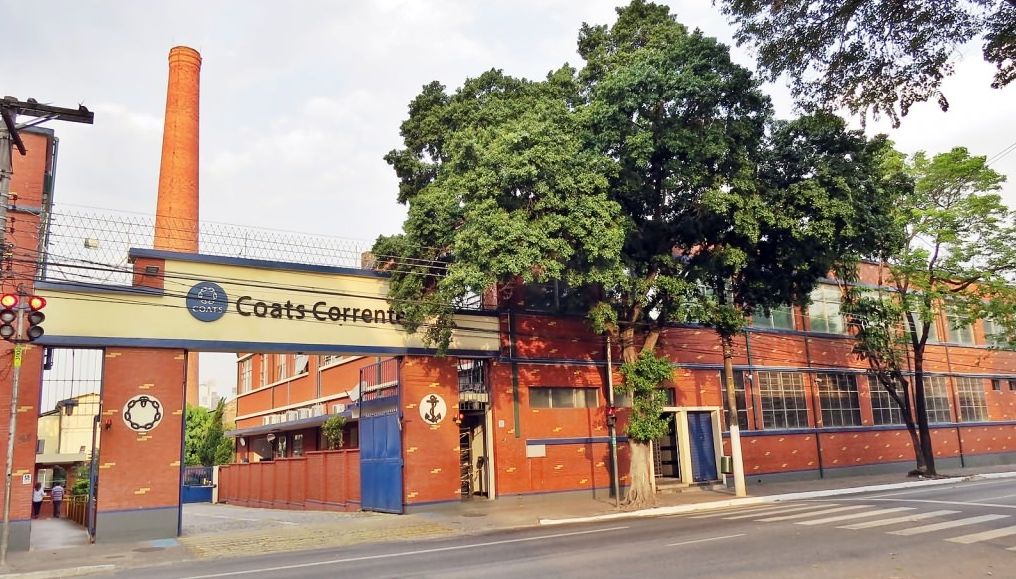
Coats Corriente, Ipiranga, Sao Paulo
Now this first MacLean episode may have been simply circumstantial, coincidental. But the re-appearance five years later in Sao Paulo once more not a Maclean but McLean or Maclean was not. In the late summer of 1912 and, if the same man, he was still living in Paisley but no longer just twenty-one and single but twenty-six, married, with the first of two sons just born and having the previous season played part-time, semi-professional football for a neighbouring Johnstone team that was about to join the Scottish Second Division. It would finish mid-table. However, he was also working as a loom-fitter for Clarks, sent, maybe re-sent temporarily by the company to do some work at Ipiranga. He would stay for forty years.
However, he was not alone. In September 1909 there had been the first appearance at the Velodromo but as a referee of an "A. D. Hutchinson", also said to have been brought in, mimicking Jock Hamilton the previous season, as the coach/trainer but of Sport Club Americano, founded in 1906 in Santos but having just moved that same year to Sao Paulo proper.
"Hutchinson" is reported by Brazilian sources to have been a player, "brought from England, where he had the previous season taken part in the First Division Championship". In fact the Brazilian historians have been confused on both name and background. "Hutchinson" was in fact Alexander Downie Hutchison and it much more likely that his involvement with professional football had been in Scotland. Moreover that participation was probably in Paisley, where he had married, stayed and worked as a Thread Mill Foreman, so at Clarks once more. Thus it meant his club was perhaps St. Mirren or in the circumstances more likely still Abercorn. It had at the end of the 1908-9 season just won not the English First Division but the Scots Second Division, the Brazilians not understanding the difference, and moreover had on its Board just then seven members of the Clarks/Coats families. Abercorn was quite simply at the time effectively the local Clarks/Coats company team with Americano perhaps becoming somewhat its Brazilian one of choice, at least, that is, for as long as it continued with the round-ball game. However, by then McLean had moved on initially with limited reward in terms of championships or trophies, although that would improve, but huge impact throughout in terms of on-field influence. Known locally as O Veadinho , the Little Deer, his slow-swift, darting, Scottish inter-passing football would prove perfect for harder Brazlian ground and be the model for A Tablinha, literally "The Little Chart", the pattern that underlay his adopted country's dominance of the World Game from the late 1950s to 1970.
_______________________________________________________________________________________
The Pioneers
Plinths & Plaques
As with not just this but all our country-trails we believe that merely recording is not enough. To do justice to the pioneers, as several countries, to which they went, have done and in Scotland Busby has also in following the lead of Bangu in the case of Tommy Donohoe, there should be place for more plinths, and if not them then plaques. So, whilst we research and provide biographical details of as many of those, who through deed and feet spread the word, we also look at where some form of visual, outdoor recognition would be both appropriate and feasible.
_______________________________________________________________________________________
The Pioneers
Tommy Donohoe
In Bangu the once small, country town and now suburb of Rio de Janeiro stands a thirty-foot high, gilded statue. It is in front of a former textile mill that is now red-brick shopping mall. The statue itself is of a man with a football under his arm standing on globe with Brazil below his right foot and Scotland his left. A mile away is the Estadio Moca Bonita, the home ground of Bangu Atletico Clube, in part founded in 1904 by the man of gold. He is Thomas Donohoe, the man credited in 1894 with bringing the idea of the round-ball game to Rio or near-Rio, arguably to Brazil as a whole and whose wife, Eliza, that same year probably brought the first actual foot-ball to the country.
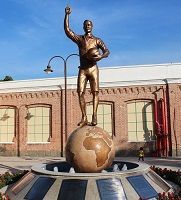
Golden Donohoe Statue, Bangu
In 1894 Donohoe was thirty-one. He had married in 1890 aged twenty-six, Elizabeth nineteen, the marriage in Sneddens by Busby, then in rural Renfrewshire, now a Glasgow suburb. Tommy had been born there, she in Pollokshaws. Both were children of Irish immigrants and worked at the local print-works. And they were to live there too, on Burnbank now Riverside Terrace, and where their two sons would be born in 1901 and 1904, by when he was Dyer, his elder brother the dye-works foreman.
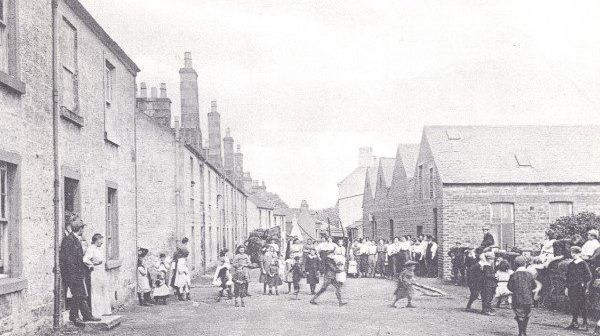
Riverside previously Burnside Terrace, Busby
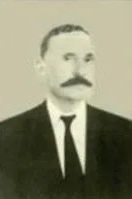
Tommy Donohoe was to have had a reasonably successful footballing career in his twenties. A tall man he is said to have played up-front for local Busby team, Cartvale, which in 1882 had reached the quarter-finals of the Scottish Cup and produced contemporary internationalists Robert Calderwood (1885) and Michael Dunbar (1886), whose brother, Tommy also played for Celtic and Rangers.
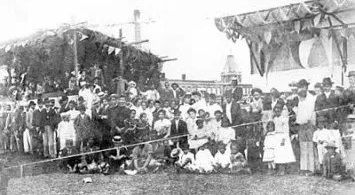
Gala Day in Bangu with textile mill in background
However, by 1894 a British-built calico mill had been completed in Bangu and Donohoe recruited as the dye-work's foreman. He travelled to Rio in May that year, his wife joining him in September and neither would return. He would die in Bangu in 1925 at the age of sixty-two. She had died after 1898, when they had a third son, Thomas, in Brazil and by 1918, when he remarried again in the town.
By the time of Tommy Donohoe's death Bangu Atletico Clube was almost twenty-one years old. It had been founded in 1904, ten years after the game had arrived in the town, eighteen years after the idea had first been suggested, the delay mainly due to the unwillingness of mill to sanction it. It took a change of its management for progress, Donohoe by then forty-one, elected vice-president, symbolically playing in the first game under team captain, another Scot, John Stark, a Chemist from Thornliebank and with Club Secretary/Treasurer Dundonian, Andrew Proctor.
But there is one more reason that the Bangu club is of great importance. It was founded with the caveat that any employee of the mill should without exception be eligible for its teams, and the workers were drawn very much not just from Europe but from all backgrounds. It meant Francisco Carregal was by the following season in the team, one of the earliest Black players in the Brazilian game. And the policy would cause problems several times over the next two decades as other clubs in Rio would seek to insist on White-only teams and Bangu would either be banned and/or refuse to comply.
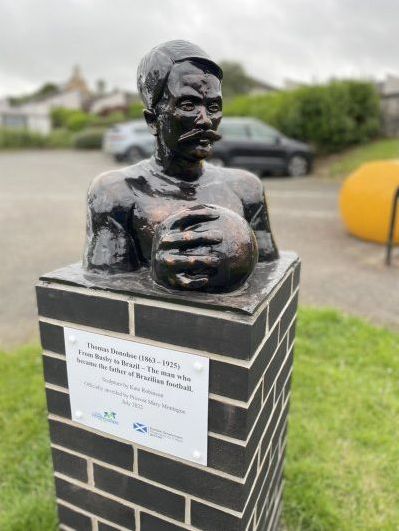
Donohue Bust, Busby
The Donohoe and Bangu story has in recent years become well-known. And the the erection in Brazil of the golden statue in 2014 proved a catalyst for reaction in Busby itself. Money was raised to commission and in 2022 install a plinth and bust of the man himself, more modest understandably than in Bangu but an examplar for all those in Scotland wanting to recognise and celebrate our Diaspora's unparalleled footballing history.
_______________________________________________________________________________________
Charles Miller
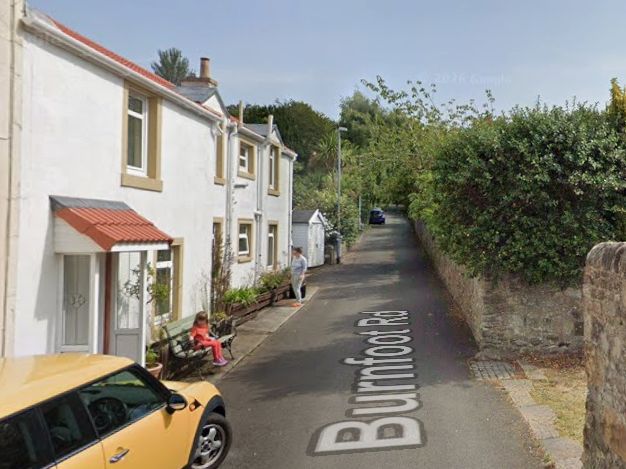
Burnfoot Road, Fairlie
Charles Miller was born in Brazil, in Sao Paolo in 1874. But the story does not start there but really at Burnfoot, now Burnfoot Road, by the Ayrshire village of Fairlie. It was the birthplace of his father, John, and uncles and lies three miles south of Largs, where both his grand-parents had been born, his grand-father Millar a Silk Weaver. But in about 1848 the family moved to Greenock, his father working at first as a Labourer and later as a Porter.
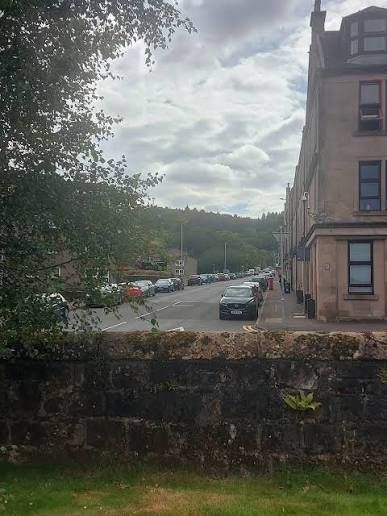
Lynedoch Street, Greenock
In Greenock the family would live first on St. Lawrence St. but by 1861 was staying on Lynedoch St., John Miller working as a boatyard clerk, his elder brother, Andrew, having already left home, perhaps for Brazil. He would marry in Sao Paulo in 1869. And the reason for emigration may well have been their father's early death. He was drowned from Lynedoch St. in Greenock harbour in 1869 aged just fifty-two in what seems to have been an industrial accident. By 1871, whilst the wider family remained John Millar was away. In 1872 he too would marry and in Brazil.
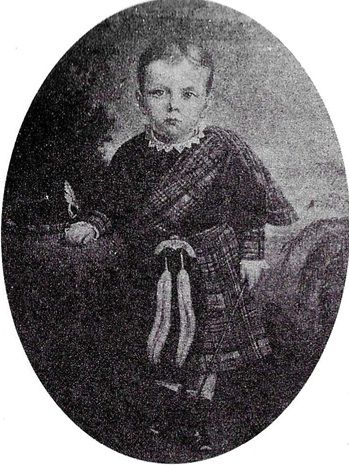
Charles Miller, aged about 5, Sao Paulo
Brazil's Charles Miller has often been reported as English. That even in Sao Paulo he was not cannot be better illustrated than by the picture to the left of him aged five or so in full Highland dress. His paternal great-grandmother had been a Mckay. But at ten he was sent to school in Southampton, no doubt visited there in 1886 by his parents before they travelled to Scotland, his grandmother having passed away that year in March, his father to have some medical treatment.
However, in the course of that treatment his father would in October die aged just forty-two, with his body not taken back to Brazil but buried with his father, his mother and other members of the family in Greenock Cemetery, Charles's widowed mother, the former Carlota Fox, returning to Sao Paulo and his school fees continuing to be paid, perhaps by his uncles, Andrew by then in Santos, Peter and William in Sao Paulo. ndded it had been thirty-one year-old Peter Miller, who in 1888 had been one of those, as was William Fox Rule, his brother-in-law, to have founded the Sao Paulo Athletic Club but not to play football. To begin with cricket, ideal in the Brazilian climate, was its game.
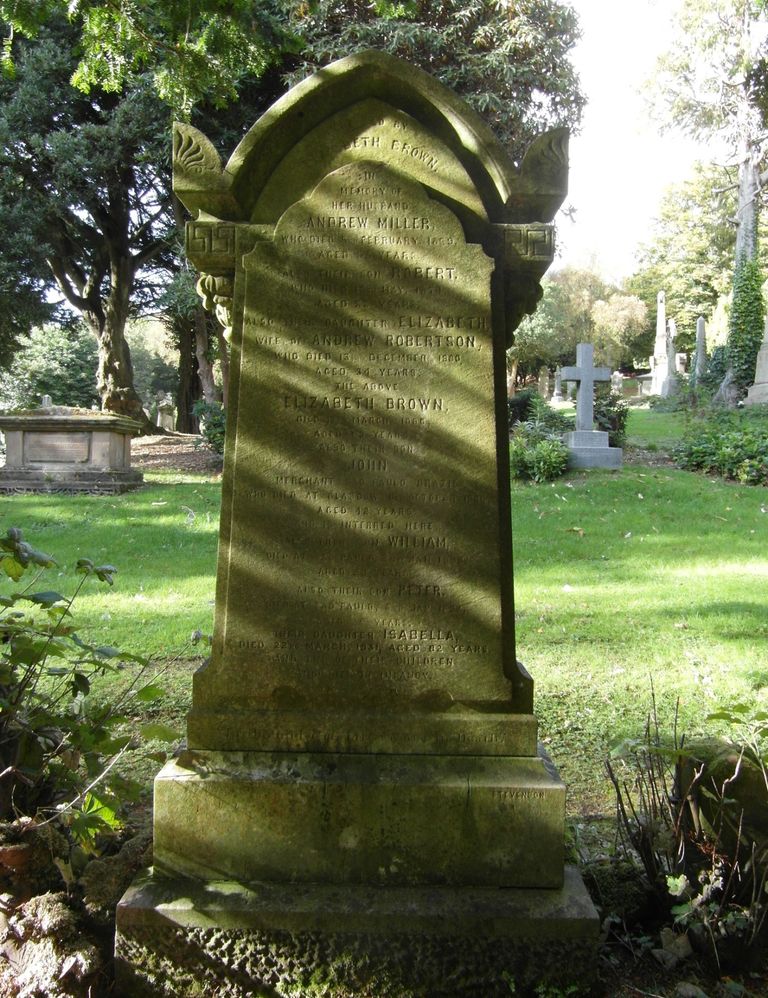
John Miller's Grave, Greenock

In fact it might have been the deaths, both seemingly in 1893, of two of his uncles, Peter aged thirty-six and William, just thirty-one, with the passing of also his younger brother, John, in 1892 and leaving him the only surviving sibling that in 1894 drew Charles at nineteen back to Brazil, to find work with on the railways and joining SPAC although with a love and reputation for the round-ball game and clearly a determination to continue to play it.
And it was to be that determination and that he had brought footballing equipment with him from England that allowed Charles slowly to introduce the concept of the game. It led eventually six months later to the Varzea de Carmo encounter and also very slowly, perhaps disrupted in 1897 by the deatth of his last surviving uncle, to a wider acceptance of the game. Off the five teams that would take part in the first Sao Paulo Championship in 1902 one, Mackenzie College, would be founded in 1898, two, International and Germania, in 1899 and Paulistano in 1890. In fact competition did not really take off until the Oscar Cox Sao Paulo-Rio encounters in 1901 and even then the Rio Championship did not commence until 1906.
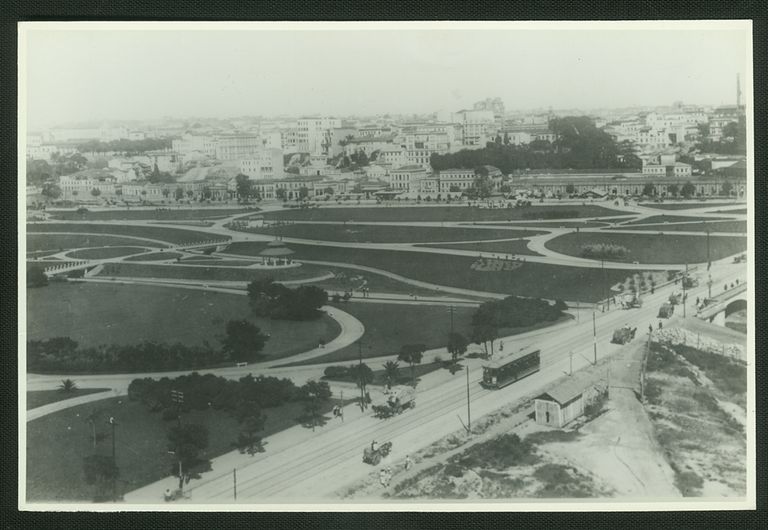
Varzea do Carmo, Sao Paulo
Charles Miller's SPAC team would take the Sao Paulo Championship for its first three seasons to 1904 but then drop away in the face of the first successes of Paulistano, pre- and then post-Jock Hamilton. In fact SPAC would not recover until 1911 with Miller still in the team but then do so only briefly. At the end of the 1912 season SPAC would finish second to last, Miller had ceased to play with his only involvement being twice refereeing. Moreover, arguments over "false amateurism", "shamateurism" had broken out within the city's wider footballing community, causing by 1913 a split with two parallel leagues neither of which SPAC joined, returning to playing recreational football only and from there gradually moving over to rugby.
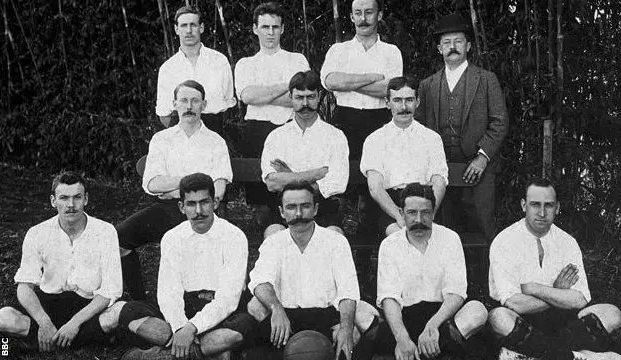
SPAC team, 1904. Charles Miller with ball
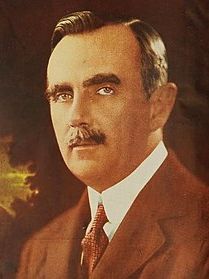
Charles Miller
It meant Miller now in his middle thirties was somewhat out on a limb. In fact he was to drop out of the footballing picture almost completely. In 1914 he would referee but only twice, in 1915 three times and that at the age of forty would be it. He would turn his sporting attention to cricket and golf.
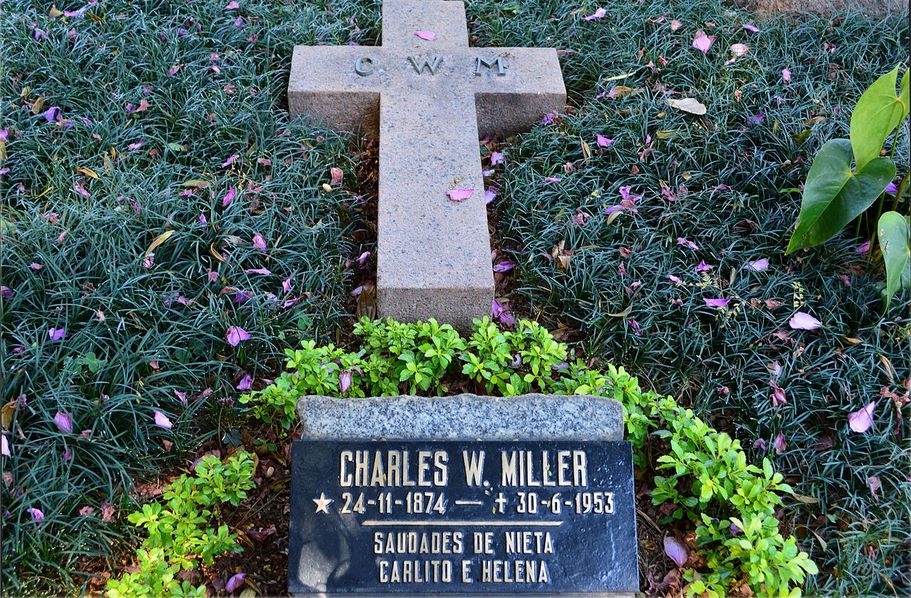
Charles Miller's Grave, Sao Paulo
Charles Miller would from 1920 travel regularly back to the UK, from Santos to Southampton, the last time seeming to be in 1950 three years before his death in 1953 at the age of seventy-eight. He is buried in Sao Paulo's Protestant Cemetery, half a mile from SPAC and rightly with a recognised and enduring reputation.
For many years he was seen in much of the country as the "Father of Brazilian Football". It is, as is often the case, not entirely true, neither geographically or chronologically but that does not mean he should not be honoured for his undoubtedly major contribution to the game's introduction and adoption. And in Sao Paulo that comes in the form of whole square. The Praca Charles Miller lies directly in front of the Pacaembu Stadium just a mile and a half from his place of burial. The stadium itself, formally the Municipal Stadium, still hosts some matches but now is also home, overlooking the square itself, to Brazil's Football Museum, with its German equivalent perhaps one of the best World examples of thriving exhibition spaces and well-funded football research centres.
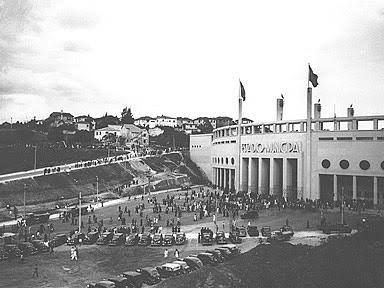
Charles Miller Square, Pacaembu, Sao Paulo
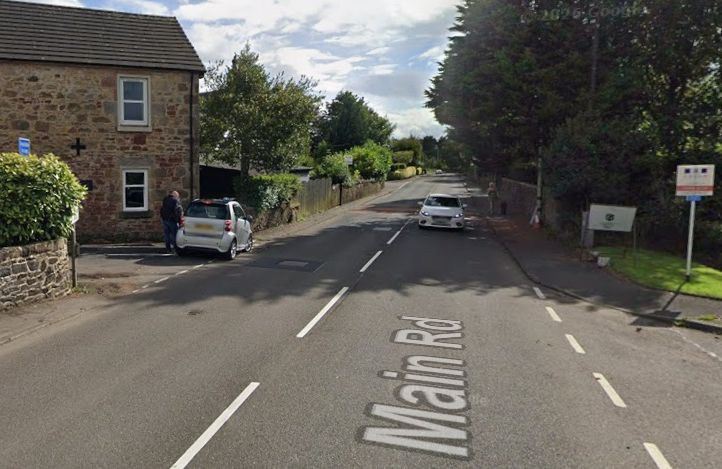
Junction of Main St. and Burnfoot Rd., Fairlie
But there is no equivalent of Charles Miller Square or any other physical recognition in Scotland of his role in The Beautiful Game. So the question becomes, if the example of the Donohoe bust in Busby is for him to be followed, where should it be? And we have a suggestion.
Burnfoot Road has a junction with Main St., Fairlie. Opposite is a small corner-patch of lawn. It would take a plinth and an inevitably expensive bust but a plinth and a simple plaque would surely serve.
_______________________________________________________________________________________
Tom Scott
Tommy Donohoe may have been the Scot initially to have taken football to Brazil and Charles Millar the first there to organise and eleven-a-side game but it is a third of our forebears to have founded not just one but two clubs including Ponte Preta, "Blackbridge", the oldest one still playing in the country. His name was Thomas Archibald McTaggart Scott, a railway-man born in 1865 at 114, Glebe St. in Glasgow.
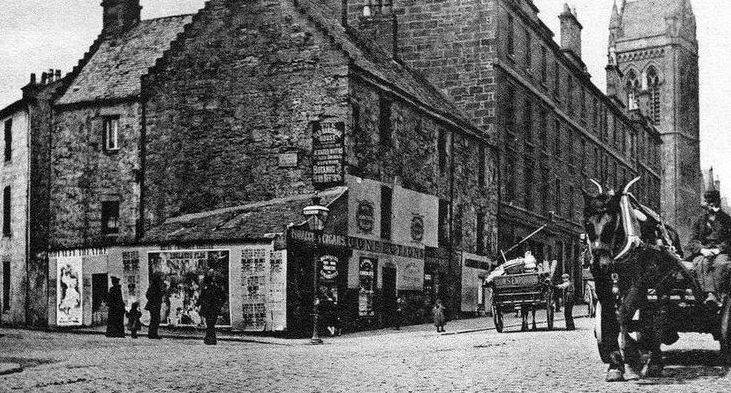
Tom Scott's father, Hugh, was an engine fitter, born in Perthshire, at Smiddyhaugh by Auchterarder just a few miles and years from William McGregor, the founder of the English Football League. His mother was Jane McTaggart, a Glaswegian and they would settle and raise their family in the city in and around Castle St..
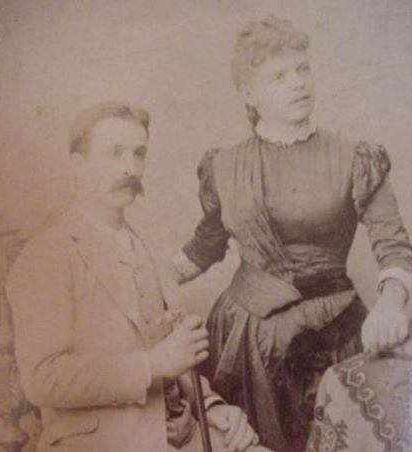
However, having trained as a mechanic the younger Scott seems at twenty-one or so to have found employment with the British-owned railways in Brazil, arriving in the country between 1886 and 1888, probably being based initially in Sao Paulo. The family retained strong ties to the city and still does. His great-grandson, also Archibald, stays there even now. And in 1890 Thomas would be joined by Helen (Nellie) Cowie, also from Glasgow, they marrying on her arrival in Santos, the wedding registered by the Consulate.
Tom and Helen Scott
Campinas, 1900
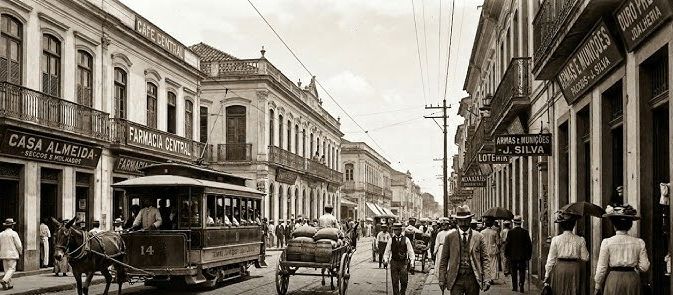
It would seem a growing Scott family would return to Scotland in 1894 but probably simply on leave since by 1897/8 they were back with him transferred to Campinas, the growing, thriving railway-junction town in Sao Paulo State north of the city itself. And whilst there is no obvious record of Scott involvement in football in the latter once in their new home he was a leading light in Ponte Preta's 1900 foundation.
Estadio Moises Lucarelli, Campinas
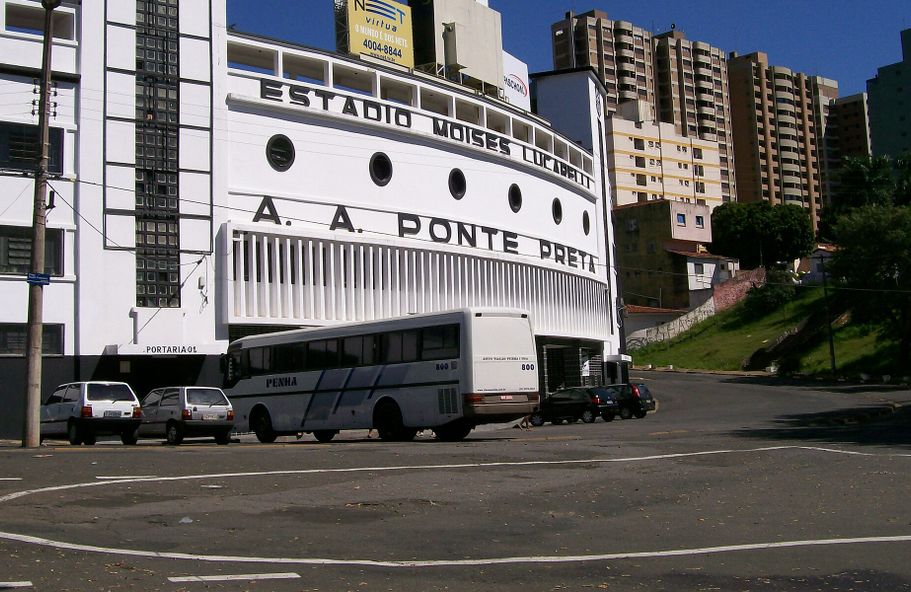
The club, based at the impressive Moises Lucarelli Stadium, capacity 20,000, plays in the top division of Sao Paulo state league but is currently in bottom place and has also just been promoted to the second tier of the Brazilian Championship but at half-way stage is again flirting with relegation.


But, furthermore, with because of Yellow Fever an enforced move in 1902 from Campinas to Jundiai Tom Scott's enthusiasm for sport was clearly not blunted. Already he had been involved in the start up of a still-existing sports club, Gremio CP, and now in 1903 would first found Jundiahy FC, even in his late thirties playing left-back in its first ever game at its Barreira ground by the railway offices against the Union Athletic Association of Lapa, Lapa being the railway suburb of Sao Paulo. Moreover, when Jundiahy folded in 1908 he would be on the first Board of Directors of its replacement to this day, Paulista Futebol Clube.
However, Scott was by 1912 having health problems and on a return trip to Scotland was to told it was terminal. But he chose not to die in Glasgow but tavelled back to his adopted country and his passing the following year. He was just forty-eight and would be buried in the only English-language grave in Jundiai's Our Lady of Exile Cemetery, the family choosing to transfer back to Sao Paulo but for Helen not for long. She should die within months to be laid to rest beside him.
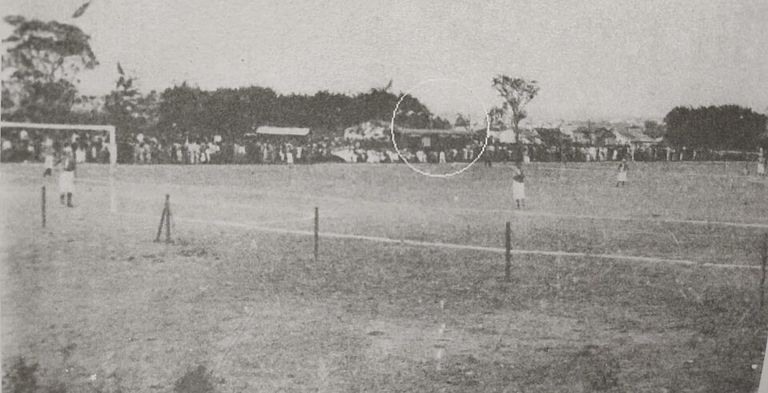
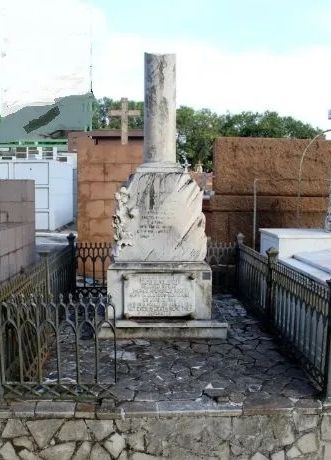
Grave of Tom and Helen Scott, Jundiai
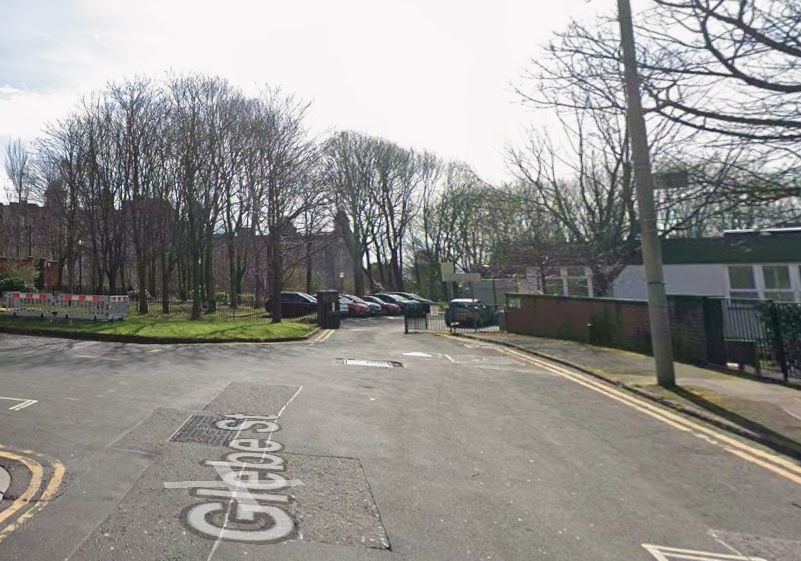
Glebe St., Glasgow
Despite the Scott family still living in Sao Paulo and Thomas and Helen's sons, having started to play in Campinas and Jundiai, being heavily involved in top-flight football in the city until 1930, the whole Scott story is hardly known. That lack needs to be corrected. A plinth and a plaque would be a physical step and there is a grassy location on Glebe St. itself where they could be sensitively placed.
In fact coincidentally there are two equally good locations, the second of which will become clear with the telling below of the story of another of the six pioneers. One again who is much under-valued.
_______________________________________________________________________________________
Jock Hamilton
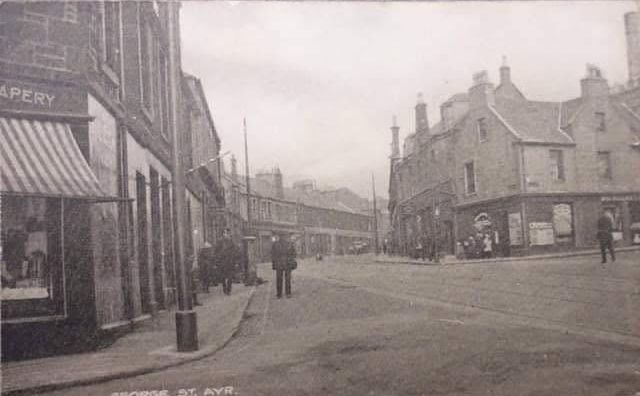
George St., Ayr
John, "Jock or Jack" Hamilton was a somewhat journeyman Scottish centre-half, a "Pivot", who was born St. in Ayr in 1869. He began his playing career with Ayr, one half of what would become today's Ayr United. That is before in the summer of 1894, so already at the age of twenty-five, he went South for a not very successful, single season with mid-table, First Division Wolverhampton Wanderers.
However, Hamilton would play on for another nine years all still in England, most successfully with Loughborough in the Second Division and Bristol City in the Southern League. And by 1904 still in same league and now at the age of thirty-five he had joined London'sFulham before the following season being appointed the club's Assistant Trainer. It was a position that would eventually take him back to Bristol City as trainer and then manager through the war years but in the meantime he had been recommended for a temporary summer stint in Brazil.
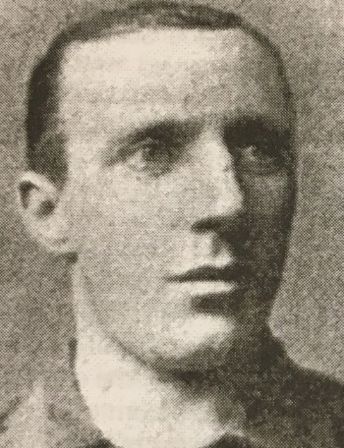
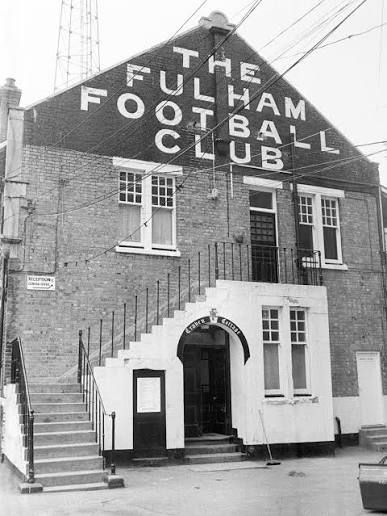
Fulham was in 1905 a club with ambitions and the finance to import players to back them. In 1906, rising from sixth place, it was to top the Southern League, apply for Football League membership but be rejected. But it did it with a certain Jimmy Hogan on its books and press on for 1906-7 by recruiting the experience, Scottish international forward, R.C. Hamilton. He was in a twenty-three man squad one of seven Scots, six of whom made thirty-five appearance or more.
The result was twofold. With its argely Scottish, First-team Fulham topped the Southern League once more and this time its Football League application was accepted. And Hamilton accepted an invitation from Sao Paulo's wealthy but stumbling Paulistano club to coach it for the English summer. It had had only one victory the previous year. He arrived in April. It won one, lost one and drew one. He left in July. It lost two in a row, then gathered itself to win three out of four and would go on the take the championship the following season.
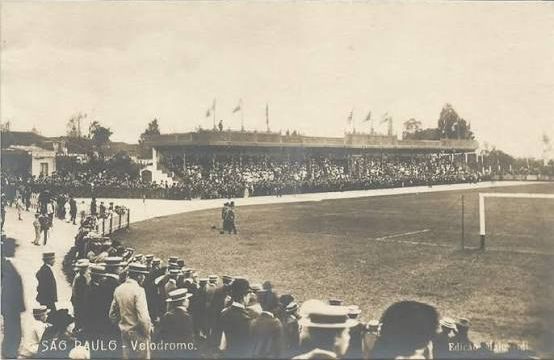
Velodromo, Sao Paulo
But in his time in Sao Paulo, his team playing like most, at the city's Velodromo, he did more than just bring British, indeed Scottish, training standards. He also did the same for officiating. taking the whistle for the first two games of that season, then three of four before his departure, including one between Paulistano and SPAC. For the latter Charles Miller was in goal that day.
And then he was gone, back to London for the new season at Craven Cottage, where is 1908 he took over at head-trainer and from where in 1910 he went on to be reserve-team trainer back at Bristol City and through the war years the club's manager before opening a newsagents. And it would be in the Bristol area that he would remain for the rest of his life. In 1900 he had married a Bedminster-girl. In fact his death at home in 1931 aged sixty-two, to be buried in Bristol's Arnos Vale Cemetery, would be in Saltford, between Keynsham and Bath with Brazil clearly not forgotten. The house was named "Sao Paulo".
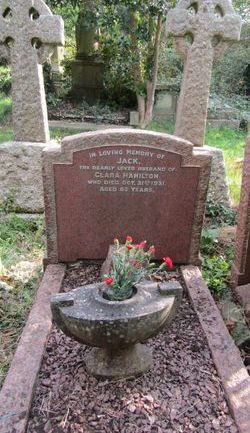
Jock Hamilton's Grave, Keynsham
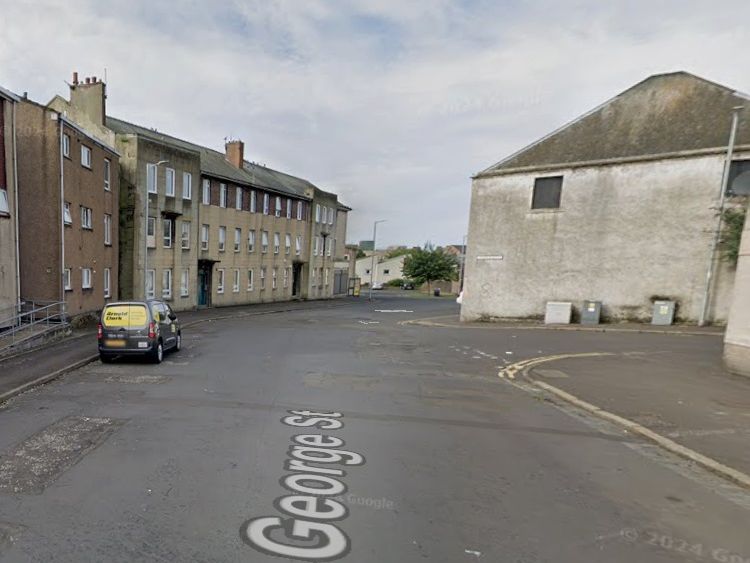
It would be tempting to think of putting a memorial to Jock Hamilton in Saltford on Beech Road, leafy by name and nature. But it would be meaningless to the English. So instead we turn to Ayr and a still recognisable but also much-changed George St.
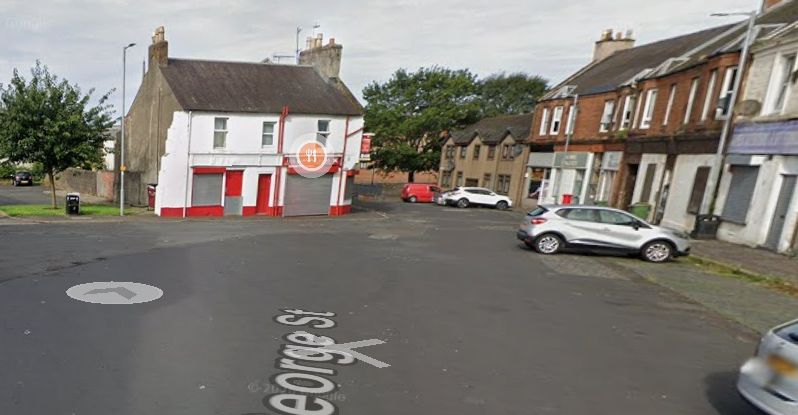
And there there is perhaps one spot where a plinth and a plaque might be possible. Where the street opens out, before it has been reduced to a passage to the river and next to No. 50 is a small area of grass, scuffy now but with the potential to improve the whole area.
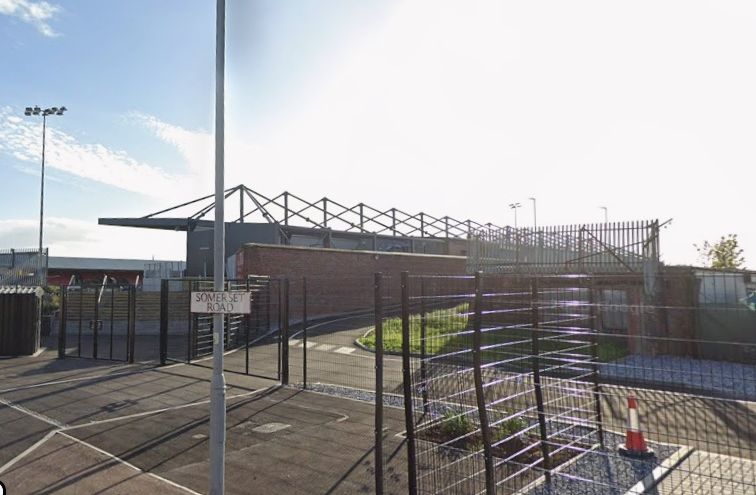
However, there are possible alternatives, with Jock Hamilton probably playing at both. The first is the site of Beresford Park, the Ayr F.C. ground until 1888. It is a retail park car-park. But the better second might simply be Somerset Park. It was Ayr F.C. ground from 1888 and before the merger with Ayr Parkhouse that would create today's Honest Men.
_______________________________________________________________________________________
Alex Hutchison
It seems the two months in 1907 Jock Hamilton spent in Sao Paulo may well have set a precedent, indeed impressed and implanted a concept, one which the following year would be copied by another of the city's club's, S.C. International, have far greater longevity, equivalent impact but until now far less recognition in Brazil whilst elsewhere hardly any.
He is recalled in Sao Paulo as A.D. Hutchinson, Alex Hutchinson, a player "brought from England, where he had the previous season taken part in the First Division Championship". However, both the name and the background claim are incorrect, a clue being that elsewhere he is recorded as Alex Hutchisson. In fact he was not English but a Scot, Alexander Downie Hutchison. And his involvement with top flight football had been almost certainly in Paisley and probably not with St. Mirren but Abercorn that at the end of the 1906-7 season had topped not the English First but the Scottish Second Division.
However, Hutchison was not a Renfrewshire-boy. He had been born in 1876 in East Lothian, probably in or by Macmerry, his mother's home-village, so had just turned thirty-three, perhaps at the end of his playing-career, on arrival in South America.
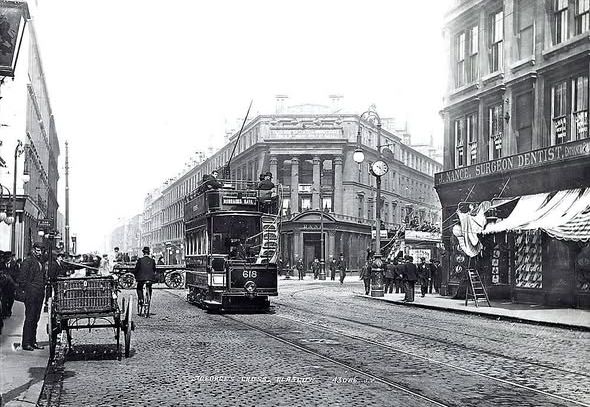
New City Road, Glasgow looking onto St. Georges Road, 1902
However, from Haddington the family then moved to Edinburgh and by the turn of the century to Glasgow, where he learned his football on New City Road in Cowcaddens and in Dennistoun. Indeed it was from his parents' address on New City Road that in 1902 he in Paisley had married Mary Crawford, a Paisley-girl, he recorded as a Fruit Warehouseman cum Salesman, she a Fruit Saleswoman.
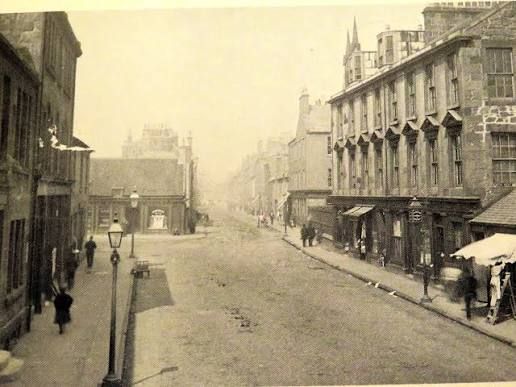
Queens Street, Paisley
The couple was to have three sons, David born in Glasgow in 1903, whilst they stayed on what was then Albert Rd off Springburn Rd., Alex by then a Railway Porter, and James and Alexander Jnr., both on Queens St. in Paisley with Alexander Snr. now being by 1906 recorded as a Threadmill Foreman.
In other words Hutchison may well have been moving for football and was by then working for Clarks, perhaps as well as playing or training football in the Renfrewshire town, the background thus. Abercorn was at the time, with on its Board seven members of the Clarks/Coats familiies, effectively a company team. Moreover the Clarks had built a thread-mill in Sao Paulo suburb of Ipiranga, opening it in 1907. So Hutchison might have arrived in the city actually sent by the company for work reasons with his further involvement with and through S.C. Americano simply a development on arrival or perhaps the possibility the Brazilian club had by then become the Scottish company's local one of choice.
So it was that as well as coaching between September and November 1909 and srill in Sao Paulo Hutchison, at the Velodromo like Hamilton, was also to wield the whistle four times. And whilst there was a small gap at the start in May of the 1910 season he was there once more until July and again for a single match in October, this as Americano had a second place finish in the Sao Paulo Championship, up from third the previous year.
And by that time he had clearly decided or had been told from Paisley he was going to stay a while longer. Two days before Christmas 1910 Mary and the three boys set sail from Southampton to Santos to jion him. And it may well have been their arrival and settling-in that meant in 1911 there was no sign of him as Americano again finished third. But in 1912 he was back on the scene once more, albeit briefly, for a one-off appearance only. It was in July for SPAC and as a player. At thirty-six it looks as if he was covering for injuries at full-back, whilst concentrating on club and training as Americano at the end of the season topped the table.
However, certainly he was back the following season, as now there was a split in the city and a second, separate, rival championship, APEA, was started, once more as the the man in the middle there for the first game of 1913 in April, there again in June, in July, in September and again October, this as again the championship was won by his club, and with ease, plus from celebratory photos it finally at this point became possible to identify him visually.
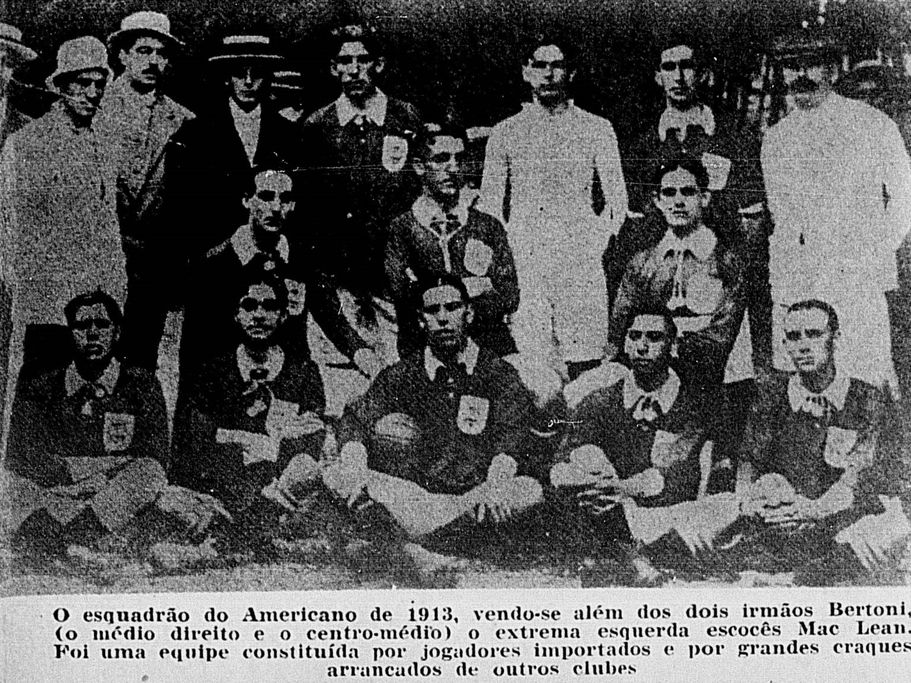
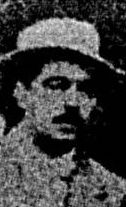
He is the tallish figure top, third from the left in the picture to the left of the 1913 Americano team and officials. And he is also shown enlarged above with one more thing of note. Sitting on the extreme right is a certain Archie McLean.
Yet, despite the success, for the whole of 1914 and 1915 the Americano club was gone, only to reappear for a single season in 1916. And for 1915 so was Hutchison. However, it had not been without a last hurrah as a player, nor was it the last of him in the middle.
During the 1914 season he was to referee once, in July, but either side and out of his club and SPAC had emerged a new entity, indeed briefly but pivotably a new force. It was Scottish Wanderers, playing in the APEA, with McLean featuring as captain. And for six of its matches, between June and September until SPAC's former keeper replaced him, Alex was between the posts, even if as a probable stand-in and certailnly less than successfully. All were to be defeats.
And then, when the 1916 season kicked off with Americano back playing, he took charge of the first match now of the Sao Paulo Championship and thirty-four more of a total of forty-eight plus also one of the rival APEA league. He was at that moment without doubt considered the foremost footballing official in his adopted city and like Jock Hamilton before him setting the standards, this as at the age of forty he then stepped away, whilst remaining in Brazil, perhaps for the rest of his life. He can be seen travelling back and forth to Britain over the next decade, with his second son marrying in Sao Paulo in 1931, yet after 1916 and, it is said coaching once more before Americano actually dissolved, he appears not to have refereed a single match again, at least in the top-flight.
The story, the impact of Alex Hutchison is at least as important as that of Jock Hamilton, not least for the much longer longevity of his contibution, six years rather than two months. But the question of where in his home country he should be celebrated is much the same.
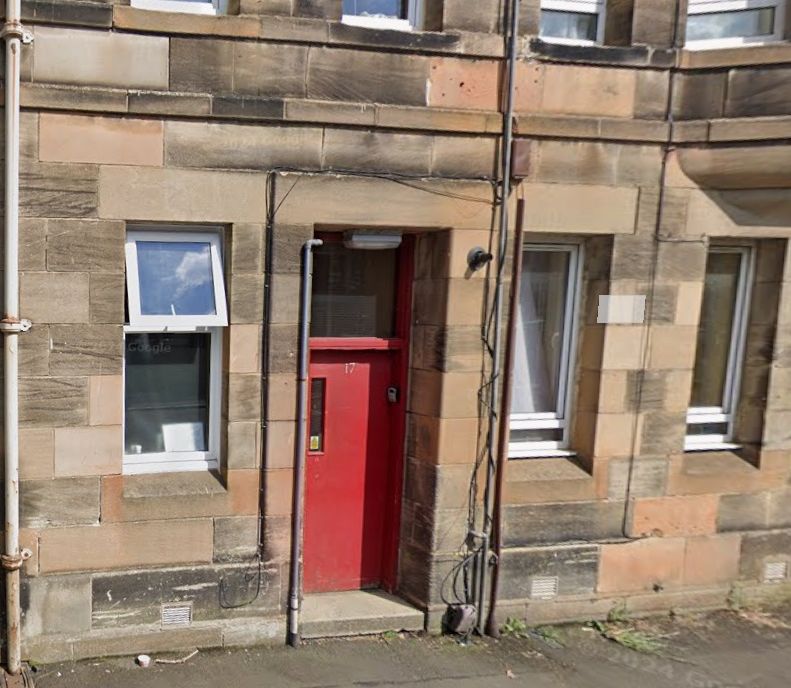
Queens St, Paisley
One Paisley suggestion might be Queen's St. from where his wife married him and where two of his children were born. And there abput half way down there is a small garden area, where a plinth and plaque might be placed.
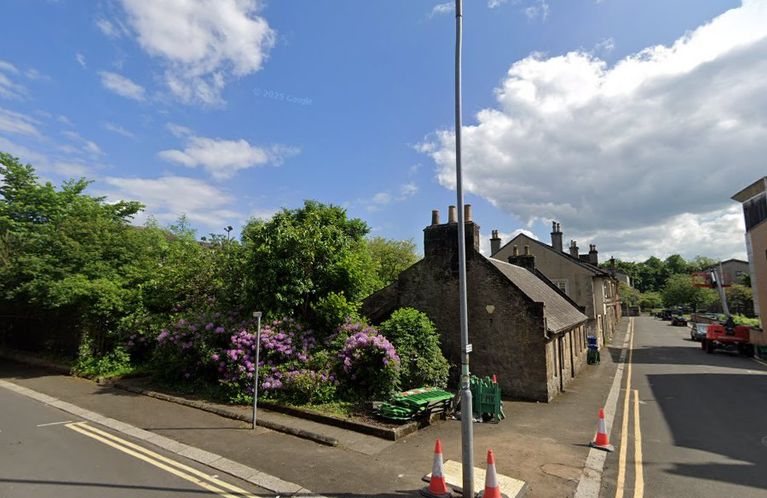
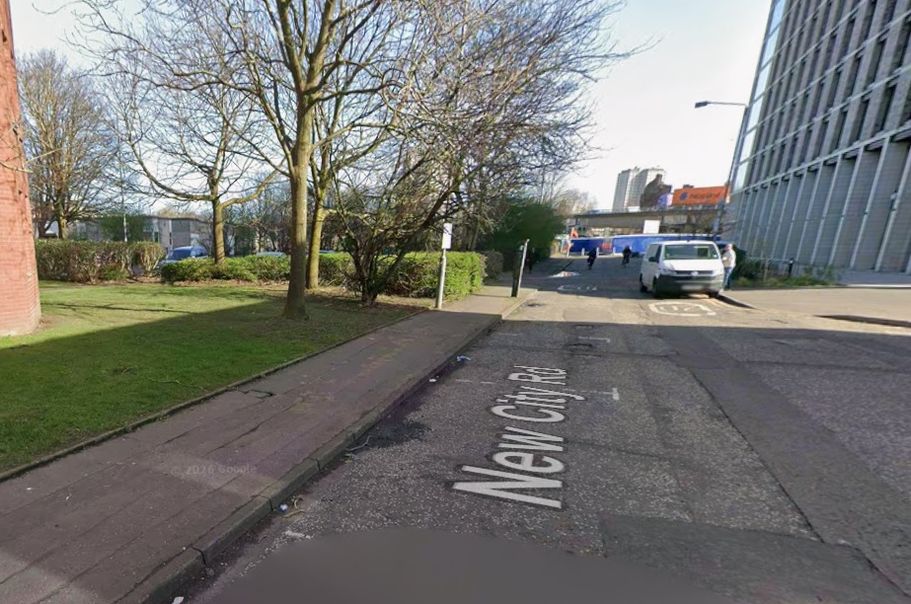
And there is the alternative Glasgow location of New City Road, where the Hutchison family, Alex aged fourteen, was staying in 1891. The area is now student and other accommodation, with not just one but several small garden areas ideal for a plinth and plaque.
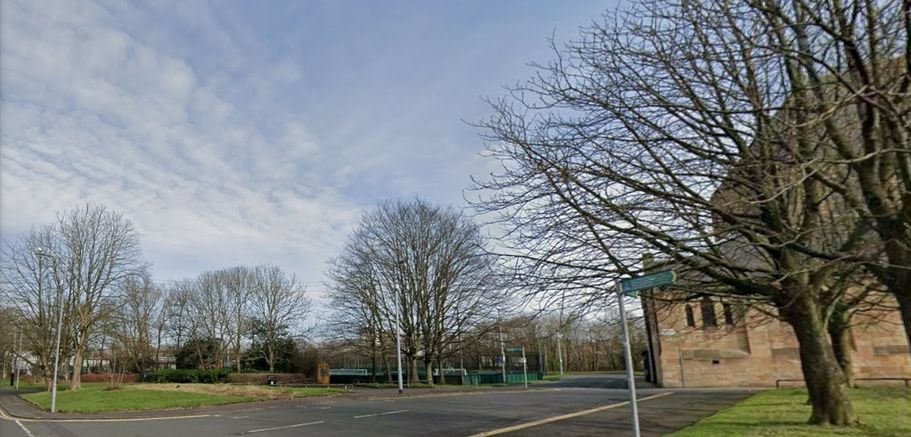
Albert St., now McAslin St. and corner of Glebe St., Glasgow
But there is by chance a fortuitious, indeed serendipitous, futher possibility. The address from which Alex left to marry was Glasgow's Albert Road. It no longer exists but only because of a name-change. Today it is McAslin Road, a short street, into which firstly half way up Glebe St., former home of Tom Scott, runs and, secondly, at the junction of the two is a grassed and treed corner where again a plinth and plaque could be placed, this time not for one of Brazil's lesser-known pioneers but simultaneously both.
_______________________________________________________________________________________
Archie McLean
Dovesland, Paisley
Anchor Mill, Paisley
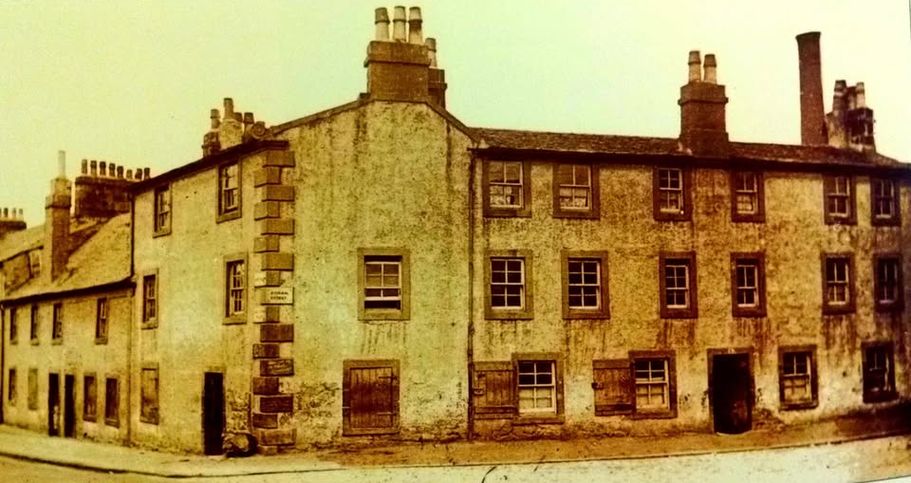
Archibald "Archie" Fulton McLean was born, the youngest of eight children, in "Dooslan", Dovesland on the south side of Paisley not in 1894 as per his Wiki entry but in 1886; that fact and much more confirmed by his grandson, Malcolm, who now stays in Lenzie but who, sent to school from Brazil to Scotland, lived with his grandparent in his retirement to Ralston.
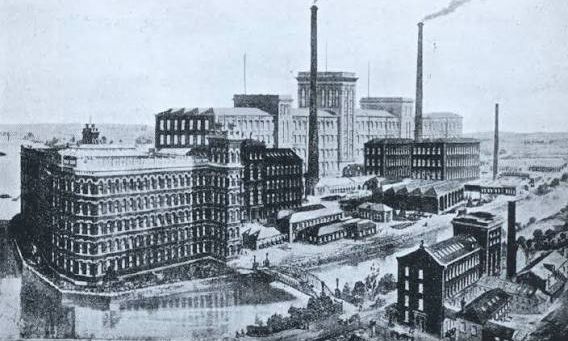
And both Archie's father, a Thread Mill Worker, and mother were Paisley-folk too. Their lives were entwined with Clarks/ Coats, as would be that of Archie also. He worked at the Anchor Milll, but in his case with not just a cotton- but a footballing- twist.
On his arrival, perhaps, as outlined already, his return to Sao Paulo in the late British summer of 1912 Archie McLean would join not Germania once more but initially SPAC, playing twice before the season's end. However, the members Sao Paulo Athletic Club had fallen out of love with Association football as they saw it being organised in the city, would before the next campaign kicked off turn their back on it and in time move over to rugby. But McLean did not follow, instead for the 1913 season joining Hutchison at Americano, indeed on 15th June both men were on the same field of play, and with as already mentioned consideable impact.
However, Americano was also a club, a team clearly not without problems. And when in 1914 it dropped out of the championship Archie McLean moved and by forming his own club, the Scottish Wanderers. It, also based at the Velodromo, was initially a blend of some his Americano colleagues and former teammates at SPAC and was on-field not very successful. It finished in penultimate place in the 1914 league. However, it did not go unnoticed especially on the left of the forward-line.
As well as his own form, which earned him the nick-name O Veadinho, the Little Deer, there Archie would forged a particularly good playing relationship, a winger/inside-forward combination, with the much younger Englishman, Billy Hopkins. He had again arrived in Sao Paulo in 1911, would late in the 1912 season emerge at Americano and had come from Portsmouth. That is in itself interesting because the town team had only become a footballing force in 1899, the year after foundation, with second place in the Southern and election to the Football League. And it had been done to a large degree by importing Scottish talent and playing in Hopkins' formative, footballing years the Scottish way. Its captain in 1899, subsequently captain/manager and manager to 1904 had been Bob Blyth, from Glenbuck and uncle of Bill Shankly.
Indeed it was this same syle of Scottish play, the short-passing game of push and run to space, which firstly adapted well to warmer Brazilain weather and harder pitches that, secondly, lead very quickly to Wanderers pair being called up to represent Sao Paulo State League against the State of Rio de Janeiro's, Paulistas versus Cariocas, in 1914, 1915 and 1916. Archie was even called up to an unofficial Brazilian national eleven although as Scots-born he could be officially. Furthermore, the McLean-Hopkins combinational style that became known as A Tablinha, the Little Chart, would be integrated into the Sao Paulo teams' play and in time in wider Brazil become the basis of The Beautiful Game that was to appear on the World scene from 1950 but more so in 1958, 1962 and 1970.
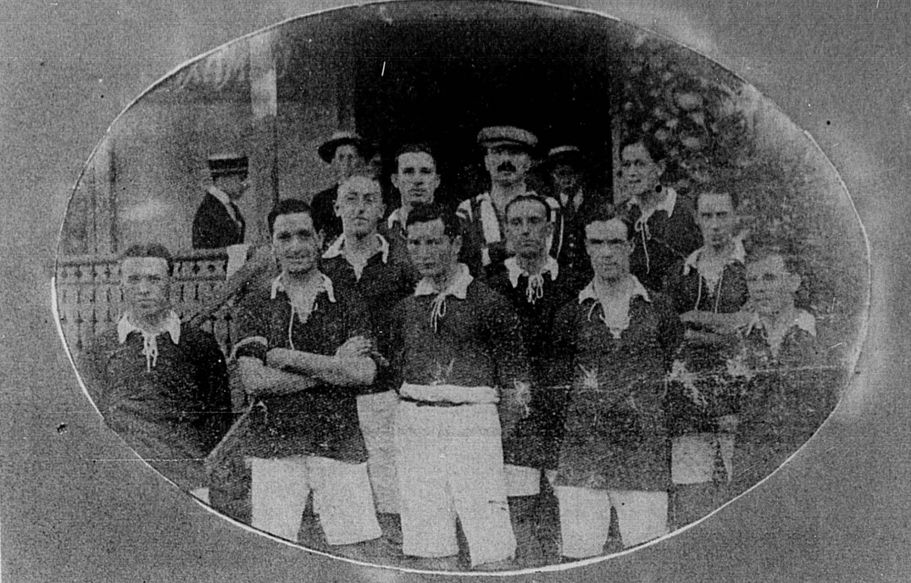
Scottish Wanderers
However, there was another side to the Wanderers that had also come from Scotland. There for much of the previous forty years, whilst the game was officially amateur until 1893 in working-class clubs gate-money was recycled to the players in various ways, not least boot-money. Working-class football, indeed woring class sport in Scotland had always been thus and even though in Sao Paulo the Scottish Wanderers were no different.
That is until a disgruntled, former player in that second season blew the whistle. Having played, indeed also completed the 1915 season the club was expelled from its league and would as a result disband.
Yet given the reputation and the talent of Archie that was to be far from the end. Instead both he and Billy Hopkins joined the Esporte Clube Sao Bento Club, Archie playing in every game of the season, Hopkins in all but one. Sao Bento was originally a works team and is from the town of Sorocaba, 100 kilometres west of Sao Paulo. And with them in its eleven it would rise in the league in one season from last to second-top, in the next as the leagues reunited slipping to mid-table where it would stay, McLean retiring from regular play, now aged thirty-three, in 1920 and Hopkins in 1921 by when one of Tom Scott's sons was also in line-up.
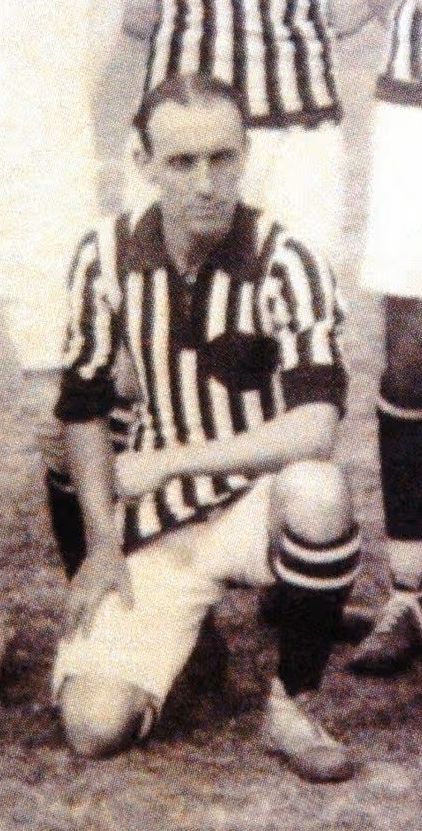
However, 1920 was not to be quite the last McLean appearance. In 1926 with the Sao Paulo league against splitting yet a new team came into being. It was called Britania, included in its first season up to three Scotts and in its first three games had a McLean in goal. If it was Archie then he was out of footballing retirement at the age of thirty-nine but it did not last. He went back to working fully for Clarks Ipiranga, retiring from there at the age of sixty-three in 1949, only then to come fully back to Scotland, indeed to Ralston by Paisley. And it was from there that in 1964 he returned to Sao Paulo to receive a standing ovation at the Pacaembu and where in 1971 he was at the age of eighty-four to pass away, to be cremated at Paisley's Woodside Cemetery.
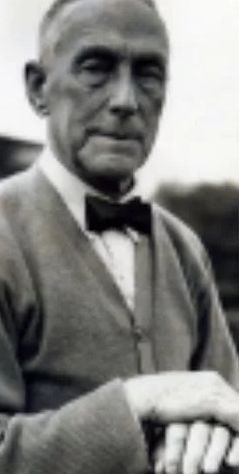
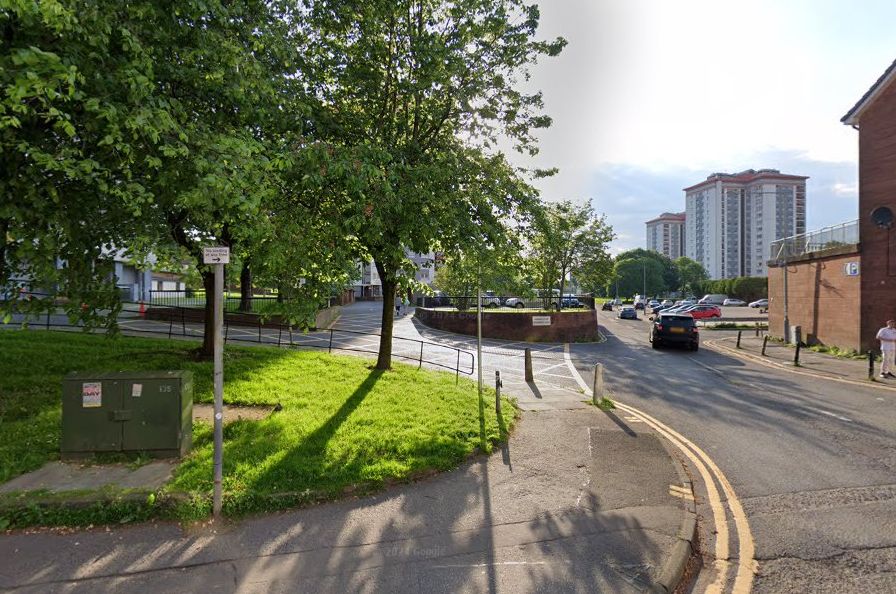
Great Hamilton St., Paisley
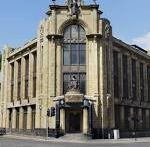
And with that we turn now to possibilities of a final one one of the six plinths. And in Archie McLean's there are several. The first might have been Barclay St. in Paisley, where he stayed aged four but it no longer exists. The second is the family home in 1901 at 3, Great Hamilton St., on the corner of which with there Neilston Rd. there is a suitable grassy area. The third is 34, Causeyside St., from where in 1909 he had left to marry, his wife-to-be being fellow Paisley thread-mill worker, Margaret McNeil. It from 1927 has been The Russell Institute, a building and local institution entirely worthy of a plaque to an equally worthy, local man.
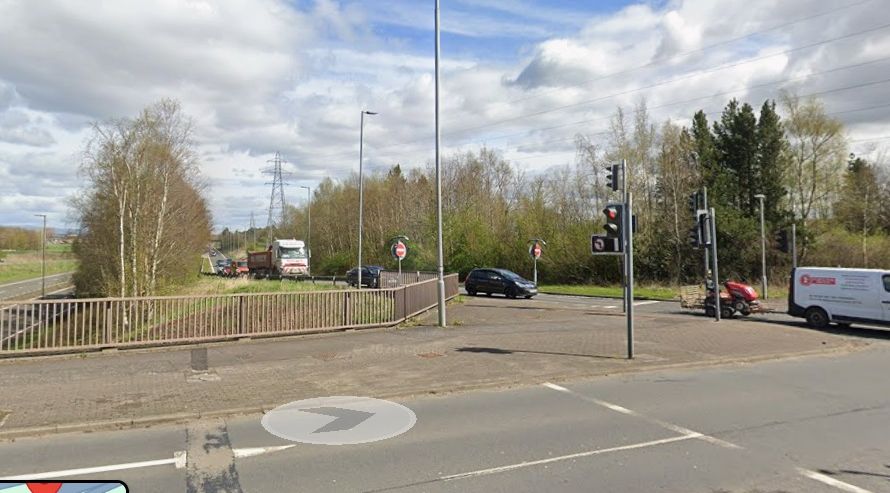
Then in footballing terms there is where he played his last football in Scotland and the then ground of Johnstone F.C. at Newfield Park. But it is now largely under the A737 and a the busy off-ramp to the town and whilst there is space Archie deserves better.
And that might be the home he, Margaret and the family last shared in Paisley before the permanent move was made to Sao Paulo. It was at 3, Alice St. a short distance further south down the Neilston Road. The building is still there largely unchanged by time and directly opposite is a corner triangle of garden that for this time a plinth and plaque might be suitable.
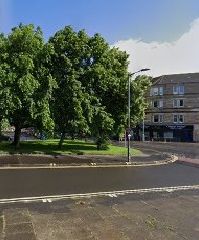
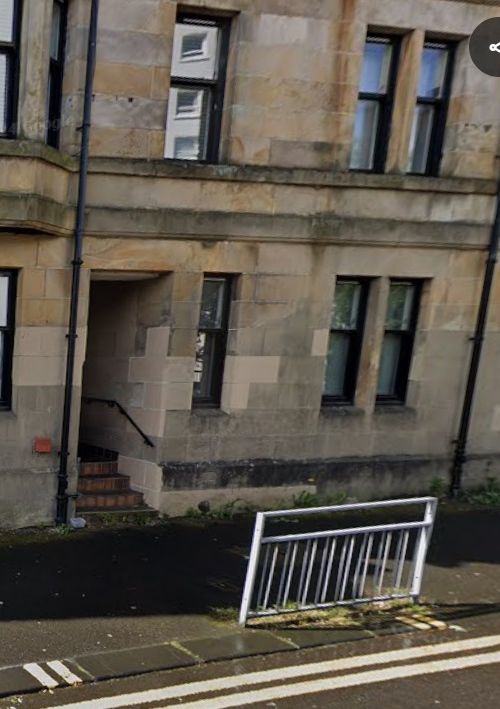
3, Alice St., Paisley
And finally there are two more possibilities. The first is Ralston. Archie would die from his daughter-in-law's house there in Atholl Crescent but he had spent all but the very last part of his retirement just two roads down in a neat semi at 79, Auchmannoch Ave.. Margaret would die there in 1963, aged seventy-five. Moreover the local sports-centre is across the road, with entrance to it off Penilee Rd., which links the two streets. The house itself is worthy of a plaque but the the sports centre with its plinthed entrance would be a fitting place for a plaque at least and perhaps even a bust of a local man with a quiet demeanour but an impact on World football that few can rival. And what about taking a step further still and renaming the Ralston Community Sports Centre after Archie himself?
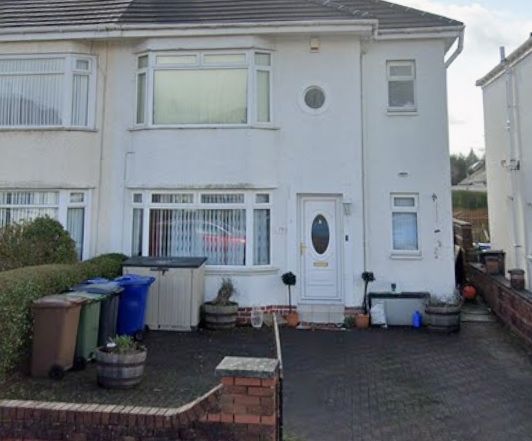
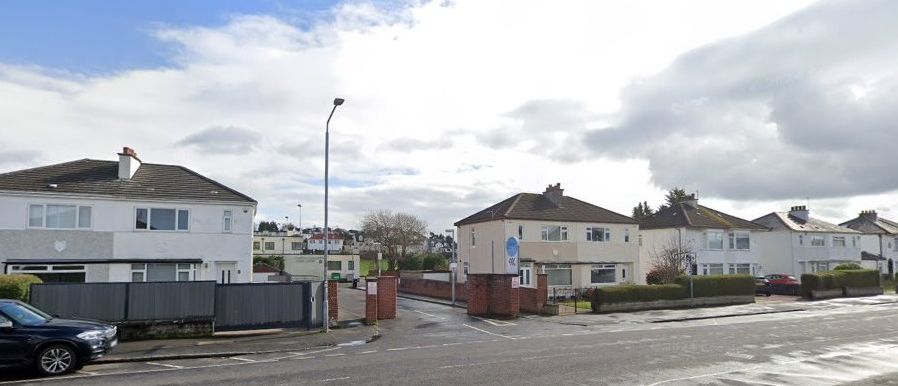
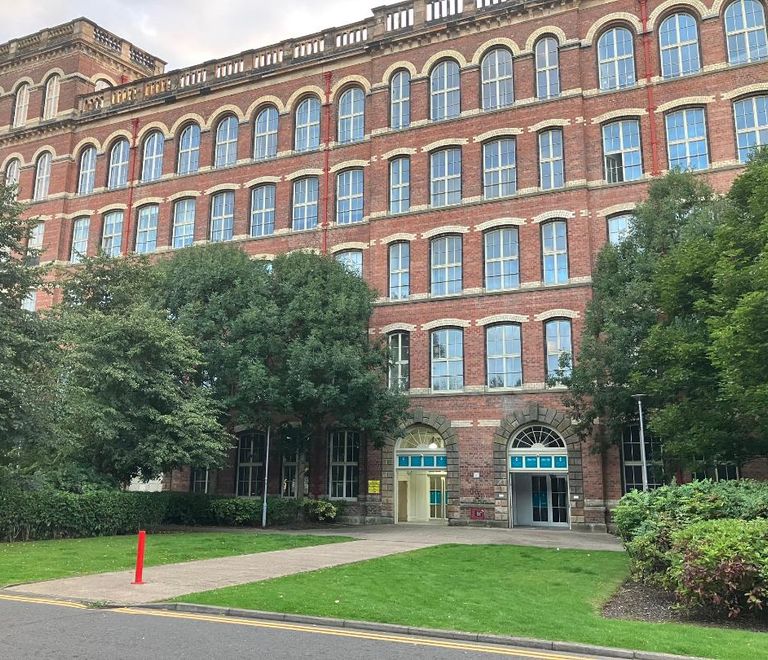
And then there his original place of work, the Anchor Milll itself; the reason why he went to Sao Paulo and why he stayed. Indeed it is the plinth-location preferred by Malcolm McLean himself and for obvious reason.
The building itself is central, magnificant, A-listed, restored, a recognised, prominent element of Paisley's cultural heritage and, having been recently converted to flats and business-premises has a guaranteed, long-term future. Moreover, directly in front of it is a garden area with well-kempt lawn on either side of the entrance path, the larger perhaps the place to mark Archie's contribution to the Brazilian game, the smaller maybe that of Alex Hutchison.
Back to the SFHG Home page