Edinburgh Amble
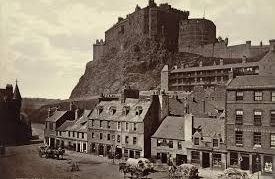
That football, and not of the mob-variety, has existed in Edinburgh, old and new, for at very least the last three hundred and fifty years is now irrefutible. It is taken back to 1673 by the inestimable Andy Mitchell with more examples in between, to not least the encounters reported in the Press to have taken place, seemingly annually from 1865 and between Moray House and Castle Terrace F.C.s, more or less the lower versus the upper Old Town, with no team numbers or code specified.
And it is Andy Mitchell too, who has assembled the John Hope story, from his founding earlier still in 1824 as a 17 year-old of the Foot-Ball club with its rules, quite possibly simply his take on what had already existed orally but was now finally written down and thus preserved. The club itself notably played in the summer months. Football in Scotland apart from the occasional mob-variety, seeming to be until 1871 a warmer-weather pasttime. Its games were intra-club only, played initially at Dalry Park by Dalry House, which still exists on Orwell Place not half a mile from Haymarket, but at that time still just outwith the city. It then in 1831 moved to Greenhill Park, again outwith, but in country-side to the south and continued until dissolution a decade later.
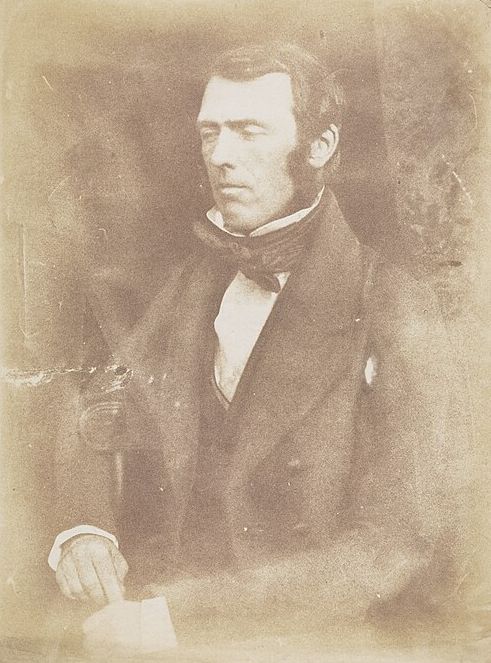
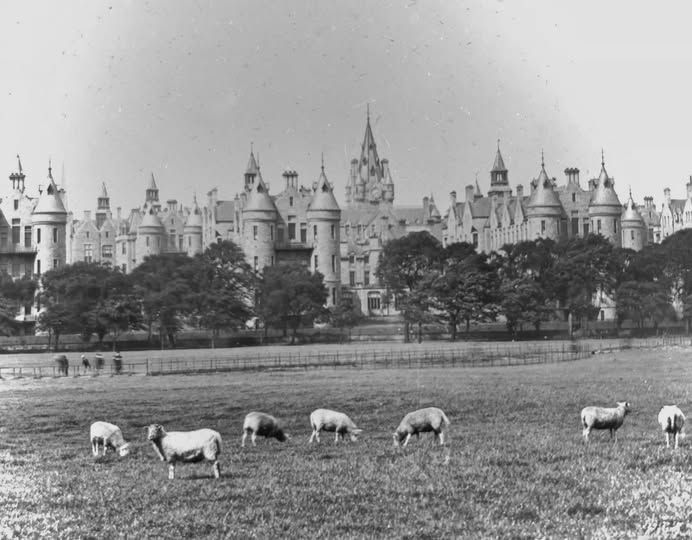
Moreover, Andy Mitchell has futher followed the Hope-trail, through the future lawyer's settlement for the remainder of his life at 31, Moray Place in the New Town and for a while right on the edge of the city, to in his 40s, his advocation of both Saturday half-days for sport for the working-man and the conversion from 1855 from grazing-land to a public open-space of The Meadows plus in his 60s involvement with the 3rd Edinburgh Rifle Volunteers (ERV), the foundation of its football team in 1874 and with his rank of Major the literal kicking-off that same year of again an intra-club encounter but this time one, which was specifically to Association i.e.London football rules.
The Association game itself can be said to arrived in the city just a little earlier in December 1873 with the playing at Raimes now Victoria Park, then just outwith Leith, of a demonstration game between two teams from West Scotland, drawn from five of the eight teams that had just a few months earlier been founder members of the Scottish Football Association. Two notable observations have been handed down about the encounter. The first was the playing style was noted that day not for its "Scottish passing" but "dribbling". It was still very early days.The second was that that same style of play resembled the "old Scotch" one again suggesting existing, older rules in the city and that Hope's ones, as an example and/or derivative of them, may have been in fact little different in practice even to these supposedly new ones. And the direct result of the matchseems to have been the almost immediate formation of the 3rd ERV club.
ERV in its five seasons of existence was a West Edinburgh team, based probably at the drill hall that seems to have stood off Bread St./Lothian Road a half mile north-east of East Meadows, where it initially played. Its first captain was A. (Alexander). W. Lamont, twenty-three years-old, seemingly a cabinet-maker to trade and Irish-born (but Protestant), who stayed on Canongate, its second Secretary Thomas Fraser, twenty-two, who lived near the drill-hall and its first Frank G. Watt, then nineteen, a man with a pivotal future and in the English game, namely in and at Newcastle. Meantime was he living on Bristo St. so more more centrally just to the north of that same recreational space as the game developed and other clubs soon came into being. In fact Watt would in 1876 move on to one of them, Swifts, quite probably because of disagreement with John Hope himself. For all his football pioneering and temperance campaigning Hope was also vehemently anti-Catholic, would therefore not countenance ERV playing Irish-based Hibernian (Hibs), founded in 1875 and also starting on The Meadows. And it was from that base at Swifts Watt would first become Secretary of the Edinburgh Football Association before in 1895 going South on being appointed Secretary, i.e. effectively future manager, at St. James's Park, there overseeing the great Scots-based Tyneside teams of the 1900s and remaining in place until 1930, just three years before his death in his adopted city at the age of seventy-seven.
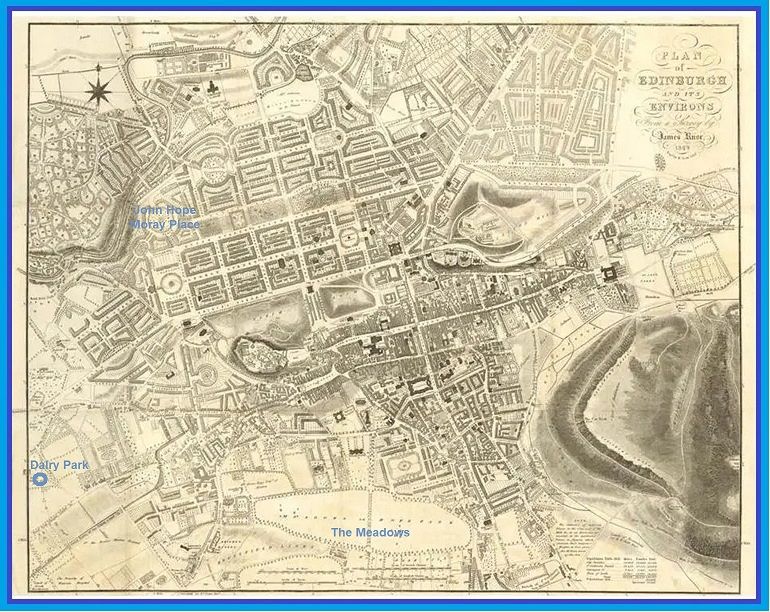
Edinburgh 1824
Meantime more still Meadows-based opposition would be coming into being. Between ERV and the Swifts had seen the emergence in 1874 of three more clubs, Thistle, Heart of Midlothian (Hearts) plus short-lived St.Andrew's and in 1875, Hanover. The last of the three had as its Secretary, William Anderson and as Captain, twenty-two year-old J. (John) Bull. The former was contactable at 27, Nicholson Street and the latter initially stayed close so both in the suburbs built in the first quarter of the century south-east of the Old Town. Moreover, Heart's Secretary, Hugh Wylie, also seems to have stayed off Nicholson St., as did Thistle's Secretary, Thomas Fraser, in Dumbiedykes and Bob Winton, the St. Andrew's captain on Pleasance.
In fact of the very earliest Edinburgh clubs it was only really Hibernian that would emerge from the old town. At that time the arriving Catholic Irish population was based not in Leith but around St. Patrick's Church off S. Gray's Close and the surrounding Cowgate area. Hibernian's first captain, twenty-two year old Michael Whelahan, a type-founder, stayed close by where Tron Square now is. Malachy Byrne, the club's first Secretary was within 100 yards of of the church itself. Both were Roscommon-men.
And here is perhaps the place for the story not of the serious stutter Hibernian would experience in the 1880s but one that would befall its contemporary, local rival almost on foundation. Hearts had entered the Scottish Cup for the first time in 1875. Drawn against 3rd ERV it drew tice and both teams went into the next round, where it drew and lost to the Coatbridge club, Drumpellier. All seemed well but the following season it drew Dunfermline in the First Round in September but failed to turn up and for four months appeared to disappear. In fact several of its players had seemingly left and joined St. Andrews. In fact on the same day the Dunfermline-Hearts game had been due to take place St. Andrew's, again in the Cup, played and beat Grasshoppers 1-0. St. Andrew's captain was Bob Winton and the goal was scored by the erstwhile Hearts captain, Tom Purdie.
It would seem at that point Hearts had disbanded but the following season it was back, entering ad re-emerged playing friendlies from January 1877. Both teams would take part in the Cup's First Round. Both would lose, St. Andrew's to Hanover, Hearts on a second encounter to Hibs, all games being played on The Meadows, 1,200 said to have watched the replay.
whilst and so once more in the expanding eastern side of the city, its first team-captain, Tom Purdie, whilst born in Musselburgh, lived on the west side, initially in Fountainbridge and then a short distance from John Hope.
But once founded began within a few years to move away from their Meadows bases.
https://ghostgrounds.wordpress.com/2021/07/03/bonnington-canonmills-and-warriston/
https://ghostgrounds.wordpress.com/2021/10/08/bruntsfield-marchmont-morningside-slateford/
https://ghostgrounds.wordpress.com/2021/09/14/corstorphine-ravelston-western-edinburgh/
https://ghostgrounds.wordpress.com/2021/09/02/gorgie-stenhouse/
https://ghostgrounds.wordpress.com/2021/08/20/stockbridge-inverleith-and-craigleith/
https://ghostgrounds.wordpress.com/2021/08/17/central-southern-edinburgh-and-newington/
https://ghostgrounds.wordpress.com/2021/07/30/portobello/
https://ghostgrounds.wordpress.com/2021/07/25/leith-lochend-and-meadowbank/
https://ghostgrounds.wordpress.com/2021/07/12/bonnington-granton-trinity-and-newhaven/
https://ghostgrounds.wordpress.com/2021/07/03/bonnington-canonmills-and-warriston/
XXXXXXXXXXXXXXXXXXXXXXXXXXXXXXXXXXXXXXXXXXXXXXXXXXXXXXXXXXXXXXXXXXXXXXXXXXXXXXXXXXXXXXXXXXXXXXXXXXXXXXXXXXXXXXXXXXXXXXXXXXXXXXXXXXXXXXXXXXXXXXXXXXXXXXXXXXXXXXXXXXXXXXXXXXXXXXXXXXXXXXXXXXXXXXXXXXXXXXXXXXXXXXXXXXXXXXXXXXXXXXXXXXXXXXXXXXXXXXXXXXXXXXXXXXXXXXXXXXXXXXXXXXXXXXXXXXXXXXXXXXXXXXXXXXXXXXXXXXXXXXXXXXXXXXXXXXXXXXXXXXXXXXXXXXXXXXXXXXXXXXXXXXXXXXXXXXXXXXXXXXXXXXXXXXXXXXXXXXXXXXXXXXXXXXXXXXXXXXXXXXXXXXXXXXXXXXXXXXXXXXXXXXXXXXXXXXXXXXXXXXXXXXXXXXXXXXX
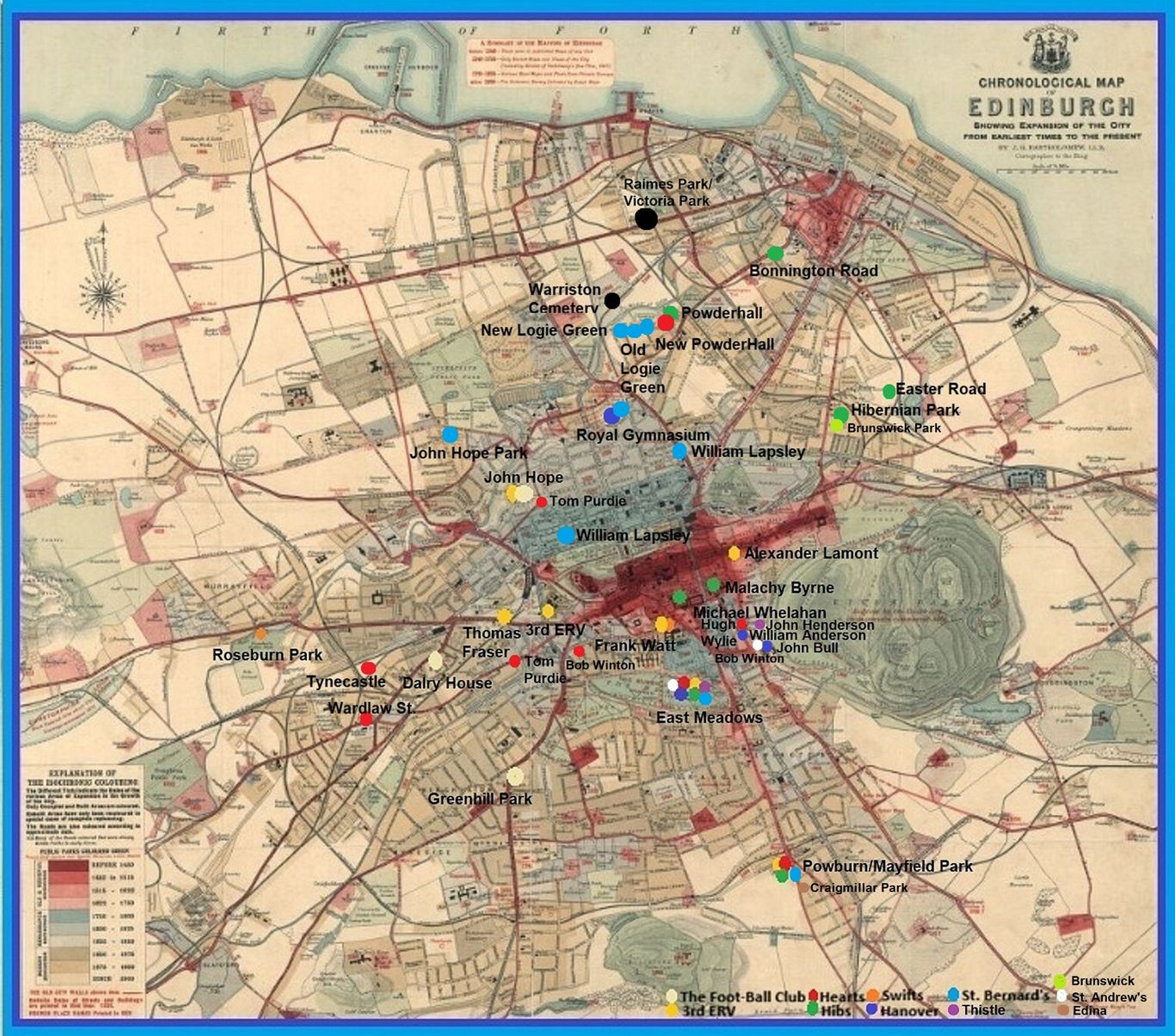
Edinburgh Chronological Development with football locations superimposed
XXXXXXXXXXXXXXXXXXXXXXXXXXXXXXXXXXXXXXXXXXXXXXXXXXXXXXXXXXXXXXXXXXXXXXXXXXXXXXXXXXXXXXXXXXXXXXXXXXXXXXXXXXXXXXXXXXXXXXXXXXXXXXXXXXXXXXXXXXXXXXXXXXXXXXXXXXXXXXXXXXXXXXXXXXXXXXXXXXXXXXXXXXXXXXXXXXXXXXXXXXXXXXXXXXXXXXXXXXXXXXXXXXXXXXXXXXXXXXXXXXXXXXXXXXXXXXXXXXXXXXXXXXXXXXXXXXXXXXXXXXXXXXXXXXXXXXXXXXXXXXXXXXXXXXXXXXXXXXXXXXXXXXXXXXXXXXXXXXXXXXXXXXXXXXXXXXXXXXXXXXXXXXXXXXXXXXXXXXXXXXXXXXXXXXXXXXXXXXXXXXXXXXXXXXXXXXXXXXXXXXXXXXXXXXXXXXXXXXXXXXXXXXXXXXXXXXXXXXXXXXXXXXXXXXXXXXXXXXXXXXXXXXXXXXXXXXXXXXXXXXXXXXXXXXXXXXXXXXXXXXXXXXXXXXXXXXXXXXXXXXXXXXXXXXXXXXXXXXXXXXXXXXXXXXXXXXXXXXXXXXXXXXXXXXXXXXXXXXXXXXXXXXXXXXXXXXXXXXXXXXXXXXXXXXXXXXXXXXXXXXXXXXXXXXXXXXXXXXXXXXXXXXXXXXXXXXXXXXXXXXXXXXXXXXXXXXXXXXXXXXXXXXXXXXXXXXXXXXXXXXXXXXXXXXXXXXXXXXXXXXXXXXXXXXXXXXXXXXXXXXXXXXXXXXXXXXXXXXXXXXXXXXXXXXXXXXXXXXXXXXXXXXXXXXXXXXXXXXX
XXXXXXXXXXXXXXXXXXXXXXXXXXXXXXXXXXXXXXXXXXXXXXXXXXXXXXXXXXXXXXXXXXXXXXXXXXXXXXXXXXXXXXXXXXXXXXXXXXXXXXXXXXXXXXXXXXXXXXXXXXXXXXXXXXXXXXXXXXXXXXXXXXXXXXXXXXXXXXXXXXXXXXXXXXXXXXXXXXXXXXXXXXXXXXXXXXXXXXXXXXXXXXXXXXXXXXXXXXXXXXXXXXXXXXXXXXXXXXXXXXXXXXXXXXXXXXXXXXXXXXXXXXXXXXXXXXXXXXXXXXXXXXXXXXXXXXXXXXXXXXXXXXXXXXXXXXXXXXXXXXXXXXXXXXXXXXXXXXXXXXXXXXXXXXXXXXXXXXXXXXXXXXXXXXXXXXXXXXXXXXXXXXXXXXXXXXXXXXXXXXXXXXXXXXXXXXXXXXXXXXXXXXXXXXXXXXXXXXXXXXXXXXXXXXXXXXXXXXXXXXXXXXXXXXXXXXXXXXXXXXXXXXXXXXXXXXXXXXXXXXXXXXXXXXXXXXXXXXXXXXXXXXXXXXXXXXXXXXXXXXXXXXXXXXXXXXXXXXXXXXXXXXXXXXXXXXXXXXXXXXXXXXXXXXXXXXXXXXXXXXXXXXXXXXXXXXXXXXXXXXXXXXXXXXXXXXXXXXXXXXXXXXXXXXXXXXXXXXXXXXXXXXXXXXXXXXXXXXXXXXXXXXXXXXXXXXXXXXXXXXXXXXXXXXXXXXXXXXXXXXXXXXXXXXXXXXXXXXXXXXXXXXXXXXXXXXXXXXXXXXXXXXXXXXXXXXXXXXXXXXXXXXXXXXXXXXXXXXXXXXXXXXXXXXXXXXXXXXX
Back to the SFHG Home page