Renton, The Vale and The Scottish-Game
Episode 4 - The Unmaking
(with massive thanks to the incredible London Hearts Supporters Club archive)
So it was that at the end of the 1877-8 season the valley of the Dunbartonshire Leven would have the Cup-Winner, The Vale itself, and a semi-finalist, Renton, which had failed to make the final only on the second replay. And it was to be superficially much the same the following season, except that, whilst the Alexandria club would go on to take the trophy for a third time in a row, having meantime also defeated the English Cup-Winners, The Wanderers, to become ipso facto World Champions, Renton's slot would be filled by Dumbarton. To do so, with Renton having gained from a first-round walk-over, it had in October 1878 in the second round and watched by 4,000 crushed the Tontine Park club away 1-6. As it turned out It was not a good omen. Whilst a new and third village club, Renton Wanderers, played its first recorded game in January 1879 Renton itself was perhaps already struggling with worse to come. The next year's Cup would see them get through rounds one and two on replays, one against the Dumbarton club, Lennox, before in the third Dumbarton itself overwhelmed them once more, this time 5-0 albeit away. And after that there is for the loser of that encounter not a single game recorded for the rest of the season.
Moreover, Renton's premier team would not be alone. In October 1878 Renton Thistle, until then the village's second of two clubs, had lost in the Cup's first round, in fact to Lennox, then played a single last fixture and was dissolved. There would be no obvious explanation and, furthermore, turn out to be a precursor of what was to come next.
In September 1879 The Vale had lost its Cup crown, going down in the first round and to the growing power of Dumbarton once more in what much have been a great match, 4-3, away. But it continued to play on with a programme of friendlies, a full squad and, in 1880-81, would reach the Cup quarter finals with Renton, firstly, be one of its victims on the way, again in October in just the second round, 0-1 at home, and, secondly, the Tontine club once more having not a single further, recorded game. Then in September 1881, whilst Renton had entered that season's Cup, it allowed itself in the first round to be walked over by another local club, Jamestown, and in addition did not obviousally feature anywhere again. Indeed, by the end of the season, so the summer of 1882, it had even resigned from the Scottish Football Association. The club had seemingly collapsed.
There is, as previously with Thistle, to this point no obvious explanation for this turn of events. And, whilst several theories have been suggested, none seems enough on its own, although together they might have been sufficient. The first is that through the 1870s, on-field, whilst The Vale had regularly drawn from a pool of at least twenty players, climbing to thirty in 1880-81 as its rival just down the road seems by 1878-9 to have had just fourteen at its disposal, and from that point perhaps simply struggled to put together a team. The second is off-field. By that time its Secretary, the man who organised it and the fixtures, was James Thomson, who in 1878 married a girl from Dumbarton, moved there with no replacement found. The third, somewhat tortuously, is that there was almost an edict had been handed down in the village that specifically football should cease, although not all sport. Shinty was still acceptable. It seems unlikely. The fourth is that early exits from the Cup redirected the village's sporting talent, and in 1879-80 that of Alexandria also, back to the ancient game.
This fourth has, in fact, been for sometime the preferred thesis as in 1880 "Vale of Leven" won the premier, Glasgow shinty trophy, the Glasgow Celtic Society Cup and in 1881 and 1882 "Renton" was twice runners-up. However, we now have uncovered the GCSC teams and, whilst there is some cross-over of personnel from both football clubs, notably David Lindsay, W(illiam) Campbell and A(lex) McCrimmond, and therefore a continuing intermixing of tactical thinking, it was simply not enough numerically to have weakened either club fatally. In the case of The Vale in fact there was the opposite, which suggests the shinty "Vale of Leven" may have been geographical rather than club. Indeed, the Alexandria team, with half-a-dozen new recruits, can be seen to have rebuilt its specifically footballing side starting after the 1879 set-back,and to immediate success. In season 1880-81it was to be a Cup semi-finalist, losing to Dumbarton, and in 1881-2, whilst exit would be in the second round it would be to the same opposition, again 0-2 and at home, with The Sons of the Rock once more going on to the last hurdle and a second loss to an also rebuilt and importation-rejuvenated Queen's Park.
And the fifth theory is due perhaps to a disruption in patronage and thus finances, not in the form of sinecure jobs, as the academic historian, Matthew McDowell, has suggested but with seemingly little indication beyond normal practice everywhere at the time, and certainly no evidence for these early years, but in terms of facilities. Tontine Park, rudimentary as it was with, for example, no grandstand until 1886, had to paid for in terms of both land and infrastructure, never mind running-costs.
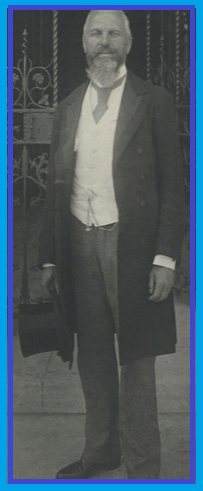
So, from the formation of Renton Football Club it seems Alexander Wylie had been its President, Honorary or otherwise. A Wylie, perhaps Alex himself or one of his younger brothers, George or Hugh, had even played right full-back for Jamestown in its earliest, known team, as had, for future reference, a McKechnie. And interest in the club was retained. In 1886 at the Renton F.C. sports-days, as they might have been in other years, all three brothers were there, even acting as judges.
As background Alex, George and Hugh's father, John, had been the one to bring Turkey-Red dyeing to the valley. He had come in from Balfron, Perthshire fitba' country. But Alex's mother was local, Bonhill parish born. In fact she was a Kinloch (See Vale of Leven's first ever squad) with Alexander himself born in 1839 in Alexandria itself and working initially for the Orr Ewings. But in 1873, so at the age of thirty-four, he joined William Stirling and Sons in Renton at the Cordale and Dalquhurn works, being part of the consortium that acquired the business in 1878 and becoming its manager in 1880. And that was the same year he wed Ann Mylrea and might simply have turned his attention to newly-married life with the previous interest in football relegated to the back-burner. In fact she was a Kinloch (See Vale of Leven's first ever squad) with Alexander himself born in 1839 in Alexandria itself and working initially for the Orr Ewings. But in 1873, so at the age of thirty-four, he joined William Stirling and Sons in Renton at the Cordale and Dalquhurn works, being part of the consortium that acquired the business in 1878 and becoming its manager in 1880. And that was the same year he wed Ann Mylrea and might simply have turned his attention to newly-married life with the football relegated to the back-burner.
However, sadly it was not to last. In 1883 Ann Wylie died in the village aged just twenty-seven and is buried in the graveyard of Cardross i.e. Renton's Old Parish Church, with her husband never remarrying.
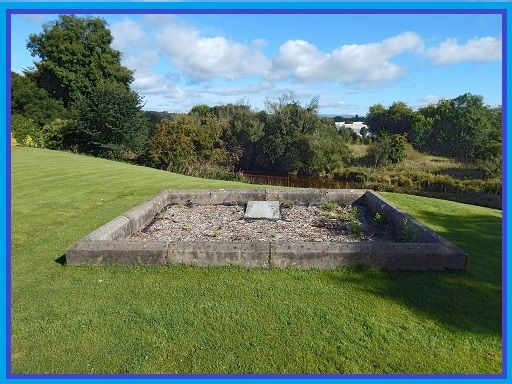
In fact he would outlive her by almost forty years, dying in February 1921, aged eighty-one, to be buried with his brother and sisters in the family plot still in Renton but at its Trinity Church. The timings are significant. It is unlikely to have been coincidence that in 1883 a new, well-run and -funded Renton football club emerged, of which he would be President and also almost four decades what remained of the same, by then long outwith the top-flight, indeed, the League, was wound up within months of his passing.
And so to Alex Wylie himself. He is, perhaps best described, as, for example, Alexander Watson Hutton is of the Argentine game, as the Father, and twice over, of Renton football and therefore much more. He would see his remarkable village-club in five years from rebirth rise right to the top in Scotland, then in Britain and therefore the then Football World. But it would in that same time also develop what would become not just its tactics and therefore style but Scotland's as a whole, thus should he not also be considered the Father of our game? Furthermore, with the Scottish Game provably the one that was taken round the World, should he not then be lauded too as the Father of the Global Game. Yet where is the recognition, where are the laurels? Unlike the arguably less significant Alex Watson Hutton, Alex Kinloch Wylie's last resting-place is adorned neither by stone nor bloom.
Known Renton, Renton Thistle, Vale of Leven and other Upper Vale Teams (cont.)
- James Smith
- R. Kilpatrick
- D. Lindsay
- J. McLean
- W. Campbell
- John Smith
- John Docherty
- James Williamson
- Thomas Kinroy
- James McComish
- A. McClaren
_________________________________________
- Cunningham
- Collins
- Sharp
- Cranmer
- McCulloch
- Brown
- Stewart
- McIntyre
- Hendry
- Coubrough
- Graham
_________________________________________
- Robert Parlane(28)
- Andrew McIntyre (23)
- W. Strathearn(18-20)
- John McPherson(23)
- James McIntyre
- John Ferguson
- John McFarlane
- James Baird
- William Taylor
- John McDougall(23)
- M. Gilles
Will Jamieson, Paton, McGregor, John Baird (23), Sandy McLintock (26), John Forbes, G. Cranmer/Cranbury, (Mc)Rae, D. F(L)indlay, D. McLean, J. Brown, A. McLeish, Cunningham
_________________________________________
- James Towie
- D. Gordon
- W. McKay
- H. McKinney
- A. MacCrimmond
- M. Kennedy
- Joseph McIntyre
- J. Munro
- James McIntyre
- T. Watson
- James Watt
- Alex. McKinney
1880-81 Renton Shinty
_________________________________________
- Lindsay
- McIntyre
- N/A
- N/A
- N/A
- N/A
- N/A
- N/A
- N/A
- N/A
- N/A
- N/A
_________________________________________
- Robert Parlane
- W. Strathearn
- Sandy McLintock
- James McIntyre
- Andrew McIntyre
- John McPherson
- Peter Logan
- John Campbell Baird
- James Baird
- Robert Paton
- John McFarlane
M. Gillies, J. McRae, C. McRae, John Ferguson, John Forbes, R. Murie, H. McLeish, D. Lindsay, D. McLean, John McGregor, W. Taylor, J. Cranmer, Cunningham/Cumming, Kerr, Wilson, McLaren, Chapman, Walker
_________________________________________
- M. Kennedy
- J. McKimie
- A. McLaren
- D. Gordon
- J. Towie
- John Smith
- James Smith
- T. Watson
- A. McKimie
- J. Baxter
- Joseph McIntyre
- James Munro
1881-82 Renton Shinty
_________________________________________
- A. Sharp
- J. Millar
- W. Collins
- T. Hendry
- D. McLean
- J. Brown
- H. McCulloch
- A. McCrimmond
- D. McIntyre
- J. MacFadyean
- William Mann
_________________________________________
- Sandy McLintock
- John Forbes
- John McFarlane
- John McPherson
- (Robert) McRae
- Peter Logan
- J. Abraham
- William Struthers - from Rangers
- Dan Friel
- James Brown
- D. Kennedy
Andrew McIntyre, M. Gillies, Kerr, W. Strathern (Strachan), J/G.Cranmer, Cumming, Gillies, C. McRae, J. McCrae, McLeish, John Miller, J. Wilson, W. B. Johnstone, Kennedy, McNee
_________________________________________