Plinths & Plaques, Statues and Graves
As with not just this but all our trails, local, national and country, we hold the view that merely recording or even putting on-line is a start but not enough. To do justice to the pioneers, as have a few clubs, even countries, to which they went, as in Scotland in the case of Tommy Donohoe and following the lead of Brazils's Bangu, Busby has too and as has SHFG again in Scotland, but also in England and Northern Ireland, there should be, both at home and elsewhere, place for more statues, golden or otherwise, restored, maintained graves, busts on plinths and if not them then plaques.
So, whilst we research and provide biographical and other details of as many of those Scots, native and Diasporan, who through deed and feet spread globally and uniquely the footballing word, we also look at where, in places from which they came or they rest, and as visual expression of our contemporary, national pride in them and those same localities, some form of physical, outdoor recognition would be both appropriate and feasible.
The Argentine Cled
- the Scots who made the Albiceleste
Imagine World football without, for all its faults, the Argentine game. But that could have been the way without the "cled", the twenty-one Scots or Diasporans who took the game to that country, nurtured it through frankly a struggle to lay and germinate seed and then literally passed it to the other immigrant masses that were reaching its shores.
Modern Argentina might try to to tell it another way but without specifically the Scottish working-class passion for the round-ball game it could have a different story - perhaps an English one, with cricket in the summer and the oval ball for the winter. Indeed if you know your South American history it almost was and might still have been but for Napoleon.
And here perhaps is another surprise. Organised football first came to the western bank of the River Plate not to Buenos Aires but its second city, Rosario, and not from Glasgow or even Edinburgh but The Highlands, indeed notably from Dingwall.
_________________________________________________________________________________________________________
Colin Bain Calder
Born: 1860 Died: 1907 Buried; Rosario, Argentina
Two hundred miles to the north of Buenos Aires, Rosario, the country's second city, was, indeed is the major port on the Parana River, the doorway to the Argentine interior. It was served from 1863 by the British-built and owned Central Argentine Railway, reaching Cordoba in 1870 and after expansion from 1888 advancing deeper into the Pampas.
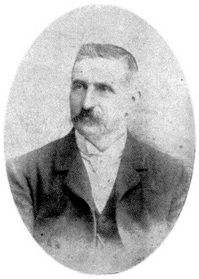
Meanwhile in 1881 a young man named Colin Bain Calder had been living in Dingwall, described as a coach painter, probably working for a carriage company in the town. He was twenty-one and from a local family, his father, a carpenter, dying when he was young, the father’s grave can in St. Clement’s churchyard right in the centre of the town. So Colin and his siblings had been as a result brought up in the then town's poorhouse, the site of today's Crown Guest-house.
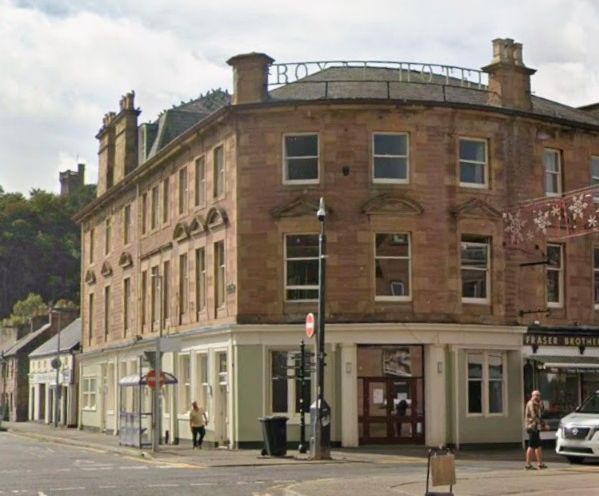
High St., Dingwall
Organised football would reach the Northern Highlands at Golspie and Brora in the late 1870s. By contrast Inverness did not see it until 1886, Elgin in 1884 and Dingwall in 1888 so any games, in which Bain Calder may have been involved, must have been largely ad hoc. Yet it seems nevertheless he in Scotland had been bitten by the football bug and it was a contagion he carried to Argentina, where in 1889 he was in Rosario in charge of the Central Railway paint shop.
In Rosario there had been in existence a cricket club, founded in 1867, which gradually expanded its scope and in 1886, presumably taking advantage of the new railway connection to Buenos Aires, was to play the first ever inter-club rugby game in the country; against none other than Buenos Aires Football Club. However, it did not in the beginning play round-ball football, a sport workers for the Central Railway would nevertheless get together to practice. And with permission from their employer they did it on land by the railway yard, they simply called themselves “Workshops”, using an old railway wagon as changing room, club-house and grandstand.
And it was the lack of more organised football that almost certainly then prompted those same workers to meet in October 1889 to discuss forming a sports club. A new name, the Central Argentine Railway Athletic Club, replavcing Workshops was suggested. There was also intense discussion as to whether it should concentrate on football or include cricket. The decision was for football only. And the October meeting was followed by a further one on Christmas Eve that same year formally to found said club. A committee was elected. The secretary was Mr. Chamberlain, the vice-president was Thomas Hopper, quite possible a Scot, and the President, who had attended the October meeting and, perhaps as a Highlander, like the founders of Queen’s Park with little interest in cricket, spoken out strongly in favour of football-only, was Bain Calder.
That Christmas meeting means that The Central Argentine Railway Athletic Club, or as it is known today, Rosario Central, is Argentina's oldest football-only club yet one of the first tasks was to find opposition. There were no other teams in town so it would have to start with be content with games against the crews of visiting ships. However, it would not remain alone for long. The Rosario Cricket Club had soon formed a team to play association- rather than rugby-football. And then there was St. Bartholomew's School and George Robb.
Bain Calder would marry in Rosario in 1890. He would meet his wife there but she too had been born in Scotland, in Addiewell in West Lothian. She was the daughter of Irish immigrants to Scotland, who had moved on to Argentina in about 1878 and her maiden name was Green, Mary Green, elder sister of again and at 10-year old club founding member, Miguel (Michael) Green. And Bain Calder himself would remain president of the CARAC for eleven years from 1889 until 1900. He would be followed as president by another Scot, William Ball, a chemist, born in Dundee in 1859 but in Rosario at least since 1886. Miguel Green himself would become club president in 1909, in the meantime the rule restricting its membership to its parent railway company employees only was at his suggestion lifted in 1903, with a name-change to Rosario Central, the name its still has.
However, in 1907 Colin Bain Calder would die at the age of just forty-six. He would, as a result, not quite see his club win effectively the Rosario League. That would happen for the first time in 1908. But since then the club he had nurtured had gone on to take not just the local competition but on five occasions the national title, including 2025.
_________________________________________________________________________________________________________
George Robb
Born: 1862 Died: 1928
Almost the full ten years ago a blog mentioned in little more than passing the part George Robb, Scot and school-teacher, had played in taking football to Argentina's second city, Rosario. Just then little more was known about him but in time notice was received of an article published in the Rosario paper, El Cuidadano.
The subject of the piece was in the strap-line - George Robb, otro pionero del futbol en Rosario - "George Robb, the other Rosario football pioneer". It covered the story with accuracy and in depth, creating a framework, from which more knowledge can be hung, filling in of some gaps too.
George Robb was was born in 1862 in Monymusk in Aberdeenshire. His father, James, was a somewhat itinerant tailor from Cruden. His mother was from Alford but by 1871 the family, as was, three sons, James Jnr, George himself, Alexander, and two daughter, Margaret and Mary Ann, had moved to Fettercairn, then in Kincardine. But by 1881 they had moved on to Aberdeen with the addition of a fourth son, William, and two more daughters, Jessie and Jane, George already at eighteen a Public School Teacher but with twenty year-old James Jnr. gone.
In fact both James Snr and his wife seem to have died within a year of each other still in Aberdeen in 1900 and 1901 but the Volpe article suggests that Robb and other members of the family, including Mary Ann, might have travelled to Argentina as early as 1886. It is possible but seems unlikely, as Mary Ann would have been just seventeen at the time but with one proviso. Her younger brother William would travel to South America, when exactly unknown but in 1899 he is recorded in Peru as a farmer and marrying, his wife of Anglo-Peruvian origin.
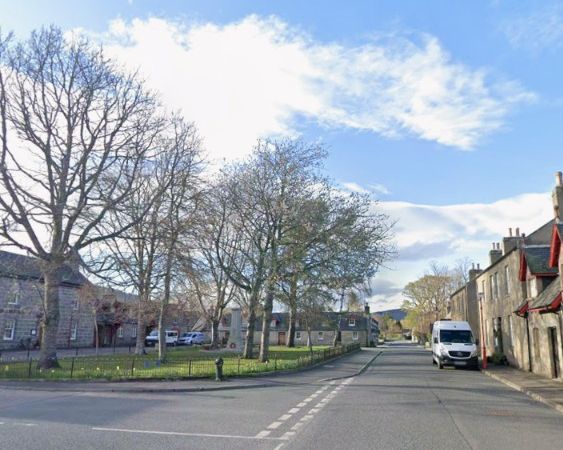
The Square, Monymusk
However, it is known that, with Alex Watson Hutton having in 1884 founded his Buenos Aires English High School, George Robb would first be appointed from Scotland to the new establishment, in August 1888 in the city's Anglican church marry Margaret Russell, seven years his senior, the daughter of Edinburgh's Master of Works and a Music Governess and was in 1888 appointed Director of the St. Bartholomew Day School with effect from 1st October. It meant a move to Rosario two hundred miles north to live on the same block as the school itself and close to the again Anglican church, from which it took its name.
At St. Bartholomew's, as Margaret ran the junior section, he introduced for the older boys football, previously played at Watson Hutton's school and brought to Rosario by another teacher, Isaac Newell, he from England, for whom in 1903 Newell Old Boys would be named. He would also play himself. On 26th July 1888, having just arrived in Rosario, he was at left-back for a game played between an eleven from the city and one from Buenos Aires. The result was a 2-2 draw, Buenos Aires twice coming back.
And the introduction would translate into a Robb's School (Past & Present) team, which would in 1896 be part of a first manifestation of a Rosario Football Association League (RFAL) with Robb himself an initiator and referee, and again in 1897 and 1899 after it had been formalised at at meeting at the school with Robb as President. Moreover, in the Robb's School teams of 1897 and 1899 was Ricardo Olavarria Le Bas, who when the replacement of the RFAL, the Liga Rosarino de Footbol, was founded in 1905, was also its first president.
By then, however, George and Margaret Robb had both stepped back from St. Bartholemew's in 1904 founding their own school, the English Commercial College and it continued to run successfully until the same pressures that in Buenos Aires changed the game there, the reduction of the British community with the outbreak of The Great War, caused closure. The couple and their by then two daughters, their only son having died in infancy, returned to Scotland to live in Edinburgh at 12, Marchmont St. in Morningside, George working as an accountant. And it would be from that same address, survived by Margaret, who would die in Canada in 1933, he would pass away at the Royal Infirmary in 1928 at the age of sixty-six, another of the Scottish pioneers of the beautiful game across our World, who remains un-lauded in and by his homeland.
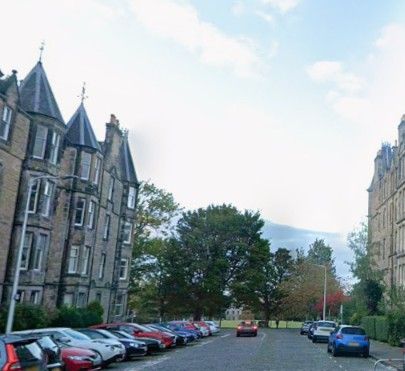
Marchmont St., Edinburgh
_________________________________________________________________________________________________________
John Caldwell
Born: 1863 Died: 1942
Sometimes when researching for SFHG it has been necessary to journey to the countries in question. But sometimes the information simply arrives, and, from his descendents, the story of John Caldwell and his pivotal, early roles in both the Scottish and Argentine games is one of them.
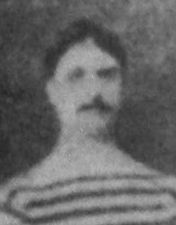
In an interview recorded in a local news-paper article in 1934, when he was over seventy years old, he recalled almost the earliest days of football not just in Partick, where he was born, but in Scotland in general. He thought he was at the time of publication the oldest, surviving member of Partick Thistle F.C. He was certainly amongst the oldest. But his memory went back further, to Partick F.C., formed in 1875 and the area's original, senior club.
John Caldwell had been born in April 1863 at 360, Dumbarton Road in Partick. He would grow there or thereabouts too, close to where a little under a decade later the World's first international would take place at Hamilton Crescent.
His father, Robert, came from Houston in Renfrewshire and was a Brass Finisher. His mother, Catherine, was a Partick native. It was there too that she died in late 1871 aged 32 , at which time John aged eight with his brothers seemed to have been taken in by their paternal aunts. Certainly, with their father nowhere to be seen, in 1881 he, aged 17, and brother Archibald were in Glasgow and in their care.
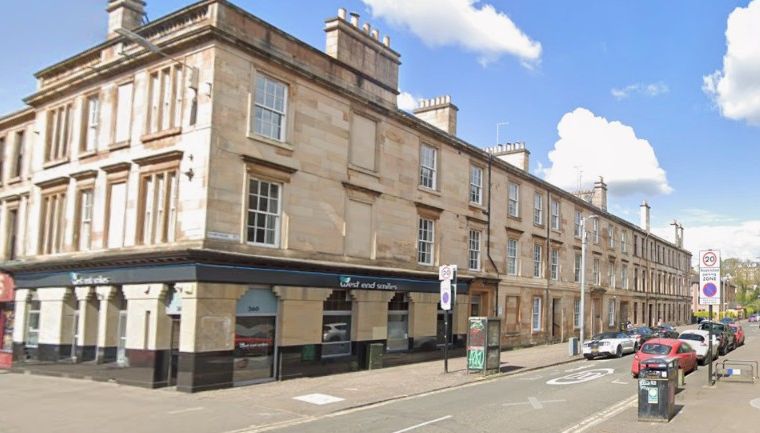
360, Dumbarton Rd. Partick, Glasgow & Hamilton Cres.
When John took to football is unknown. But it is clear from simple dating that he would have been in his early teens, when both Partick and Partick Thistle FCs came into being, and in his early twenties when Scottish, amateur football had its first Golden Era. 1881 and 1882 saw the national team trounce England home and away by large margins. And it was thought that Caldwell was a forward, a left-winger, or rather in the 2-2-6 formation then used, one of the left-wing pairing, But it turns out he was a left-back, who made his debut First Team appearance for Partick Thistle on 20th December 1884 in a 4-4 draw to Dundee Harp. He was thus twenty-one years old and is said to have previously played for Cowlairs.
In fact he was to make a total five appearances for Thistle that same season but then he seems to have dropped off the radar. The following season there were no appearances. Perhaps he returned to Cowlairs in the fluid way that was the case in that era. Yet he would be back. In 1886-87 he would make twenty appearances, almost half of that season's fixtures, at which point the twenty-three year-old might have thought that for him a career in professional football in England might was a possibility, as it would be for many of those he played both alongside and against. But he was clearly not regarded as permanent by the club never mind others. In the 1887-8 season, recorded as having returned from a long injury, he once again became a bit-player.
Once more he would feature on just five occasions, playing what would be his last game on 25th February 1888, a 3-2 home defeat to Battlefield but that was it, it seems, at least for the senior club. He is then said again to have re-joined Cowlairs, the team of the Springburn railway works and very pertinent to what was to come. As John Caldwell interviewer puts it, in 1889 "he secured an appointment with the railways in Argentina". Presumably there he first worked in Buenos Aires for it was there that quickly he became involved in football in the country's capital. Amongst its British community the game was embedding. Matches are recorded from 1889, with by the Southern Hemisphere winter of 1891 enough teams to allow the formation of a first league. It consisted of five teams, Buenos Aires FC, Belgrano, the Buenos Aires and Rosario Railway, St. Andrew's and Old Caledonians. And it was these two last teams, which finished the season equal on points, the former that of the Presbyterian church that still exists in the city and was the source of one of the Argentine's major universities, the latter that of the company, Bautaume and Pearson, that had been contracted to install the local water and sewerage systems.
The Scots influence in St. Andrews is obvious. Bautaume and Pearson employed a large number of Scots too, hence the team name. And the connections with Scotland were strong and surprisingly current. The first Scottish Football League had in April 1891 finished with a similar impasse. Dumbarton and Rangers both had twenty-nine points. A play-off match was decided upon. Held on 21st May it too finished undecided, a 2-2 draw. The title was shared. And just months later eight thousand miles away the solution was replicated. On 13th September Argentina's first champions met and this time there was a victor. St. Andrews defeated Old Caledonians 3-1. Gibson, Scott. Riggs, Angus, Phillips, Smith, White, Clark Sutherland, Wilson and Corsner were defeated 3-1 by Carter, Penman, Waters, Francis, Barnes, A. Buchanan, Moffat, Alex Lamont, one of the three most important figures in the foundation of the Argentine game Morgan, J. Buchanan and a final player of some note back in the old country, twenty-eight year-old John Caldwell.
How long John Caldwell stayed in Argentina is unknown. Contracts at that time to South America were normally four years. It meant that the Glaswegian may have returned home in 1893, which seems to corroborated by his seeming non-appearance when the Argentine League resumed after a pause that same year and also by the fact that in 1895-6 back in Partick at the Jags he was Secretary.
However, John Caldwell's association with Argentina was not at an end. In fact he was to spend much of his remaining working life in the country, only returning to Scotland on retirement in 1923 this time from none other than the Central Argentine Railway, with its Rosario Centra. Indeed John Caldwell might already have been on his way to the River Plate that same year or shortly after for a second four years, returning in late 1901. He does not seem to be recorded in the census earlier that year. Yet he was without doubt in Scotland in 1902 since in that year in Kilmacolm he married Margaret Moore, although appearing to leave almost immediately, for either Buenos Aires first or directly to Rosario. The reasoning is simple. In 1903 Margaret gave birth to a son, Robert Reid Caldwell, he named for his grandfather and one of those aunts to have raised his father but she did so in Argentina. And it would be Robert Reid with his parents who can be seen travelling to and from Britain over the next twenty years and would return to Scotland, to marry there and resume the family connection with home.
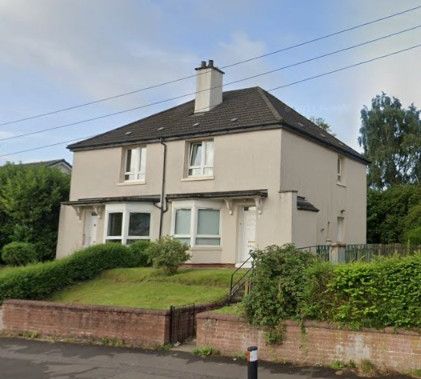
21, Knightcliffe Ave., Glasgow
Robert Reid Caldwell, after a working life as a Radio Operative on merchant ships, would die in Glasgow in 1974.
John Caldwell himself died in 1942, at the age of seventy-eight and back within touching distance of Partick, recorded as a retired Railway Traffic Inspector but for the moment nothing more, although the house is still there and deserves a plaque.
_________________________________________________________________________________________________________
Alexander Lamont
Born: (1870) Died: (1927)
It is commonly agreed, even accepted knowledge in Argentina that that country's Father of Football was “El Ingles”, Alexander Watson Hutton. It is less common knowledge but nevertheless true that he was not English at all but a Scot, born in Glasgow, raised in Edinburgh. It is even less commonly accepted, firstly, that his footballing paternity was limited to Buenos Aires and specifically not to the Argentine's second city, Rosario. Nor, secondly, is it recognised that, even if he were the Father of the Argentine game, he did not act alone or was even its founder. True he became in 1893 the first President of an Argentine Association Football League (AAFL), in reality just the Buenos Aires league, but a president doth not a committee make nor was the organisation, over which he presided, the country's first football or even its first league.
And here is an,perhaps the explanation. Two years earlier than the 1893 AAFL, in 1891 a first football league had been formed in Buenos Aires, also called the AAFL and ran for a year. Watson Hutton was not involved in it other than referring. He had other things on his plate. The President was a Mr Woolley, the Englishman Frank Wooley, a railway man, who unexpectedly would die in office, but the Secretary, the organising force behind it, was one Alexander Lamont. That might have been interesting but not crucial but that same Alex Lamont would also be the Secretary to Watson Hutton's presidency of the AAFL. He was effectively the man, clearly with a deep and enduring love of football, who took on the day-tp-day running of not one but both organisations, giving the second reincarnation such a solid start that it exists to this day. Yet Lamont is almost never mentioned and this is an attempt to tell what little we have known of his story and what has possibly emerged more recently.
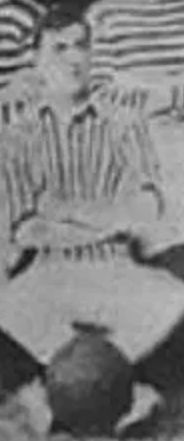
Watson Hutton had arrived from Edinburgh in Buenos Aires in 1882. He was not quite thirty and a qualified teacher previously at George Watson's. He came, recruited by St. Andrews, the school associated with Buenos Aires's Presbyterian church of the same name. Indeed the church, still Presbyterian, retains it to this day.
As to Alex Lamont. He seems to have arrived in 1890 and to work for the Great Southern Railway Company. He may have also been seconded to the St. Andrew's Church and School to help James Dodds with their reorganisations, which seem to have been reaching a point where compensation from the government could be agreed. Construction of the new church at its present site two blocks from English High School first premises would commence in 1893.
In the meantime English High and the Watson Hutton faced a different set of problems. In football terms by 1891 his first crop of boys would have reached an age, where some could play football at a level competitive with men but most could still not. They were not ready. In addition the school was again on the move. Rising numbers would see it in its third premises in seven years with all that implied for him in terms of reorganisation. And on a personal level there may also have been the first signs of illness in his wife, the former, also Edinburgh teacher, Margaret Budge. An illness that would soon prove fatal.
Thus it was understandable Watson Hutton and his school had not wanted to or could not in 1891 become too involved in the new league that consisted of just five teams, Buenos Aires FC, Belgrano FC, both British social clubs, Buenos Aires and Rosario Railway, the club for those who ran it, and the two teams that would tie for first place, St. Andrews, with Lamont as captain, and Old Caledonians, from the company constructing the city's water and sewerage system. Old Caledonians was a team of Scots, perhaps just Glaswegians. St. Andrews was equally Scots and connected not so much with the eponymous school but the Church.
With St. Andrews and Old Caledonians on an equal number of points at the end of the 1891 Championship a means of separating them had to found. It was a carbon-copy of the situation in Scotland just months earlier in the first year of its league. A play-off had resolved the situation in the Auld country and with news clearly travelling fast the Scottish footballing community in Buenos Aires adopted the same solution. An Argentine play-off took place and St. Andrews won the trophy with Charles Douglas Moffat, scoring the winning goal. So when Douglas Moffat would say in a newspaper interview many years later that Alex Lamont was "Alma Mater" of Argentine football with another figure, Arnot Leslie of Old Caledonians, his right-hand man he must have been remembering precisely this period if not the very moment.
It then seemed as if 1892 would then be set up for a second year of the league. But in the end there was nothing because of Frank Wooley's death. That is not to say that there was not football. There were friendlies played and there was necessary reorganisation, perhaps negotiation with Watson Hutton, which needed a season to bear fruit, which would consist of five teams but only one of the originals, the Buenos Aires and Rosario Railway. Alex Watson Hutton was President, Alex Lamont once more Secretary, he with Douglas Moffat having moved to one of the five, the Great Southern Railway-based Quilmes club, Lamont also refereeing.
However, again the set-up would only be for just a season. With him still Secetary Alex Lamont, announced that he would be leaving for Rio de Janeiro. Whether he was being transferred or his contract, normally four years and with arrival in 1890, had simply come to end is unclear but by the end of April he, having prepared the league for the 1994 season and perhaps having played a fixture or two now for a third team, Lomas, was certainly gone.
And that might have been the last of the man. But the name was soon to reoccur and once more in a footballing context. In October 1901 and in Brazil a scratch team organised by Oscar Cox from Rio de Janeiro travelled to Sao Paulo, where against a representative one from the second city it played two friendly games, both drawn, the first 1:1, the second 2:2. And a gentleman already clearly with considerable soccer kudos, openly accepted and praised by both sides for his lack of bias, had travelled with the Rio players and refereed both matches. His name was A. Lamont.
Which leaves the question, who in fact was Alex Lamont, or was it Alex Lamonts? In truth the answer is that as yet no-one knows. There is a picture from 1891 but it is of a man who in age could be anything between perhaps twenty and thirty-five. But there are clues. The first is his arrival in 1890, the second that he was a player at least from 1891 to 1894 in the Argentine, the third that in Brazil he appears no longer to have been. The fourth is the kudos he seemed very easily to have enjoyed in both countries and the fifth a 1896 visit, a return even, to Buenos Aires.
In the record of that visit Lamont's gives his employment as "diverse". It did not rule out him being a clerk. But it did give an age, 25, which gives a birth-date of 1870 or 1871. It could also almost tie up with the previous 1890 arrival of clerk, if he had travelled once he had reached the then age of maturity, 21. However, Brazil suggests an older man not beyond running around but past playing, so aged perhaps between thirty-five and forty-five. That gives a date of birth between 1855 and 1865.
Two Alexander Lamonts were born in Scotland in 1870 and 1871, one in Tradeston in Glasgow and the second at Millhouse in the deeply rural Parish of Kilfinan in Argyll. It could be either as both grew up with football exploding into the Scottish consciousness but the first was initially the more interesting, except there was a problem. He had died at the age of seven.
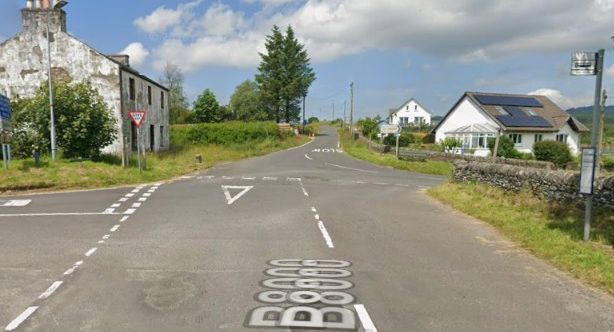
Millhouse, Argyll
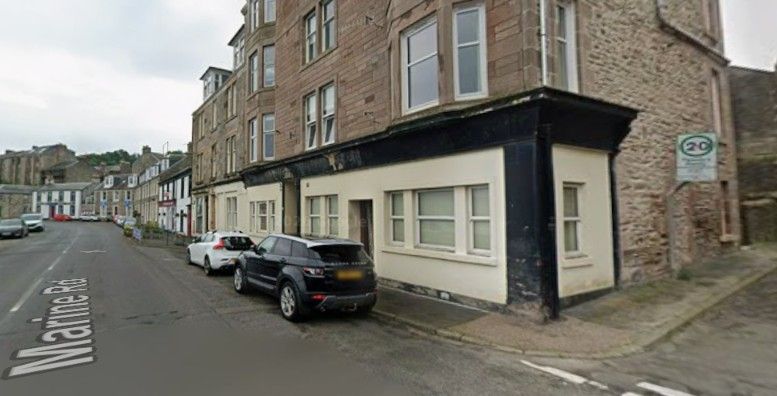
Marine Buildings, Port Bannatyne, Bute
It left the Kilfinan Lamont. His father was Colin, his mother Elizabeth McGregor and in 1871 he had an elder brother and elder sister. In 1881 the family had move to Port Bannatyne on Bute and he had two younger brothers and a younger sister. A decade later the family was still there with two more children and again in 1901, but in neither year was there an Alexander. If it was him then he was known already to be in Buenos Aires in 1890 and in 1901 he was in Rio and Sao Paulo.
Yet once more a potential difficulty arose. A 19 year-old seaman, Alexander Lamont, was reported drowned in the Orkneys on 16th May 1888. and may have been the Kilfinan Lamont. Bbut then perhaps not. 1888 less 19 leaves 1869 or even 1868, not 1870 and there were five Alexander Lamonts born in those years including one from Firth and Stenness, spefically on Mainland Orkney. If it were him that had died then the Kilfinan Lamont might still be the one.
However, there was still the possibility of an older man and thus other potential birth-dates. In fact here were thirty-three Alexander Lamonts born in Scotland between 1855 and 1865 with almost no further clues. It makes more precise identification impossible except perhaps in one case, one case with possible kudos.
In 1875 a teenager, a Highland and Island boy growing up in the Lowlands as most members were, Alex Lamont was playing for Vale of Leven F.C.. In January 1876, he is leading the line in the Vale’s match against Queen’s Park in a Scottish Cup semi-final. They lose 2:1 but for the next three seasons Vale of Leven will be the best team in Scotland, lifting the Cup. Lamont is by then not in the team, the main central forward is John McGregor, but in 1930 he is shown in a Vale of Leven F.C, reunion photo with 74 his given age. That would give a birth year indeed of 1855 or 1856.
In those precise years the births of surprising few Scottish Alexander Lamonts are recorded. There are just seven. However, one is in Cardross in Dumbartonshire, and not five miles from Alexandria, the home-town of Vale of Leven F.C. and including Renton. Moreover, at 15 in 1871 that same Alex Lamont, is living with his parents, Donald and Flora, incomers both, born on the Isle of Mull, on Main St., Alexandria, a short distance from The Vale's ground and in 1881 he, aged 25, is still in the Vale. Yet by 1891 at 35 he was apparently gone, at an age when he could still have been perhaps a player but stepping over to refereeing he is apparently gone possibly to return later in life, if not to the Vale then at least to Scotland, perhaps not by 1901 or 1911 but possibly on retirement between 1915 and 1920. Hence the 1930 photograph.
But there is an explanation. And in 1921 there was an Alexander Lamont living on Main St. in Alexandria, aged sixty-five and, whilst he was not there in 1911, he had been in 1901 and as Lammond in 1891 also. And neither was he ever a clerk. In 1921 he was an Engineer's Labourer, in 1901 and 1891 a Yarn Bundler. In short South American Alex Lamont was not he but Klifinan and Bute Alex was still a possibility.
And this is where the inestimable Andy Mitchell stepped up. He pointed to the death of an Alexander Lamont in 1927 in Johannesburg, South Africa, since found to be more precisely 156, Prairie St., Rosettenville. He had even traced the grave to the local Brixton Cemetery. Moreover, the deceased was fifty-seven years old, so born in 1870 and had been working with the city's Engineer's Department as an accountant, a logical progression from a young clerk. Furthermore he, living again in Johannesburg and described as a Banker, had married. His wife was the former Edith May Pope. They were wed in 1903 in Durban, where she was living, although she was born in 1867, in Glasgow and the family had lived in St. Andrews, her mother Scots and her father an English, Wesleyan minister.
But let us at this moment take a step back to Scotland. On birth Kilfinan Alex is actually recorded as the son not of Colin, but Coll, the Gaelic equivalent. And importantly, there would be another Coll Lamont, who would come into this World and almost eight and half thousand miles away. On 11th June 1905 in Johannesburg, South Africa Edith Lamont nee Pope gave birth to a son, Coll Alistair, Colin Alexander, with the contention that he was named for his father but more so for his grandfather, for, as Alexander Lamont of Johannesburg is specifically mentioned in Bute's Coll Lamont Snr's will, grandfather Coll certainly was. Indeed Coll Jnr, his mother and his father can be seen travelling back and forth to the UK. In early-ish 1906 it was Alex on his own, a clerk, in 3rd Class. His mother had died in 1905. And in 1910-11 Edith makes the return trip, this time with "Cole" A.
Of course still none of this proves conclusively that Johannesburg Alexander Lamont was Buenos Aires Alex Lamont but there are important positives. Firstly, it eliminates the possibility that the Kilfinnan Alex drowned off Orkney. Secondly, the timings work. Four years in Argentina might have been followed by four, perhaps eight more in Brazil taking us to 1902, then a chance to head for and spend thr remainder of his days on Africa's southern tip.
_________________________________________________________________________________________________________
Alexander Watson Hutton
Born: 1853 Died: 1936
Alex Watson Hutton is considered and was without doubt "The Father of Argentine Football", if something of an adoptive one. In 1893 he became the President of the Argentine Football Association, from 1898 Alumni F.C., the club founded by former pupils of his English High School, would develop into the the best team in the country and remain so for a decade and his son, Arnold, would become for seven seasons a regular Argentine international.
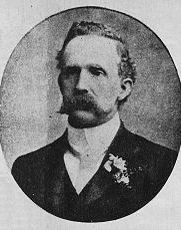
But, of course, the elder Watson Hutton was not an Argentine by birth. He was a Scot, his birth in the Gorbals in Glasgow but raised in Edinburgh. In fact the early Watson Hutton story is both complicated and not without pathos. He was born in 1853, the son of Fifers, his father a Grocer from Dunfermline, his mother from nearby Crossgates. But the family was to leave Glasgow with Alex aged just two, moving to Leith, which is where a series of tragedies struck.
Within weeks of arrival in the capital city in 1855 Alex's father died. His younger brother then passed away aged two in 1857 and was followed by their mother in 1858. He was therefore orphaned at just five to be brought up by first his grandmother, who herself would die in 1862, he by then just eight, and then be awarded an orphan-place at Daniel Stewart's, it a rugby school. That is, however, before he from there trained as a teacher at Edinburgh University, so aged twenty as the new football took hold in Glasgow and twenty-two as it arrived in Auld Reekie.
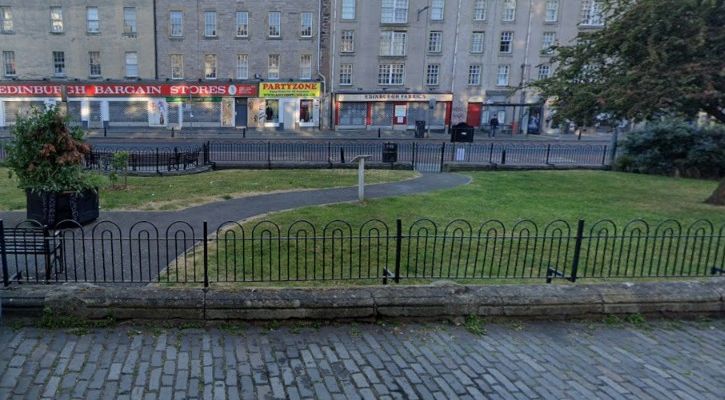
St. Patrick Sq., Edinburgh
And it as a teacher that Watson Hutton reappears in the record in 1881, boarding still in Edinburgh on St. Patrick's Place with a family, the Waters, where the elder sister is a Pupil Teacher and the younger one a Milliner. It was a year before at twenty-nine Alex would make the decision to take up a position in Argentina, in Buenos Aires at the St. Andrew's Scots School, where he stayed two years but not to return home. Instead in 1884 he opened still in the Argentine capital his own English High School.
The new school proved successful, allowing him, as a believer in the benefits of sport in education, to introduced football, playing in-school alongside his pupils and also outwith at a more senior level as the game gradually arrived with increasing numbers of British workers. It also allowed him to marry, his bride thirty-year old Margaret Budge, with whom he was to have three children, a son and two daughters, all Argentine-born. She was originally from Anstruther in Fife but had also been a teacher in Edinburgh before subsequently heading the lower school at the English High.
However, the occasional game was for the moment the limit of his involvement even as in 1891 the Argentine Association Football League was formed largely at the instigation of Alex Lamont, with Frank Wooley as President. In part that may have been because Margaret Watson Hutton may already have been unwell. She would die in August 1893 at the age of just thirty-eight. But there was also the death of Wooley in 1892, which resulted in no organised competition that year and Watson Hutton, with Lamont still doing the organising, willing or in 1893 persuaded to step into the breach and from that point, even after the departure of Lamont in 1894 and Hutton himself stepping down at President in 1895, he providing a figurehead around whom the sport could then evolve. It included in 1899 the English High School (EHS) joining the AFL's Second Division, being promoted and winning the First Division in 1900, as its Youth team won the Third, and in 1901 the EHS first team being renamed Alumni and with evolving teams dominating the game for much of the next decade.
Alex Watson Hutton would retire from his school, which still thrives, in 1910. By then he had also in 1902 remarried, his second wife, Catherine (Kate) Waters, the milliner, younger daughter of his Edinburgh landlady of two decades earlier. And by retirement he had also rather fallen out of love with local football as it was ceasing to be amateur. It would not officially be professional in the Argentine until 1931 but in the meantime had and would become increasingly shamateur. In fact his sporting interest would turn to rugby. He would be a member, eventually President, of the Belgrano club, in fact staying just by its ground. It had been formed in 1896, been a founder member of the Argentine Rugby Union in 1899, would last win the Argentine football championship in 1908 but would be relegated in 1916 and eventually disaffiliate completely from the AFA, whilst remaining a rugby powerhouse to this day.
Alex Watson Hutton would enjoy a long and local retirement during which he, Catherine and children would travel back to Scotland on several occasions but not to stay. In fact he would not pass away until 1936, then aged eighty-two, and at home just feet from the Belgrano Club ground still and only yards from the English High. He would be survived by Kate for almost two decades. Her passing would be in 1955, she aged ninety-one at her then residence, just one more street away from her, their previous home. And both are buried in the British Cemetery, itself just a mile and half away.
_________________________________________________________________________________________________________
Miguel (Michael) Green
Born: 1879 Died: 1947
In 1868 in Bathgate in West Lothian a Daniel Green married a Mary Gallacher. He was twenty and a chemical worker, she eighteen and had worked in a mill since she was at most ten. Both stayed in Blackburn, where she had been born the daughter of a Donegal father and a local mother. He had been born in Co. Londonderry in Ireland and was illiterate. On the married certificate he could only make a mark.
West Calder, West Lothian
And the following year they were to have William, their first of four children to be born in Scotland, followed in 1870 by Dennis and in 1872 in Addiewell by West Calder by Mary and James in 1874. And it is really Mary, who is the key to this story for at some point after last date the Greens were to leave Scotland and head south. In fact, at some point between then and about 1878 that journey had taken them and others in the Gallacher family to Latin America, indeed to Argentina and Rosario. And it was there in 1879 that Michael Hugh Green was born, Mary aged seven. And he was to followed by Susana in 1882 and Daniel Jnr. in 1885, all of them Scots-Irish by origin.
Quite what work Daniel Snr. had found in Rosario is unclear but it may already have been with the British-owned Central Argentine Railway, founded in 1863 and which two decades or so later was to recruit as a carriage painter a Scot from Dingwall in Ross-shire; one with a passion for football that on Christmas Eve 1889 would see the foundation of Rosario's first senior football club, then called The Central Argentine Railway Athletic Club, now simply Rosario Central, with its stadium still down near the old yards and its president for the fist eleven years that same Scot, Colin Bain Calder. Moreover, in 1890 Bain Calder would marry eighteen year-old Mary Green, the two families living as neighbours. And that same year, as Rosario Central fielded it first ever team in a game against a passing British ship, an eleven year-old Michael or in Argentina, Miguel, Green was its centre-forward.
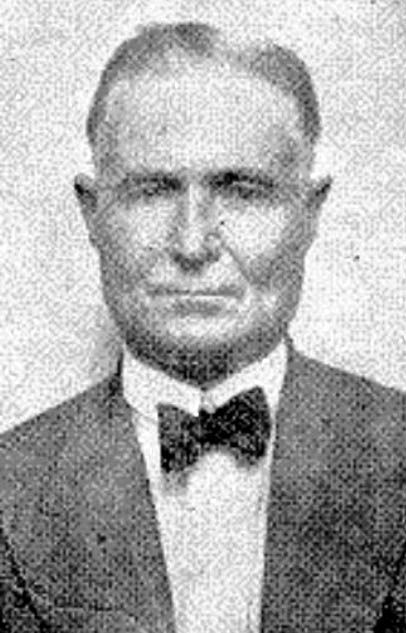
Miguel Green, working initially as a clerk, would continue to play for Rosario until retirement from the game in 1906 still at a relatively young age. By then his club from 1903 had been playing in the strong local league, so out of the eye of Buenos Aires and therefore international selection, and, despite winning its first national title in 1913, it would continue to do do until 1939. And as such he was joined in the Central team by his younger brother. The two, Michael and Danny, would play alongside each other for the two seasons from 1904, Danny hanging up his boots in 1911, by which time Michael had been Treasurer of the Rosario League in 1905, football in Argentina, of course, played in their winter but our summer, that same year had been deemed largely responsible for the bringing through of Zenon Dias, the first Rosario Central player selected for Argentina, and in 1909 was himself President of Central itself. Brother, Danny, would be Vice-President in 1911.
Both Miguel and Danny Green would live out their lives in Argentina. Danny would probably marry in 1915 in Rosario and have a family there with no date of death known. Miguel would seemingly not marry, dying in Buenos Aires in 1947 and to be buried in the city's Western Cemetery. But today his remains are to found in the British Cemetery in Chacarita, moved there in 1954 for reasons unknown.
_________________________________________________________________________________________________________
Arnot Leslie Snr. Arnot Leslie Jnr.
Born: 1840 Died: 1904 Born: 1870/1 Died: N/A
In 1893 at the end of the first season the second iteration of the Argentinian League the winner was new team, Lomas Athletic, a club at which there were three Leslies, three brothers. As players there was William and George, recently arrived back from school and football in Scotland. William was eighteen, a full-back, born in 1875, and George fourteen, a forward, born in 1877. And the team manager was Arnot Leslie, aged twenty-two, perhaps twenty-three.
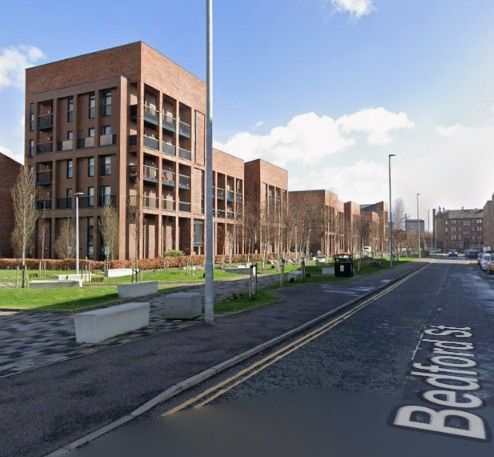
Bedford St., Glasgow
All three had been born in Buenos Aires, sons of Arnot Snr., born of Fife parents in The Gorbals in 1840, a tinsmith, who at twenty was living there on Bedford St., there had married, had arrived in Argentina in the mid-1860s, to build a successful plumbing business, and would retire in 1899 back to Glasgow, to Eastwood and a house on Monreith Rd., Newlands, which he called "Argentina" where in October 1904 he would pass away.
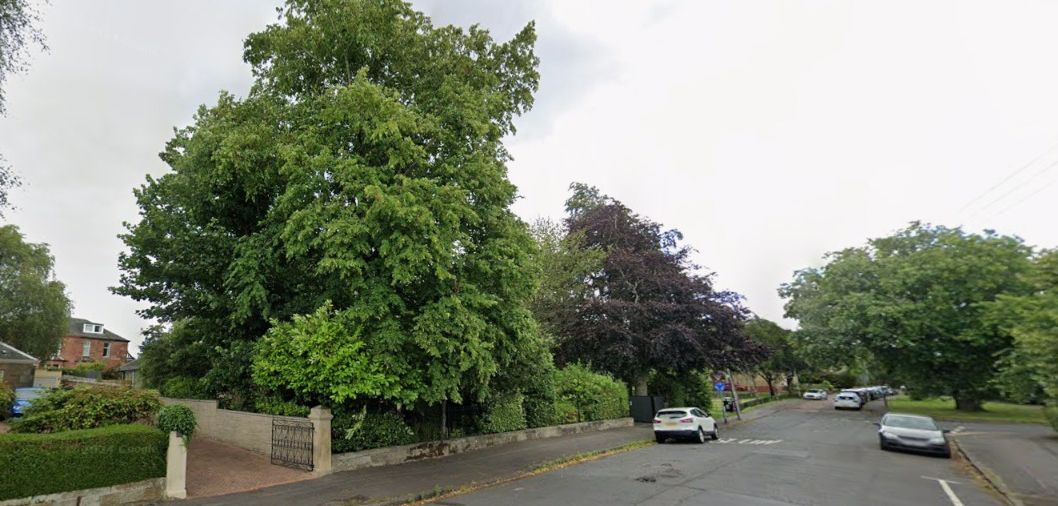
73, Monreith Rd., Newlands, Glasgow
Eldest son, Arnot Jnr., would return with him, seems to have sailed to Buenos Aires in September 1899 then back, doing the same trip in January 1902 yet be in Glasgow once more in 1903. A noted golfer that year he would be the Eastwood club-champion. However, in November 1905, if not earlier, he was again on his way again. Moreover, he would the same journey in September 1908, in October 1910, his mother had died in August, and December 1912, when he seems to have settled in Mar del Plata, a south of Buenos Aires, there in 1913 winning its golf club's first ever championship, which remains named for him.
Yet, despite his obvious prowess with the wee, white ball his first sporting impact had been with the larger, leather one. From 1893 to 1898 for five seasons in a row with him as trainer cum manager and his brothers in his Lomas A.C. and Lomas Academy teams he had been the Alex Ferguson of his time and place. As coach he would never lose an Argentine championship entered, whilst without him the club gradually slipped away; third in 1899, fourth in 1900.
That is perhaps coincidentally but notably until 1906 when for a season, seemingly with him back in the country, Lomas topped that year's league's Group A table only to lose the play-off against Group B champion, none other than Alumni.
However, the Mar del Plata reference to Arnot Jnr. appears to be the last. From that date he simply disappears. In 1912 he had been recorded as a merchant. He would have been about forty-three. He does not seem to have married. And there is as yet no known record of his death.
_________________________________________________________________________________________________________
James Anderson
Born: 1872 Died: 1932
It is 1902. Argentina are taking on Uruguay officially for the first time ever and we know the whole of the teams. In the Argentine eleven are Charles Douglas Moffat as is William Leslie and two of the Brown brothers. The Argentine captain is James Oswald Anderson, said to have been English and even with confirmation from FIFA. It states;
"He was born to English parents in Buenos Aires on 18 March 1872, five years after the first recorded football matches in Argentina,"
Except that, typical of FIFA, neither part of the statement is correct. Firstly, although there was a game of foot-ball played in Argentina, indeed in Buenos Aires and in 1867, it was not 11 a-side. It was in fact just eight a-side. Again we know the teams. Nor is there any evidence at all that it was to Association rules. The consensus is that it was a hybrid or more likely a version of rules that had been formulated in Cambridge, or since many of the players seem to be Northern English, Sheffield or similar. And what additional evidence there is seems also to indicate that hands could be used and there were no goals on the pitch.
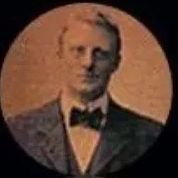
Moreover, in addition a simple check of records reveals that in 1891 James Anderson is recorded as a student of theology, that he studied at Bedford Modern School, had been born in Buenos Aires but was staying in Hertfordshire at the house of his Uncle Henry. The family is well-off. They have servants. Uncle Henry is a banker. And he had been born in Scotland.
In fact Uncle Henry, Henry David Anderson, was born in Glasgow. His father John Anderson, his mother Frances Burn were also both Scots-born. John Anderson is himself recorded in that same city with the family at 17, Woodside Place, as a South American merchant but with in 1869 his eldest son, William, Uncle Henry's brother, James's father, also recorded as a merchant in South America, doubtless part of the business, living and married in Buenos Aires. In addition James Oswald Anderson has a pivotal place not just in in Argentinian football history, lamentably all but forgotten except among a small group of experts, but in Argentine field, ball-sports more generally. He was much more than just a prolific forward during the dawn of the game there or the first captain of the Albiceleste, the Argentine national team. His contribution would go far further.
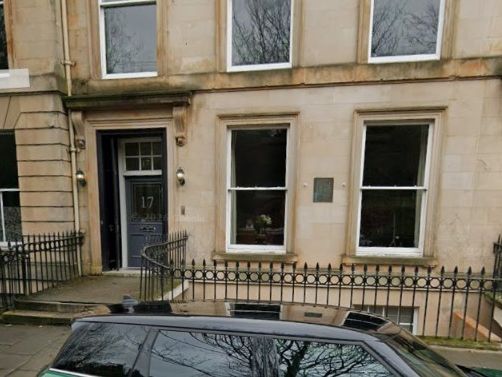
17, Woodside Terrace, Glasgow
On returning to Argentina James Anderson in 1895 joined Lomas Athletic. It was a good choice. As one of the six clubs that made up the 1893 reformation of the Argentine Association Football League it was managed by Arnot Leslie and, including two of his younger brothers in the team, had already topped the table in two successive years. And it would do so for three more years until 1898 with its alter ego, Lomas Academy, taking the trophy in 1896.
On the field James Anderson would play until 1902, winning three titles, and said to have scored an impressive 31 goals in 37 appearances. It would be his J.O. Anderson XI that in 1901 would face a Uruguay Select team drawn mostly from the Albion club in what was the first, if unofficial encounter between the two countries. It took place in Montevideo, a 2-3 away win. Then a year later he would again take the "arm-band" when the two countries met for the first time officially. It was a game once more played in the Uruguayan capital and in front of a crowd of 5,000, perhaps 8,000, and resulted in a second away victory by six goals without reply. Anderson scored the fifth. Then off the field he would serve as the AAFL Secretary and later as Vice-President.
Yet at the same time he was also encouraging and organising the other football, rugby. In 1899 he had founded the River Plate Rugby Union Championship, now the Argentine Rugby Union, and in 1904-5 was its President before returning to Britain. Moreover, between 1906 and 1912 he would remain in Britain, during which period he played Minor Counties cricket for Hertfordshire. But he kept a football connection. In 1913, on the occasion of the jubilee, the 50th anniversary of the foundation the FA, the English FA, he would be one of two representatives of its Argentine equivalent.
And he would remain in Britain until his death in Reading in 1932, a Diasporan Scot who unpretentiously had been among the main instigators of not just one but two of Argentina's great sporting passions.
_________________________________________________________________________________________________________
George and William Leslie
Born: 1875 (William) Died: N/A
Born: 1877 (George) Died: 1934
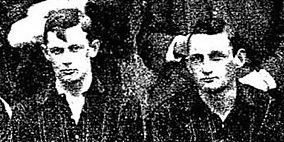
As already mentioned in the Lomas Athletic team that won the Argentinian league in 1893, three Leslies were involved. In the centre of that year's club photo, suited and booted is Arnot, Arnot Jnr, the team manager. At his feet is George, aged fourteen and a forward, and to his left are William, eighteen and a full-back, both recently arrived back from school and football in Scotland.
All three had been born in Buenos Aires, sons of Arnot Snr born of Fife parents in The Gorbals in 1840, a tinsmith, who had arrived in Argentina in the mid-1860s, had there built a successful plumbing business. And the two youngest boys were thrown straight into the fray as their club coached by the third would take the Argentine Championship not just on their first involvement but for four more seasons in succession.
Yet, in 1899 with the retirement of Arnot Snr to Glasgow and the return with him of his wife, Jessie, Arnot Jnr, another of his younger brothers, Alexander and his sister, Grace, the seemingly unchallengeable Lomas run came to an abrupt end. The team now Arnot-less would only finish third of four behind the winners, Belgrano, and Lobos, a mainly Irish team from a provincial town about 65 miles outside Buenos Aires and would start to break up. The reasons were threefold - Arnot Leslie's departure, seemingly at least one of Leslie boys having transferred allegiance, and to Lobos, William playing centre-half, Scottish centre-half, and finally the team had failed to fulfil two fixtures.
However, during this period and beyond the league was not the only game in town. There were friendlies between select XIs, "Allens", chosen by T. F. Allen of Lanus, versus Negronis, Andersons, including the Leslie brothers against the Browns, and any other combination that could be thought up. For example, “England” played “Scotland-Ireland-Wales”, the latter winning 7-0 with a team that included both William and George, Anderson again and the oldest footballing Brown, Jorge. Moreover, in 1901 a select XI representing Argentina was put together by Anderson and in 1902, captained by him, the first official international took place. In the former George Leslie, still with Lomas, played and scored the first of his team's goals. In the latter it was William, now with neighbouring and rival club, Quilmes, who took the field in 6-0 win.
Meanwhile 1900 had seen a slight improvement in Lomas's results, finishing second but with fewer than half the points of champions, English High School. But it was to be a false dawn. In 1901 it propped up the table and did so again in 1902 even though new team, Barracas, had joined. Furthermore, George Leslie seems to hung up his boots, later to become Lomas's Honorary Club Secretary, and also in 1902 to have married. This whilst William played on, Quilmes also dropping down the league, in 1904 even finishing in last spot.
George's wife was Isabel Dodds, the grand-daughter of James Dodds of St. Andrew's Church, who arrived in Argentina in 1844 from Scotland in a second wave of immigration, and the daughter of one of the founders of Lomas, Thomas, indeed the club's first president. The ceremony actually took place at St. Andrews Church. Fife via Glasgow had married Berwickshire via Argentina's original Scottish colony, Chascomus, and was followed in 1903 by George with his new wife travelling to Scotland to see his parents, her new parents-in-law.
And George and Isabel Dodds must have remained married until at least 1913. They travelled to Britain together that year but with no sign of children. But then she simply disappears. Perhaps she was a victim of the epidemic of Spanish flu that swept South America in 1918 and 1919. But whatever had happened in 1923 George remarried. His second wife was Olive Gray, with whom he had three children, two girls and a son, Gordon. George Leslie died in 1934 in Buenos Aires, before which the family had returned on several occasions to the old country, where there was and still may be family.
As to the other Leslies, the non-footballing brother, Alexander, is known to have died in Buenos Aires in 1947. And of William there is no record after 1940, when he perhaps travelled alone to Britain and an address in Torquay, having also done a similar journey on a number of occasions before that date. The proviso is that there was just then and born at about the same time, 1880, another William Leslie in the Argentine capital with the possibility of cross-over. Perhaps there will be future clarification. Which finally leaves Arnot Jnr. He can last be seen travelling to the UK in 1931, seeming again never to have married, in the interim also having travelled back and forth a number of additional times. Bbut after that there is nothing, although there is the possibility that he had moved to Montevideo and simply off the footballing radar or, indeed, any other.
_________________________________________________________________________________________________________
Jorge Brown}
Born: 1880 } + five brothers Diego, Carlos, Eliseo, Alfredo, Ernesto and and a cousin, Juan Domingo
Died: 1936 }
A James Brown had been among the very first British immigrants to arrive in Argentina after its formal split from Spain in 1816, after which there was still iinstability caused by a nine-year War of Independence. Said to be from Lamington by Biggar, he and his wife-to-be, Mary Hope, with two hundred and twenty others, mainly Border Scots cleared from the land and given their passage as a loan, had arrived on the ship, "Symmetry", from Leith and already in 1825, destined for an agricultural project just south of what was then Buenos Aires.
The project would fail, presumably the loans never paid back, but the family remained in their new homeland, what had they to go back for, gradually prospering. And eight of the Scots-Diasporans' grand-children, seven the sons of their youngest boy, also James, and his equally Diasporan wife, Eliza Gibson – Jorge, Ernesto, Eliseo, Alfredo, Carlos, having learned his game in Britain, Tomas and Diego, the eldest, and their cousin, Juan Domingo or Dodds – were into the new century to play for Alumni, the second ever, after Lomas, of their adopted country's great teams; with the first five of the brothers listed and their cousin over almost a decade and half to 1916 also becoming Argentine internationalists.
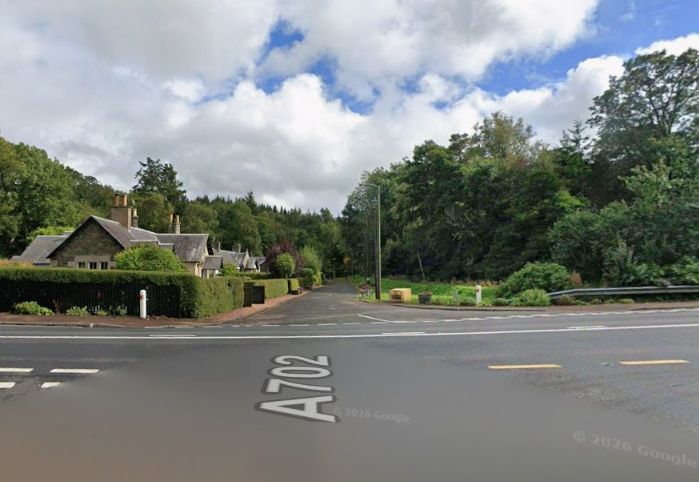
Lamington

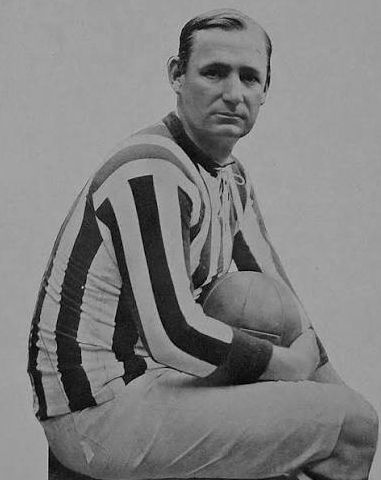
Jorge Brown
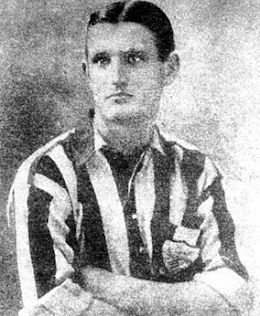
Ernesto Brown
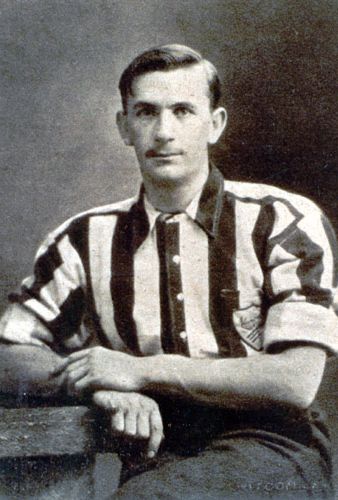
Carlos Brown
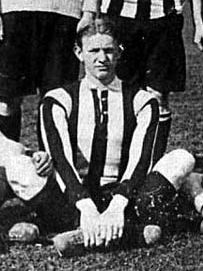
Eliseo Brown
Alfredo Brown
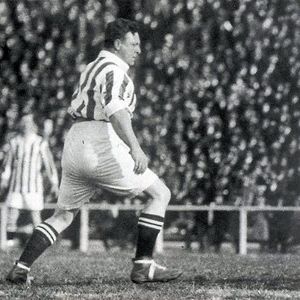
Juan Domingo (Dodds) Brown
However, in 1899 the Argentine League was reorganised into two divisions with the First Division topped by Belgrano,, whilst the new Second Division would be won by Banfield. However, runners-up and effectively promoted would be a new, young team emerging from Alexander Watson Hutton's English High School, one that in essence would be the future of Argentine football for the next decade. It would the team to be promoted, in 1900 run away with the top-flight with its reserve team essentially replacing it as second in the second and the senior eleven as follows.
J. McKechnie; Jorge Gibson Brown, Walter Buchanan; Andrew Mack (captain), Charles Buchanan, Ernesto Brown; H. Jordan, Eugene Moore, S. Leonard, John Moore and W. A. Jordan
It was clearly a families' concern. The two Moores, the Buchanan brothers and McKechnie had all come from Lobos. In addition there were two of the Brown brothers, Jorge and Ernesto (George and Ernest), the Jordans and 24-year old, Anglo-Irish, Andrew Mack, nicknamed El Colorado after his red hair, who had arrived in Buenos Aires in 1897 and was teaching at the school. Between them they had the championship won with two games to spare and it would be the starting point for league wins in nine of the next eleven years under the name they would be known by from the following season, Alumni.
Jorge Brown, born in 1880, had begun playing as a young teenager for the English High second team, when English High had in 1895 stuttered and dropped out of the league, had at sixteen joined Palermo in 1896, then Lanus in 1897 before returning, aged 20, in 1900, to the old-boys’ team and remaining for twelve seasons. From 1902 he would also go on to play for Argentina twenty-three times. This as Ernesto, born 1885, a left-back, would between 1902 and 1912 turn out for his country on twelve occasions and Carlos, born in 1882 and also a defender would be alongside him for two caps.
In 1901 Alumni had been victorious in all its games, conceding just one goal and already had the trophy with three games to go. In 1902 it was seven of eight and in 1903 nine of ten. Then in 1904 there was a slip to second spot with only five of ten won, even as Alfredo, born 1880 and with between 1906 and 1911 eleven caps, had arrived and was league top-scorer, replacing Jorge.
However, in 1905 normal service would be resumed with ten wins of twelve, as it would be in 1906 also, seven of eight and not just Eliseo and Juan Domingo now in the eleven. Juan would be play in defense and over the decade from 1906 represnet his country thirty-eight times whilst Elise would be top-scorer in his own right, as he would be for the next three years, also being called up internationally ten times over the next five seasons.
It meant that by 1907 seven Brown were active on-field as Alumni with six in its team, both full-backs, a half-back and three forwards, and seventeen wins of twenty again claimed the league title, as it would do at all but one attempt to 1911. But that would be it. In 1912 the club essentially folded. In 1913 it was dissolved with only Jorge, Ernesto and Juan seeming to play on, all at Quilmes, Juan to 1916.
_________________________________________________________________________________________________________
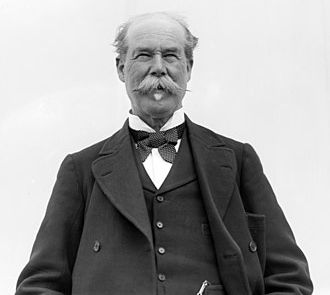
Sir Thomas Lipton
Born: 1848 Died: 1931
As far as is known Thomas Johnstone Lipton, 1st Baronet, never obviously played football, although born perhaps in 1848 or 1850 and thus only in his early- or mid-twenties when the explosion of the game began in Scotland. At six feet one inch he might have made a good centre-back had they existed at the time. But he clearly knew the game, perhaps from ad hoc matches on Glasgow Green, and had affinity, a soft spot for it, becoming later in life first the sponsor at the international level in South America of the Copa Lipton, a fore-runner of the Copa America, and then at club level of a competition, the Lipton Trophy, a prototype for the European Cup and therefore today's Champions League.
Tommy Lipton was born of Protestant Irish parents in The Gorbals. His father was a Watchman, then a Carter and finally back south of the river a Butter and Eggs Merchant, precisely what his son would initially become, albeit after a short interlude. As his father had been able to open a shop on Crown St., Thomas had found work as a message boy but clearly had other plans so much so that in 1864 the young man took himself off to America for a wee while. But he had returned by 1871 and with some money, with which he went into business alongside his old man, that same year opening a shop in Anderston and from when on business boomed. The family was then able by 1881 to take itself to live in Cambuslang, in their Johnstone Villa, he and his father now both calling themselves Provisions Merchants, i.e. Grocers, and by the time of his mother's death in 1889 and his father's the following year the empire had grown to three hundred sites.
By that same time Lipton had successfully expanded and was expanding his interests with investments abroad. In the 1880s it was in meat in the United States and in the 1890s in tea in Ceylon, the foundation of the Lipton's Tea brand of today. And after his parents death he also moved South, first to London's Muswell Hill and then in 1892 to Osidge House between Southgate and Barnet, where he was to stay for the rest of his life.
And it was about this same time that his interest in sports began to grow. First came yachting, he first challenging for the America Cup in 1899, the first of five attempts to 1930, all unsuccessful. Then he turned to football in 1905 donating the Copa Lipton to be competed between the national teams of Argentina and Uruguay. And to Buenos Aires, where the leading light in football was Alex Watson Hutton, born in The Gorbals five year Lipton's junior, his father also a grocer, it was probably carried by Arnot Leslie, who a decade and a half earlier had been instrumental in the foundation of the first Argentine Football Association (AFA), had managed Lomas, the dominant team in the second AFA, whose brothers, George and William, had played for Argentina in the first and second international matches and whose father, again Arnot, had also been born in The Gorbals, this time eight years Lipton's senior. It seems unlikely to a have been coincidence.
And from a first taste effectively of football sponsorship Lipton was to go on to in 1909 and 1911 to provide the cup for a competition staged in Italy with the support of its royal family and which included clubs from the north of the home nation, Switzerland, Germany and England. There was no Scottish team but it was a start and, for Italian geographical balance, was contemporaneous with the Lipton Challenge Cup, played between the champion teams of Southern Italy and Sicily.
Sir Thomas Lipton never wed. He was gay. There is some confusion with another Thomas Lipton, also a Scot of the time, who did marry and have a family but it was a Catholic wedding.
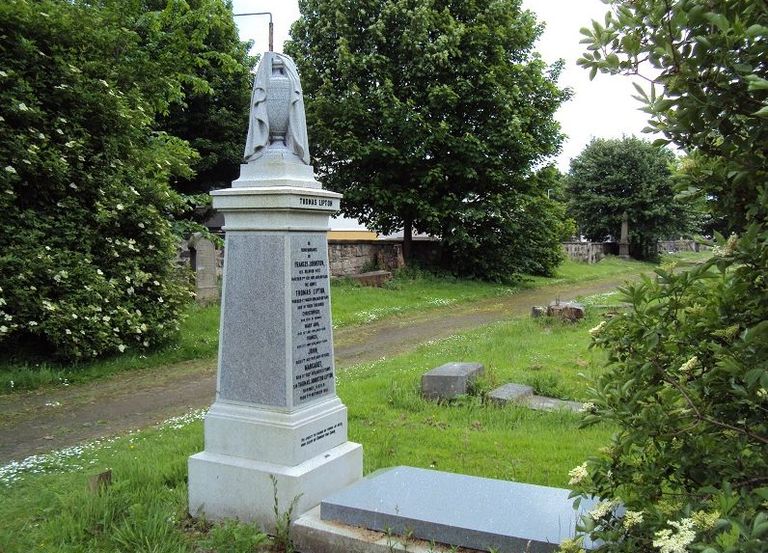
And on death he was an immensely wealthy man. With his passing he left £566,000, the equivalent of £44 million now, bequeathing the bulk of it to his home, his native city, Glasgow. And it is there that he chose to be buried in the Southern Necropolis less than a mile from where he was born and with his mother, father and his siblings, he being the only one of three to survive beyond their teens.
_________________________________________________________________________________________________________
Arnold Watson Hutton
Born: 1886 Died: 1951
If there is anyone who epitomises the course of Argentinian Association football from control that was Scots-born, to Crillo, via "Scrillos", Scots-Diasporan natives, indeed was with Hugh Wilson the link, it is Arnoldo Watson Hutton, Arnold Pencliffe Watson Hutton, son of Alex Watson Hutton and Margaret Budge. He was born in 1886, in 1902 at fifteen was already turning out for Alumni. That was until he was sent to study medicine in Europe, in Scotland, to Edinburgh, where he played both football, a winger, and rugby, an scrum-half, and Germany. But he never qualified, returning to Buenos Aires in 1906, rejoining his former club, before from 1907 at by then twenty-one clearly very much ploughing his own furrow.
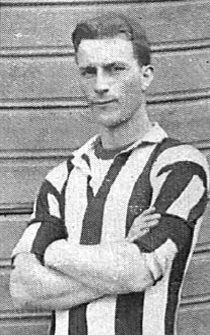
It meant that Watson Hutton Jnr. seemingly played both the round-ball and oval-ball games and to the highest level. With Alumni he would gain a first football cap in 1906 just two months after his return. He would win others in 1907, 1908 and 1909 and be top-scorer in the Argentine league at the end of the 1910 season having in June that same year, as a member of the Belgrano club, of which his father was a member, taken part in what is considered to Argentina' first international rugby match, a 28-3 defeat by a touring British fifteen. Moreover, he would be an international in four other sports, cricket in 1912, tennis and water-polo.
And as a footballer, and by then still only in his late twenties, he would continue to play until 1914, on the disbanding of Alumni in 1912, indeed already from 1911 turning out for Belgrano's football team, which continues in the Argentine top-flight to ths day and with which he would win the last of his caps. Meantime, however , in 1913 he became engaged to a twenty-year-old American girl born in Montevideo. But the married did not take place. She would marry later and in the USA. Instead in 1918 he wed Maria Roca in Buenos Aires and seems to have spent the rest of his life in business in the city. Indeed he would pass away there in 1951 at the age of sixty-four.
_________________________________________________________________________________________________________
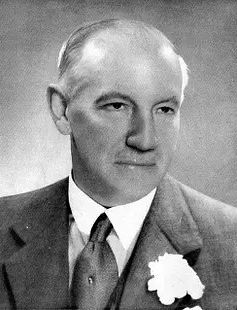
Hugo Wilson
Born: 1873 Died: 1940
In Argentinian football until modern times none had held the position so long and even then it is doubtful that any had had to oversee such change. But in a way and of greater interest still is what he was called at home. Did his wife call him Hugo or Hugh, did he call her Agnes or Ines and did they speak Spanish or English? For they were both Argentinian but also Diasporan, she Irish, he Scots. In fact he was the last in a line of mainly Scots, native and Diasporan, from Colin Bain Calder through Alexander Watson Hutton, George Robb, Alex Lamont, the Leslies, John Anderson, the Browns and others, who over a period of thirty years had seen on- and off-field the introduction of football, Association football, to and its establishment in Argentina.
So, whilst Watson Hutton, father and son, are rightly lauded by the modern football establishment in Argentina, who was this Hugh Wilson, who gets hardly a mention, even though he was President of Argentine Football Association from 1909 to 1915, the last one of British origin to hold the position, and the one to see it out of ex-patriot, British control? Hugh Wilson, Hugo Wilson, had been born in Buenos Aires in 1873, the second son of Scots-born parents. His mother, a Ritchie, had arrived, aged two, on the banks of the River Plate in 1843 but had been born in High Gates by Kilmarnock and his father's birth was in 1845 and probably in Ayrshire too. The hesitancy is because, whilst he seems to have insisted on being known not just as Hugh Wilson also but Hugh McCrae Wilson, there is only one birth that year that fits. It is in Mauchline and is illegitimate. His mother is definitely Jean McCrae. His father is recorded as a Robert Wilson. It was not the best start in life and it appears to have got worse. Both his parents then seem to disappear and he be brought up in what looks like straightened circumstances and by his grandmother, two aunt and a sister at 64, Loudoun St. in the village with every incentive to emigrate at the earliest opportunity, perhaps as early as 1866, the year he turned 21.
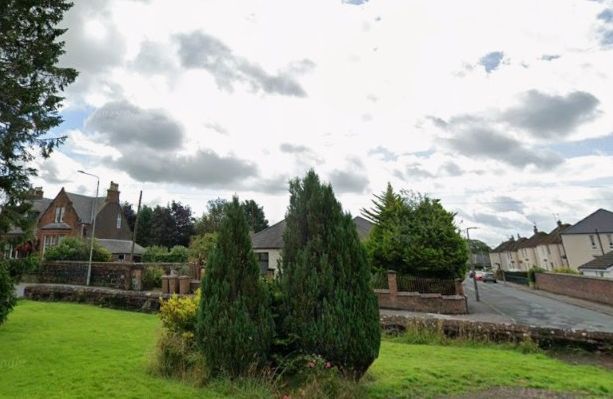
Formally 64, Loudoun St., Mauchline
Eldest son, Arnot Jnr., would return with him, seems to have sailed to Buenos Aires in September 1899 then back, doing the same trip in January 1902 yet be in Glasgow once more in 1903. A noted golfer that year he would be the Eastwood club-champion. However, in November 1905, if not earlier, he was again on his way again. Moreover, he would the same journey in September 1908, in October 1910, his mother had died in August, and December 1912, when he seems to have settled in Mar del Plata, a south of Buenos Aires, there in 1913 winning its golf club's first ever championship, which remains named for him.
But back to Hugo Wilson Jnr. In 1895 he is recorded, his father having died in 1893, as living in Buenos Aires with his brother, Andrew, and a Ritchie, so probably a cousin. Furthermore, about the turn of the century by the time he was thirty he was married. He and his wife had their first of four children in 1903 and they had probably met through football. His bride's name had been Slamon, Agnes or Ines Slamon. She was from a town outwith Buenos Aires, a mainly Irish town, Lobos, with in 1898 its football team playing in the Argentine League with an H. Wilson as one of its forwards.
However, the family then clearly settled back in Buenos Aires and he and it can be seen travelling back and forth to Britain on several occasions, he recorded as a a businessman, a merchant, a manufacturer and finally perhaps a diplomat. And it was also during that time he was elected to the AFA presidency, achieving both affiliation to FIFA and a highly successful transfer of control of the organisation from previously English-speaking British- via Diasporan Scots- to non-British Spanish-speaking control in a way that was clearly successful but for which in today's Argentina he receives no recognition. Indeed, he seems to have lived out his life prosperously but without much respect even from his contemporaries, dying still in Buenos Aires in 1940 and buried in the British Cemetery not far from Alex Watson Hutton but strangely without any of the same appreciation.
_________________________________________________________________________________________________________
Back to the SFHG Home page