The Chile Eight
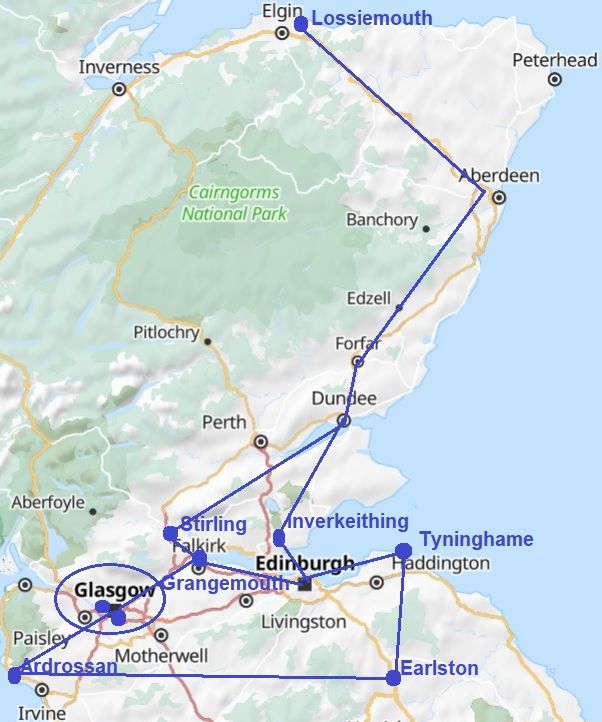
The official arrival of football in Chile is quite simply down to four men, all Scots. And its implementation on and off-field, as players and then pioneering officials, was due in no small part to two more, plus a Diasporan and his two brothers and a further Diasporan.
Of the four three were born in the Central Belt, in Stirlingshire, Ayrshire, and The Borders. And, whilst the birthplace of the fourth had been Drainie, the parish of his mother's home-town, Lossiemouth, he grew up and learned his football in and around Port Glasgow. That is before they all by one means or another found them-selves in Valparaiso. It was at a time before the devasting earthquake of 1906 both Chile's major port and most vibrant and international city, with an early British population enough for the foundation already in 1857 of the Scottish Mackay and Sutherland School. It was only post-quake that Santiago, the political capital took over the lead-role with football there emerging, slowly at first, from 1897.
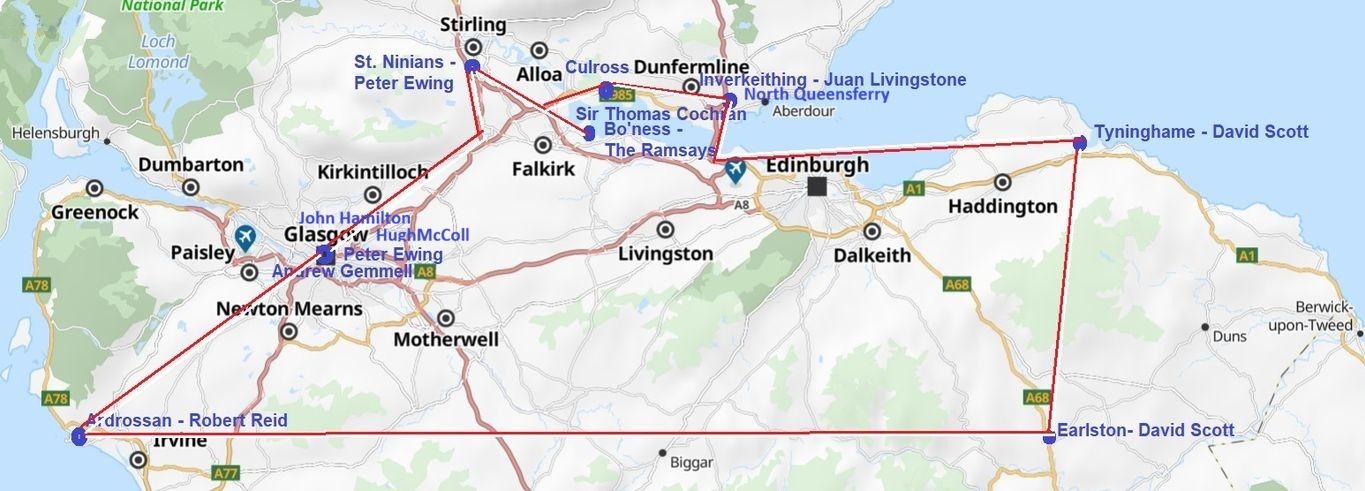
However, by then the Chilean Football Association had already been was formed, and by the four, in a cafe in "Paradise Valley" in 1894. Peter Ewing, aged fifty-two, was its Honorary President. He had been born in St. Ninians by Stirling before the family had moved to Glasgow, his father a Currier, he a Merchant. President was David Scott, thirty-two years old, born in Earlston by Melrose but brought up in Tyninghame, his father a coachman and he a journalist. Secretary was Andrew Gemmell, born on the Moray Firth, aged twenty-six and a Teacher/Lecturer at the time, as his Ayrshire-born father had been before him. And Treasurer was Robert Reid, fifty, another newspaperman, born in Ardrossan and the only one to return to Scotland. He would die in Glasgow in 1919.
And of the four others, three Johns or Juans and a Hugh, in Valparaiso and then Santiago, two were Scots-born and the two others Diasporans so Chilean-born, one had his origins in Bo'ness and the other in the south-west Fife. The first was Hugo McColl, a football twice over. In Glasgow he had already been one of the earlier to take up the game. Then there was John (Juan) Ramsay, player and administrator, one of four footballing brothers, another of whom, Joe, also would be a significant figure in the game. John and Joe's parents, Alexander Ramsay, an engine-minder/machinist and Jessie Frew, had grown up as neighbours in the former West Lothian town before taking themselves first to the the mining area of north Chile and then the country's capital. And the third was John Hamilton, Glasgow-born too, and part of a remarkable footballing family. Six brothers all played the game to a good level, three for Scotland. And finally there was John (Juan) Livingstone, whose father, also John, had been born in North Queenferry, his mother's home village, his father from Dunfermline. John Livingstone, effectively John Livingstone Jnr., would not only make his mark first as a player and then referee but also be the father of Sergio Livingstone, El Sapo, Chile's first great goalkeeper and captain of his country, including at the 1950 World Cup and even against England.
_________________________________________________________________________________________________________
Plinths & Plaques
As with not just this but all our country-trails we believe that merely recording is not enough. To do justice to the pioneers, as several countries, to which they went, have done and in Scotland Busby has also in following the lead of Bangu in the case of Tommy Donohoe, there should be place for more plinths, and if not them then plaques. So, whilst we research and provide biographical details of as many of those, who through deed and feet spread the word, we also look at where some form of visual, outdoor recognition would be both appropriate and feasible.
_________________________________________________________________________________________________________
And so to the men themselves:
Hugh McColl (with grateful thanks to Andy Mitchell)
In 1873 the West End Cricket Club based initially at Burnbank in Glasgow's Woodlands and then Cowlairs founded a football off-shoot. It competed in the Cup between that same season and until 1878 with twenty-one year-old Hugh McColl, from his family's home, the now demolished 15, Richard St. in Anderston, its first Secretary.
He had been born in 1852, his father an engine pattern maker. He himself was a commercial clerk, who from the red-ball, summer game was one of the first to adopt the round-ball, winter one, playing at full-back. However, West End was to be wound up at the end of the 1877-8 season, McColl was in his mid-twenties and may well have moved South for a period. Certainly in 1879 he married in then Cheshire in Dukinfield by Aston-under-Lyme a Staleybridge girl, Harriet Waterhouse, before returning to the Clyde, settling in The Gorbals as a Stationary Clerk and starting a family. There would be five children to 1888 all Scottish-born but there would be a sixth, whose birth would be in 1891 and in Chile.
However, the family's arrival in that South American country, in the port city of Valparaiso to be exact, had been at least by 1889 because that year he was a founder with David Scott and again from the city's cricket club of a football section with him as its first President. Interrupted by revolution it by 1892 would be formalised as Valparaiso F.C., its obviously very Scots initial team,
MacNaughton, Scott himself and Reynolds, Crangle, Drummond and Roberts, Norton, Millie, Fullerton, Melrose and Simpson
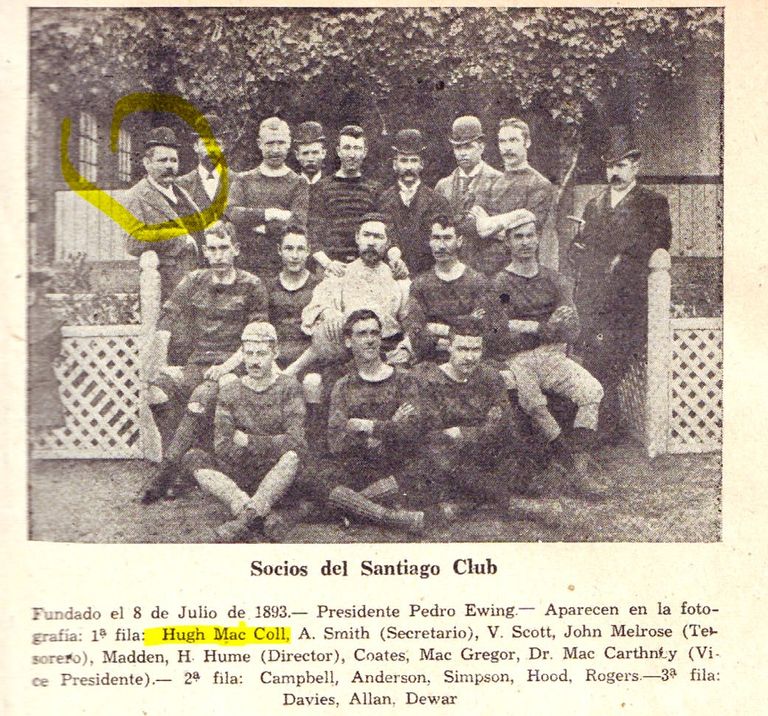
Santiago Club, 1893. Hugh McColl ringed
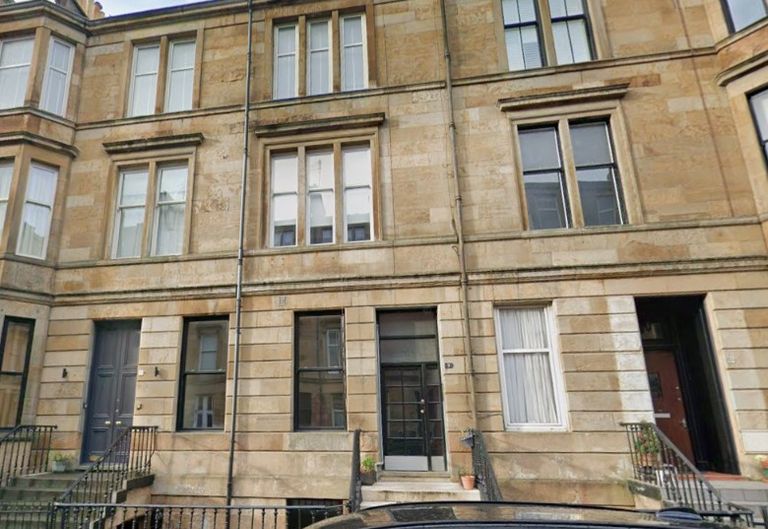
9, Roxburgh St. Glasgow
And meantime McColl seems to have moved on to Santiago and there, now at the age of forty he was in 1893 to be part of the Santiago Cricket and Athletic Club, with a certain Peter Ewing as President, and its playing of the first intercity match between Valparaiso and Santiago; but not as a player but coach.
Yet, Having spent at least five years in Chile, the McColls would return to the UK. By 1901 they, he described as a Shipping Clerk, were staying back at 9, Roxburgh St. in Glasgow. And there he went into partnership in a shipping agency cum ship and insurance brokers, commission agents and export and produce merchants, a business that after The Great War became McColl and Sons on Wellington St. with McColl himself, staying by then on Bath St., passing away in 1928, an Export Merchant, aged seventy-six.
Peter Ewing
That three men, three Scots, Robert Reid, Andrew Gemmell and David Scott, were in 1894 in the port city of Valparaiso founders and, as Treasurer, Secretary and President respectively, first office-holders of the Chilean Football Federation was known and undoubted. But further research from the country would cast up another name as its Honorary President. It is Peter (Pedro) Ewing, and in Chilean records he is described also as a Scot and by birth.
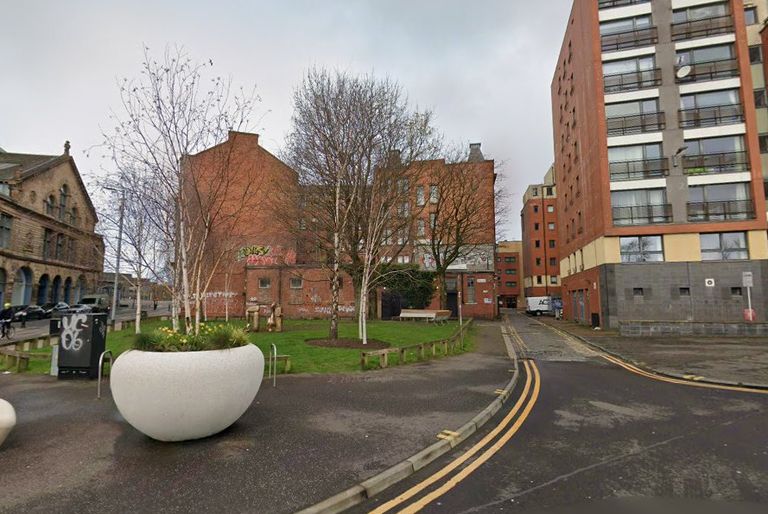
Goosedubbs, Glasgow
Moreover, we would come to know a Pedro Ewing would die in Portales, a suburb of the Chilean capital in 1912, with the additional information that he was seventy-one, born in 1841, to be buried in the city's Protestant cemetery and, Chilean-style, that his father's name was Archibaldo and his mother's Isabel "MacLearn".
However, the fly in this ointment was that there is no obvious record of a Peter Ewing, born in Scotland in or near either of the years in question with an Isabel McLearn mother. Yet there was one with an Archibald as a father. He was born in about 1842 in St. Ninians by Stirling, one of eight children, but at the age of nine he and the family were staying in the heart of Glasgow on Goosedubbs, where there is perhaps just place for a memorial, his father, son of a Balfron, Stirlingshire farmer, a currier to trade, his mother, the daughter of a local weaver, not a McLearn but a McLaren and not Isabel but Elizabeth. So it was a return to the Chilean records for a deeper search and more checking revealed "McLearn" to be a misspelling. Pedro was indeed Peter McLaren Ewing. Moreover, "Isabel" was elsewhere recorded as Elizabeth.
And with that a story unfolded. The nine year-old Peter had been still at school. At nineteen he was an apprentice currier. However, by 1871, whilst the parents were still in Glasgow, indeed they would in The Gorbals, he was not. In fact he disappears post-1861 entirely from the Scottish, indeed British records, with the strong possibility that on reaching maturity in 1862 he might have found his way to Chile and to a new life. Moreover, thanks to the unstinting cooperation of the Chilean football historian, Sebastian Nunez Mardones, we even know, if we have the right man, his last resting-place. It is the Ewing-family mausoleum confirmed as in Santiago's General Cemetery but its Dissident i.e. Protestant section.
_________________________________________________________________________________________________________

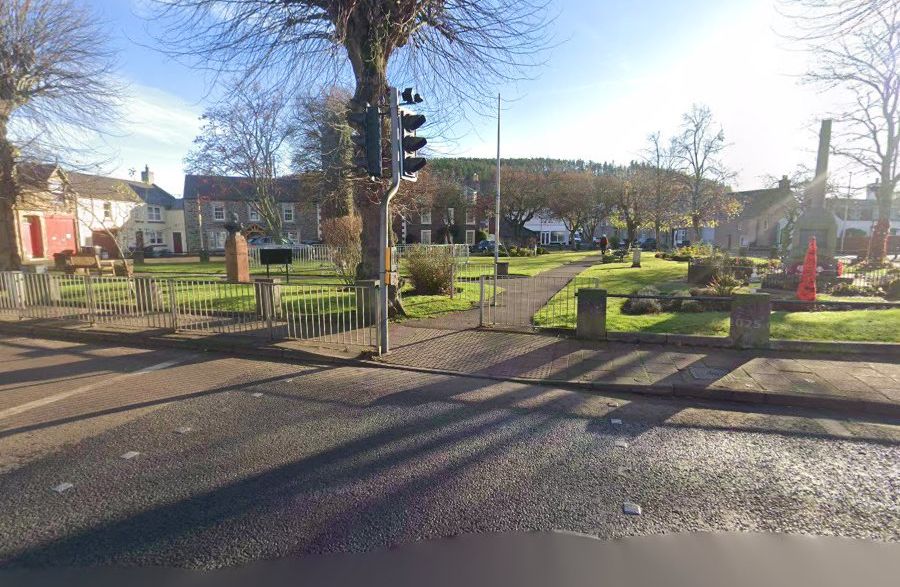
Earlston
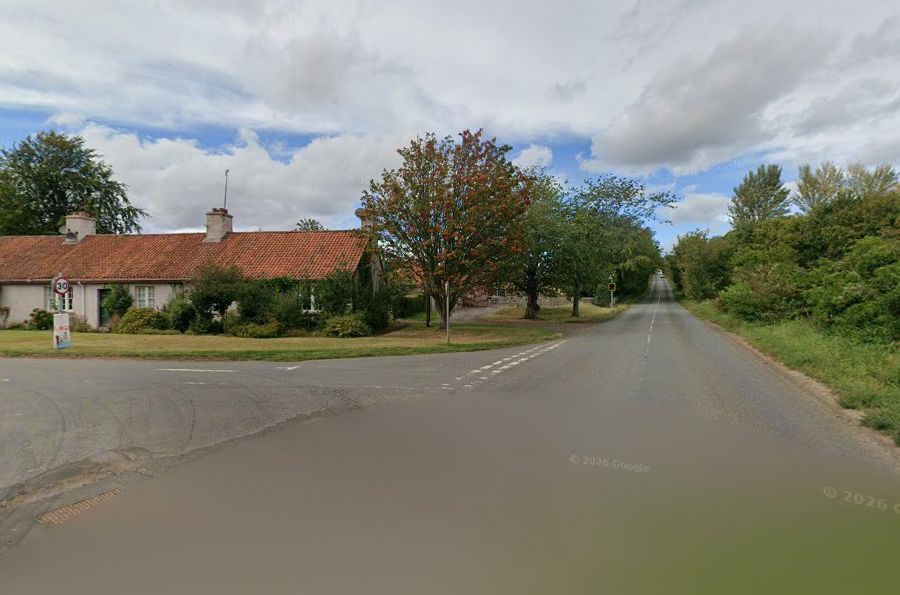
Tyninghame
David Scott
When in Valparaiso in 1894 the Chilean Football Association was founded it was with the journalist, local David Scott, as first President and, unlike Peter Ewing, his origins have proved much easier to trace.
Recorded elsewhere as David N. Scott, he married in Chile in 1896, having stepped down from the Presidency of the country's FA after just a year. And the “N” in his name stands for Napier, as confirmed by John Alexander Napier Mcnab Scott, his great-great grandson, as is also confirmed that his great-grandfather was born in Earlston in then Berwickshire in 1862, passing away at the age of not quite fifty in 1912 to be buried in Valparaiso in a grave crowned by a Celtic Cross.
In fact, David's parents, John Marshall Scott, a coachman working for the great estates, and Mary Napier, were both born in East Lothian and married there before moving to the Borders. However, when Mary died still in Earlston in childbirth in 1865, John remarried and moved back nearer to his roots to work at Tyninghame House, outside Dunbar.
And so in Scotland for Scott we have not but three sites, all more than suitable for a memorial. First there is the in the centre of Earlston itself The Green formed between High St. and Station Rd. And then there are the grassy junctions of the A198 and Tyninghame High St. or even South Row opposite the lane leading to Tyninghame House.
_________________________________________________________________________________________________________
Andrew Gemmell
Andrew Gemmell was born in 1868 the home village of his mother, Lossiemouth, in parish of Drainie in Moray. His father, a teacher and then headteacher, was from the Ayrshire-Dumfries border, who with his wife was soon to move south once more. Gemmell's child-hood and youth would be spent mostly in Glasgow and Port Glasgow as his father moved for work. That was until, as the result of a prize won, whilst at Glasgow University, his arrival in 1892 at the age of 23 and for a year in Chile to Valparaiso, still at the time the largest city in the country.
He went initially to the Chilean Naval Academy to teach English, then seems to have returned to be recruited back to Valparaiso by the still existing Mackay and Sutherland School, its Scots roots obvious, to teach mathematics, and on the field to play in and captain its football team. And off it he is also thought to have been instrumental in the laying the school's first football pitch on the school grounds.
That was until at some point about 1898 he seems to have resumed working at the Naval Academy, there becoming “Superintendent of Games”, marrying in 1901 and then becoming involved in athletics. In 1903 he took part in the "Great Naval Athletics Championships", between the Naval Academy, the Naval Engineering School and the School of Accountants, also teaching at all three.
But he would return to the round-ball game. It would be he who in Chile first translated the London FA's rules from English into Spanish. He also became be a noted referee in the city, indeed internationally, was in 1910 the treasurer of the Valparaiso Football Association and in 1912-1 became the Chilean Football Association's last British President.
So it is for Andrew Gemmell there are perhaps three locations for a memorial. The first, for a plinth maybe, is in the heart of Lossiemouth. The second might be Port Glasgow. And the third for a plaque is where, before departure to Chile, he is recorded as a young teacher, lodging on West End Park St. in Glasgow.
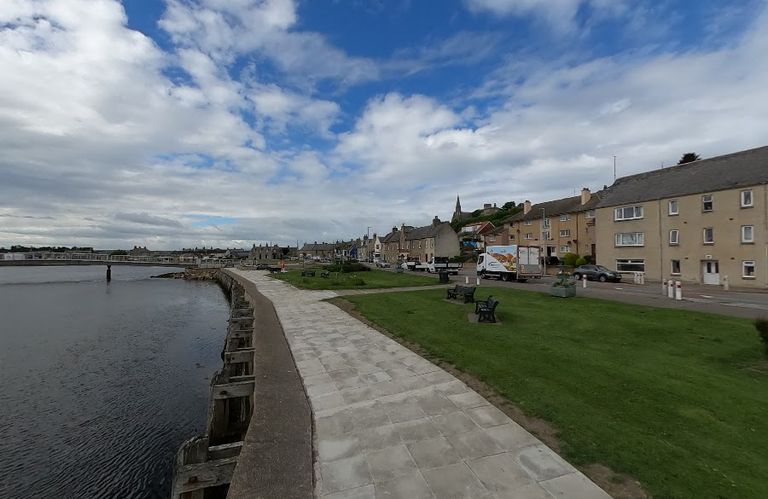
Lossiemouth
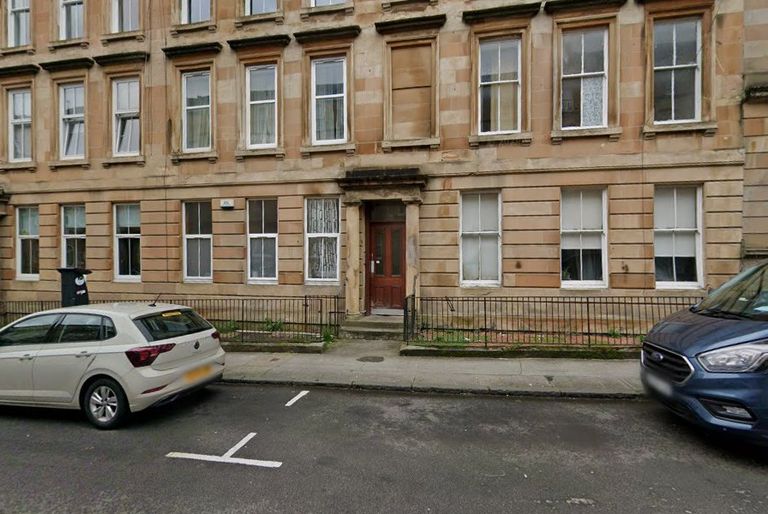
14, West End Park St., Glasgow
_________________________________________________________________________________________________________
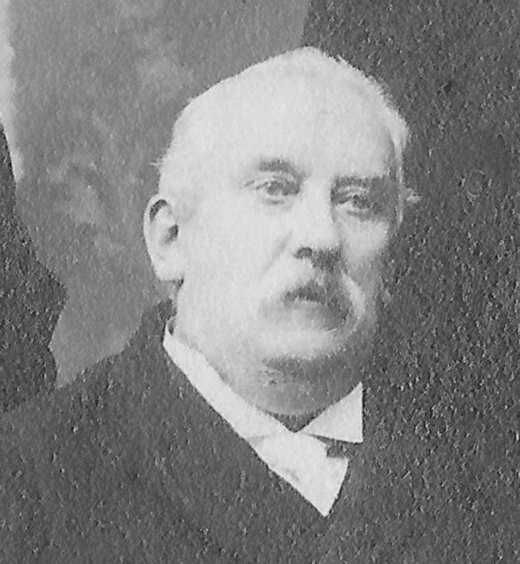
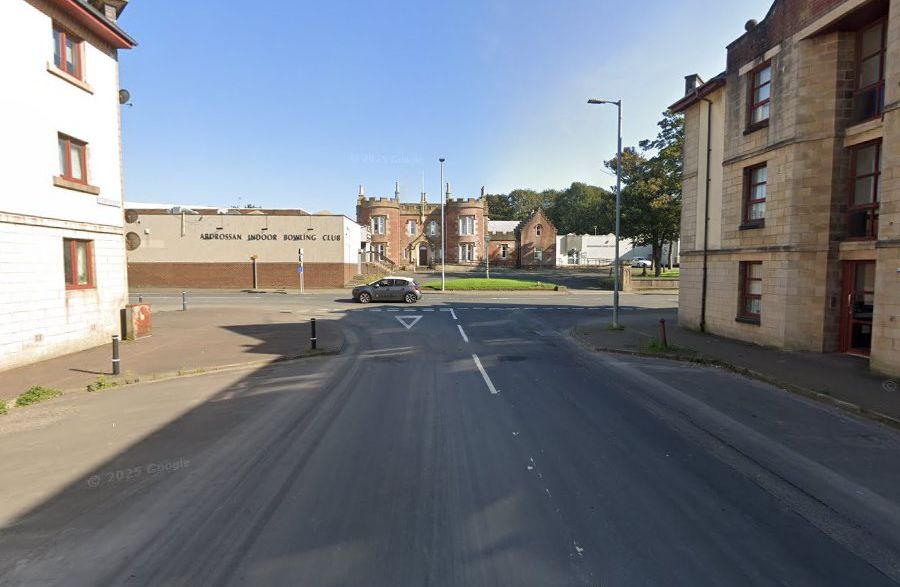
Barr Lane, Ardrossan
Robert Reid
Of the fourth of the four, early, Valparaiso Scots footballing pioneers, Robert Reid, specifically Robert H. Reid, nothing initially was really known except that he was, although Treasurer, regarded by some as the real, initial administrative force behind the early Chilean game. There is no mention of him as a player, which perhaps suggested he was older, but he is said to have worked both as a journalist and in 1898 in known to have published the The Illustrated Sporting Annual of Chile.
But more would emerge despite Robert Reid being a not an uncommon name in Scotland with the suggestion from Chile his middle name was Harvey. In fact he was Robert Harvie Reid, born in 1844 in Dalry or perhaps Ardrossan in Ayrshire, the son of John Reid, a weaver, and Janet Harvie and so was already forty-nine or fifty years old in 1894. That he is unlikely to have been a player at the time is therefore confirmed.
Harvie Reid was like Scott a journalist. In 1861 he had been a printer's apprentice, in 1871 was a 26 year-old reporter in Ardrossan with football already being played there in 1874, Reids amongst the players, having in 1870 married Janet Irvine from Kilbirnie, living, a site for a plinth, on Barr Lane in the seaside town and the couple starting a family. Then from 1880 he was on the move, editing a newspaper in Paignton in Devon, and said to have arrived in Chile in 1885-6 to take up a newspaper post, possibly in Santiago. He seems certainly to have been in the Chilean capital in 1889 but after a short spell in the small city of Victoria he moved to Valparaiso. There he settled, working for the English-language Chilean Times, that is until in 1905 accepting the post of night-editor of The Buenos Aires Standard, also English-language, moving to Argentina, and then becoming editor of The Herald, equally English-language, in that same city before retirement, a return to Scotland, settling in Milton in Glasgow and dying there at what was 90, Cambridge Street in 1919 at the age of seventy-three.
_________________________________________________________________________________________________________
John Ramsay and the other Ramsay Brothers
More or less at the same time as the Valparaiso foundation in 1894 of the Chilean Football Association some eighty miles inland Santiago would see its first clubs, the wonderfully- and explicitly-named, Santiago Rangers-non-Sunday-Playing Club, National Athletic and the German, Atletico Aleman, with games to begin with friendlies, often 5-a-side with players frequently coming and going and changing teams. However, gradually more stable clubs were being created and 11-a-side becoming the norm.
Thus it was from an ad hoc team from Santiago Cricket and Athletic Club, which had a year earlier had challenged Valparaiso to a one-off match, that a more permanent entity emerged. It was Santiago Athletic. Then 1897 would also see the formation the clearly Spanish club, Club Union Espanola, as initially the Centro Espanol de Instruccion y Recreacion and 1900 that of Santiago National. And two years later it would be Santiago Badminton with Morning Star following in 1903.
Elsewhere too 1902 would see the creation in Talca, 160 miles south of Santiago, of Club Social de Deportes Rangers and a myth. One of the club's founders was Luis, Lewis, Greenstreet, and the club's name is said to have been chosen by his father, John Greenstreet, both also said to be Scots and with a Glasgow affiliation. The problem is that the story is false. It is unlikely the Greenstreets were Scots either by birth or origin. "Greenstreet" is not a Scottish name. There is, in any case, no record of them in Scotland. And the club's name came from Amalia Neale, John Greenstreet's employer, and derives not from Scotland but Eastbourne, England. There was, however, a Scots connection. One of the club's other founders was a Ramsay, a member of Chile's first footballing family.
As local matches in Talca gelled into the city's Municipal League, won by Rangers, back in the capital in July 1903 there was the formation of the Santiago Football Association. It was an organisation, of which Frank (Francisco) C. Campbell, a product of the Mackay and Sutherland School, was one of the instigators, with a league of sixteen teams in two divisions. The trophy played for in that first year was the Copa Subercaseaux, donated by the Honorary Chairman of the association. The Secretary of its first Board of Directors came from Union Atlético, a certain Jorge (George) Dan Ewing, the thirty-two year-old son of none other than Pedro (Peter) Ewing. And the first winner of the Cup was Ewing’s club, captained by another Ramsay, John.
John "Juan" Ramsay was Chilean-born, in 1879. He was therefore a South American "crillo", a "scrillo", an early Scots crillo, one of five brothers, sons of emigrated Scots, Alexander Ramsay and Jessie Frew both from Bo'ness, both in part growing up on the town's Church Wynd. And Alex Ramsay, in Scotland a young man as football took off, in Santiago a railway employee, seems to have taught all his boys the game from a young age and taught them well.
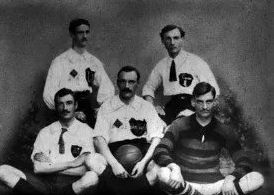
As to his boys, described as a clean and brilliant defender, at fifteen John was already playing for that Santiago Rangers-non-Sunday-Playing Club with the five Ramsay brothers perhaps forming the entire team. Certainly a picture has survived of them all together as such. And of the others one, James, was to die aged 33 in 1915 in France having returned to Britain to enlist as so many did from British communities in South America, not a few paying the ultimate price. Another, Alexander, like John, was also a noted defender. It was he who would be instrumental in the formation of Rangers of Talca, go on to become a referee and also die young, in 1917 and still in Chile. Then there was Joseph, José Ramsay, a highly regarded forward, playing until 1910. And youngest of all was Manuel, also known as by his second name, Arthur.
Kirk Wynd, Bo'ness
John Ramsay, from his five-a-side start, was not only to be a significant player but also an important football official and administrator, in Santiago initially and later nationally. Still a teenager he was firstly to be one of the founders of school team, Instituto Nacional FC, before, in his early-twenties, with his brothers moving on to Union Atlético, which, after victory in 1903, in 1904 it took the Copa Subercaseaux for a second time and with a team that once more included a mainly Scots or Scots-Diasporan spine - John and Joseph themselves, Frank Campbell again, Frank Morrison, Andrew Taylor, now captain, Fred Anderson, Hugh Sutherland and George Hood.
In fact, from 1903 Union Atlético was to be the predominant club in Santiago and John Ramsay perhaps the most recognised figure in the local game. That is until 1906, when the club disbanded seemingly because of bad results, he went on to form English F.C. and play for two more seasons, this whilst brothers Joseph and Arthur joined the Loma Blanca club. Founded in 1904 in 1907 with Joe in attack and Arthur at left-back, plus a MacNiven and a Jackson, it would win the Santiago FA's Copa Unión.
However, 1907 would also see Valparaiso largely flattened by a powerful earthquake from which it never, indeed has never fully recovered. Santiago, already Chile's political hub, filled the void also becoming the country's economic hub and eventually its footballing one too. And it was in the year following the earthquake, in 1908, that John Ramsay took the step from player to football administrator. He was elected, aged 29, to the board of the Santiago Football Association. He was also involved in the Referees’ Association, with the leading, local Santiago officials, his brother, Alex, and a certain John MacDonald, and in Valparaiso, Andrew Gemmell, before in 1910 being promoted from treasurer to president of the Santiago F.A. It was fortunate timing because there was increasing conflict between the Santiago-based, Spanish-speaking National Sports Federation and the still British-orientated Football Association of Chile in Valparaiso, a situation not dissimilar to that developing in Buenos Aires at much the same time and one that John Ramsay was fortunately able to overcome at a local level but which at a national level was not resolved until Andrew Gemmell stepped up once more in 1912, remaining in place to 1915.
Juan Ramsay would marry in 1916 and seems to have died childless in 1940. As to the other brothers, Jose, who had married in 1908, remained in Chile and was visiting the United States until the early 1950s. Alexander too had married in Chile in 1909. He seems to have had a daughter, who died young. Of Manuel, Arthur, nothing more is known. However, none of them appears to have had any further significant role or effect on the Chilean game. That was to be left to a Scot, John Hamilton, and another with a Scots-Chilean father, John Livingstone, and his still more famous son, Sergio.
_________________________________________________________________________________________________________
John Hamilton (with again grateful thanks to Andy Mitchell)
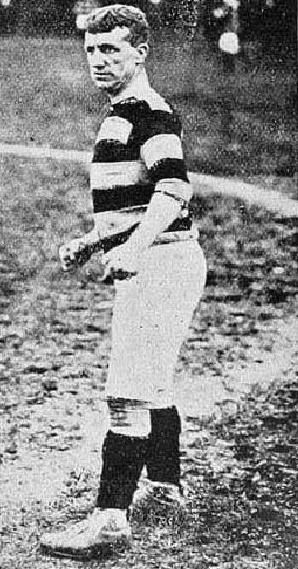
To have pairs of brothers playing for different international teams has been a not frequent but regular occurance through Scottish football history. Most recently there have been the Souttars, before that the Bakers and the Goodalls. But to have four brothers doing it is unique. Yet that is what the Hamilton boys, Alexander, James, Gladstone and John managed. Alex of Queen's Park and later Rangers did so for Scotland four times between 1885 and 1888, James three times in 1892 and 1893 and Gladstone once in 1906. And John, having made his professional debut in the forward-line of Derby County in 1894, actually between those Goodall brothers, won three caps as a slightly rotund thirty-six year-old and all for Chile; indeed in the first three internationals Chile ever played.
Corunna St., Glasgow
John Hamilton had been born in Glasgow in 1873, his father a Greenock-born brick-layer cum owner of a building company. In 1881 and 1891 he was living with the family on Corunna St. in Finneston and playing for Queen's Park's Second Eleven.
And it was from there that he went on at twenty-one to play in England for The Rams for a not too successful season before one more Down South and return to Scotland until retirement in 1902, the same year in Glasgow he married from the family-home address Sarah Somerville, the couple settling in Govan.
But he had also trained as a journeyman boilermaker cum engineer and it seems to have been that which in 1908 took him to Chile, specifically to the city of Vina del Mar by Valparaiso. There from the following year he turned out for Vina de Mar F.C. before moving across to Valparaiso F.C., with it in 1910 and 1911 winning the local league and also in 1911 the Sporting Cup.
And 1910 had also seen John Hamilton selected for the nascent Chilean national team, travelling to Buenos Aires for a friendly, a loss, against the home nation and then two more losses in the Copa Centenario Revolution de Mayo, two goals for, eleven against. But then it was the first time a Chilean team had ever competed, whilst he at the age of 36 was its oldest player.
However, that was to be more or less the limit of it. Hamilton would turn to refereeing, taking charge later that same year in September of the match as Argentina came to Chile, to Vina, for the first time. And so it would be until 1914 when he returned to Scotland, back to Glasgow, where in 1932 he would from his home in Dalmuir pass away in the Western Infirmary at the age of just fifty-eight.
_________________________________________________________________________________________________________

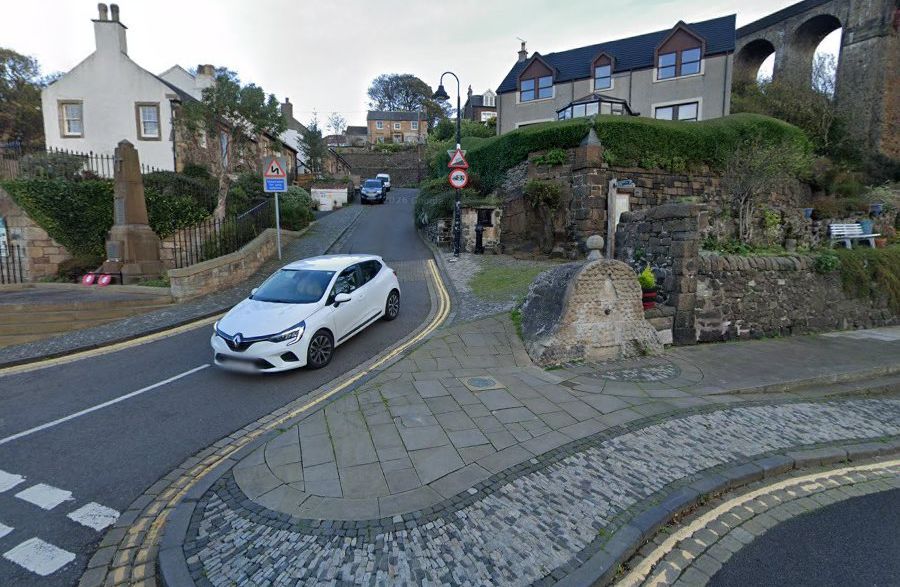
North Queensferry
John (Juan) Livingstone
At the Parque Pereira in the final game of the 1917, round-robin South American Championship held in Montevideo in Uruguay a smallish, dark-haired man took to the pitch as referee. He came from Chile, but with a twist, his name, Juan (John) Livingstone, the clue.
His football background was as a founder of his country's Referees Association and before that from the late 1900s at club level a player, a left-winger with Santiago Nacional and the Universidad Catolica, a Diasporan Scot amongst more than several others just as the game took off.
But whilst he had certainly been born in Chile it had not been in the capital but in the Estacion district of the town of Los Andes. His father had been a Scot, registered at Juan's birth as John Pringle Livingston, originally from Fife from North Queensferry, a railway engineer, dying still in Chile but in Valparaiso just five months after his son's arrival in 1889.
As to John (Juan) Livingstone Jnr.'s mother, she was An(n)a Eves, English, who would marry twice more, again still in Chile, both times to Scots, with her third husband have three more children; Macdonalds, two boys and a girl, and the extended family moving to and growing up in Santiago. Indeed Juan would die there too, in 1955, having trained as an architect but working finally as a journalist, with football administration on the side. He would be one of Chile's first three delegates ever to FIFA, travelling to Europe, perhaps even to Scotland, to attend its 1928 Congress in Amsterdam. He would also marry in Santiago, in 1918, and have two children, two boys, the second of whom, Sergio, El Sapo, The Toad because of his crouching stance. He would from a start in the club-game in 1938, at twenty-one in 1941 become his country's goalkeeper, perhaps until the modern era its greatest, captaining the national team at the 1950 World Cup including against England, retiring first internationally in 1954 and then from club football at almost forty in 1959. And, before his death in 2012 at the age of ninety-two, he would go on to become a renowned pundit, again perhaps his country's foremost, on first radio and eventually TV.
Back to the SFHG Home page