The Slow Rebellion -
how Scots working-class realism made football proper pro.
Legend, the Myth, has it that football was founded by posh-boys, mostly Southern, fresh out of the English Public Schools. But it wasn't, nothing like, as we hope this web-site has already shown. The truth is that the off-field construct, The Football Association, was begun in 1863 by a small group of middle-class, admittedly upper middle class men, dissidents from the handling-games, who hadn't been near a posh school, except in one case to Cheltenham for a short period. In fact for almost all of the first decade of the FA's, the "English" FA's existence it was headed up by a solicitor at the onset already in his thirties, a rower, who was the son and grandson of non-conformist ministers of the church and had been born and lived most of his life till then in Hull.
But the game that Ebenezer Morley, for he was your Humber-man, oversaw as the FA's Secretary and then, with a small gap, President for over a decade to 1874 was avowedly amateur so simultaneously from where did today's professional game come and what was the source of the posh-boy idea.
In the case of the latter it was because, after Morley's departure, a small of group of them attempted and succeeded with what amounts to a coup. Why is unclear. perhaps they saw it, with the game growing in England and by then exploding in Scotland, as an opportunity for personal aggrandisement, socially and monetarily. But, although not before a decade and a half of embellishment, i.e. gas-lighting that persists to this day was in place, it/they did not succeed. And the reason may ultimately and not for the first time have had its source some four hundred miles plus to the north.
Sport for money was, even in the 1870s, unlikely to have been a new concept. In Scotland middle-class athletes might on their sports days have run for fun but working-class ones at their meets openly competed for lucre. Now cash for team-sport beyond the tug-of-war might well have been rarer but it did exiist and for substantial amounts. The evidence is there.
In 1870 a John Sinclair (see below) from Bridge of Allan by Stirling issued by newspaper seemingly on behalf of the players of the Vale of Leven in Dunbartonshire and to the men of Inveraray in Argyll a challenge to a shinty match with a prize of up to £100. That's £15,500 today.
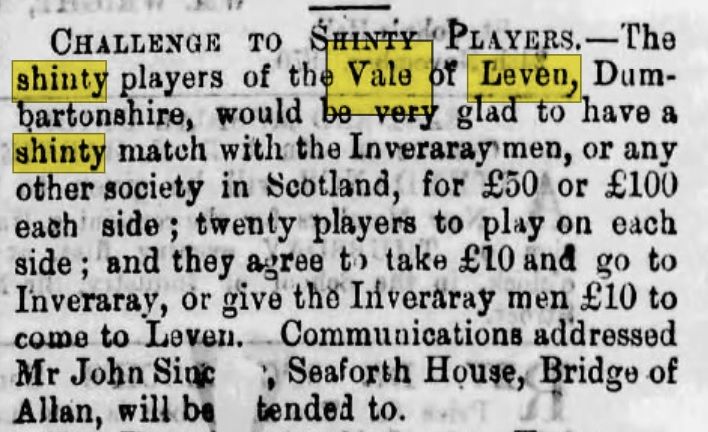
And even within the Vale there was clearly appetite for the same, admittedly less lucrative but still worth the equivalent of £70 per player, so not bad for an afternoon's work and, as the old game of the Gaels was from 1872 replaced by the new Association one, as shinty players became footballers, it is unlikely as a model to have been forgotten.
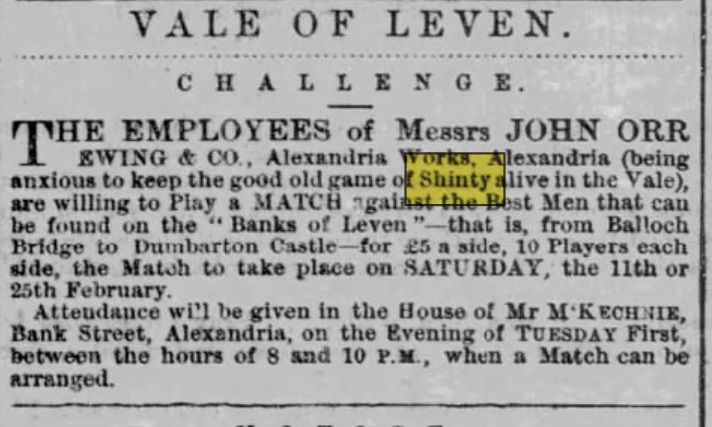
This is not to say that playing sport for money did not exist elsewhere in Scotland, indeed Britain. It is highly likely that it did but the point is the possibility that when the earliest of Scots football exponents, the first of the so-called Scotch Professors, went South the idea of the monetary incentive to play, rather than being a new thing, was there, already at the very least embedded in their psyches. It was an expectation not a novelty.
However, the point has to be made that the first of them to go - J.J. Lang and Peter Andrews - went to Sheffield so in 1876 to Sheffield Rules outwith the London ones, our game. Thus the impact on the latter was felt first only in 1878 when Jimmy Love and Fergus Suter joined Darwen on the other side of The Pennines. However, again there were caveats. First Love lasted only a few months, seeing, given his personal circumstances, the army as a better offer, and, second, both he and Suter were very young - just turning twenty-one - and in home-town Glasgow not playing for one of the best clubs. Neither had been capped. Both were talented but raw, Suter in Lancashire essentially applying the Scottish game, as far as he knew it, but also able very successfully to learn on the job.
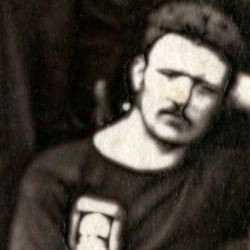
J. J. Lang
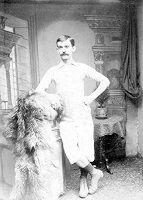
Fergus Suter
But that was soon to change with the arrival in stages but by 1880 permanently at Blackburn Rovers of Hugh McIntyre. He was by then already twenty-five, had played at half-back for Rangers including in a Cup Final and been capped, again in the Scottish, standard pair, at left-half. He was both talented and experienced and also about to enter his prime. And his effect was rapid. In the 1880-81 FA Cup the Rovers were eliminated badly at home in the Second Round. A season later they were in the Final, McIntyre now joined by Suter as the full-back pairing and up-front another young Scot, from Renfrew and also capped, Jimmy Douglas.
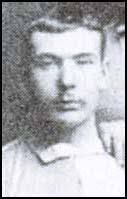
Hugh McIntyre
Rovers lost the 1882 Final to Old Etonians, but only by an early, single goal and next year would stutter again in the Second Round as town rivals, Blackburn Olympic, became the first northern and working-class to take the English trophy. Yet Rovers would re-emerge in 1884, reach the Final once more and this time be successful. However, it would be done by Suter remaining at full-back, Douglas being joined in the forward-line by also ex-Rangers and twice-capped, John Inglis, the opposition that day being Glasgow's Queen's Park, and now twenty-nine year-old McIntyre, as captain, at Scots-2-2-6 right-half and local boy, James Forrest, on the left.
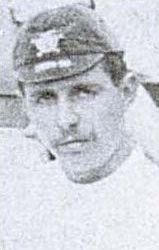
James Forrest
James Forrest was nineteen; twenty the following year when the scenario was repeated, with Blackburn once more triumphing over The Spiders. In 1884 it had been 2:1. Now it was 2:0 but there were other differences. The first is that whilst Queen's Park continued with 2-2-6. Blackburn had changed to 2-3-5 with McIntyre at centre- and Forrest at left-half. Moreover, alongside that was England, where against Scotland two weeks earlier and having learned from the master Forrest had been at centre-half. It was the first obvious manifestation in the top-flight of the younger Englishman in full receipt of knowledge from an older Scottish team-mate, indeed from his Scotch Professor. But consequeces there would be, and against a backdrop of tension elsewhere.
In 1880 in Preston William Sudell, a player in a previously uncompetitive team, had taken over the running of the North End football club. It at that time also came under the influence of James McDade, said to have come down from Renfrewshire's Neilston, quite probably genuinely looking for tinsmith work since the following year he is recorded as such, aged twenty-six, with a wife and four children, three born in Scotland, the youngest aged two, and new-, Lancashire-born one month old girl. But he clearly had Scots footballing knowledge, joined what is now the town's club, began "to educate the locals", played a couple of seasons and then coached and probably scouted, seemingly initially in his what had been his home patch. He would be joined in 1882 by John Belger and Jack Gordon, the former actually Hull-born, but Stewarton-raised, a player for Govan's South-Eastern, and the latter originally from Bridge of Weir, so also in Renfrewshire.
And it was at that point that Dade's boss, Sudell himself, went all out, aided by additional scouting contacts found in Preston but notably with Edinburgh. For the 1883 season four more Scots arrived, all from the Caledonian capital, including the Ross brothers, Nick and a seventeen-year-old Jimmy, plus Gordon and Robertson. Then for 1884 it was four more, two more again from Auld Reekie and now a first two from Ayrshire, to which in 1885 would be added a further brace of Ayrshire-men, John Goodall and Sandy Thomson, plus in 1886 Archie Goodall.
It meant that by 1883-4 the North-End team that took the field in the Fourth Round of the FA Cup on January 19th 1884 might have been half-Scots and whilst near-neighbouring Bolton clubs, Great Lever and Padiham, that had been beaten in the earlier rounds had said nothing, because they were going down the same path, Upton Park, the London-amateurs opposition that day was not so reticent.
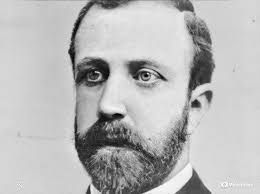
William Sudell
After a 1-1 draw at Deepdale a formal objection to professionals having been played by the home-team was made by the Londoners, upheld by the FA, even openly admitted by Sudell on the grounds correctly that everyone (in the North) was doing it and perhaps less correctly that it was not against regulations anyway. It was true that until 1882, so after Sudell had begun to recruit, there was in all the FAs' rules, naively, not even recognition of the concept of non-amateurism. Yet that year it had been changed, moreover, by Sudell's native Lanacashire. Nevertheless the 1884 bottom-line was that all hell broke loose.
So at this point the question has to be asked how it had come to this. There three figures were of most import - Francis Marindin, the Eton-educated soldier-President of the FA, the briefly Harrow-educated Charles Alcock, the Secretary and Treasurer, and his social-climber, secretarial assistant, Nicholas Lane Jackson, the three of them united by a trio of hatreds, one, of the repeated defeats Glasgow meted out to English cities, two, those that Scottish clubs inflicted on English ones and three, the again repeated gubbings by Scotland's national team of England's. About the first of the trio of 'shame' the three gentlemen could do little but by 1882 for the second and third they had come up with a plan. It was to create a club of amateur players of the right ilk, i.e. the best of the English, upper-class best, that would then feed into their country's team, making it, of course, nothing less than invincible. And to be frank but for two events it might even have worked.
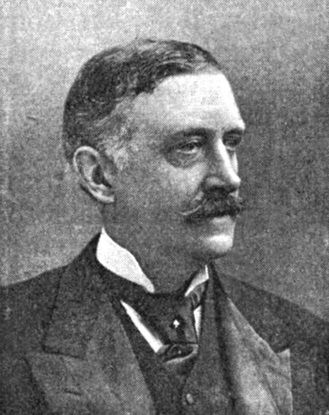
Francis Marindin
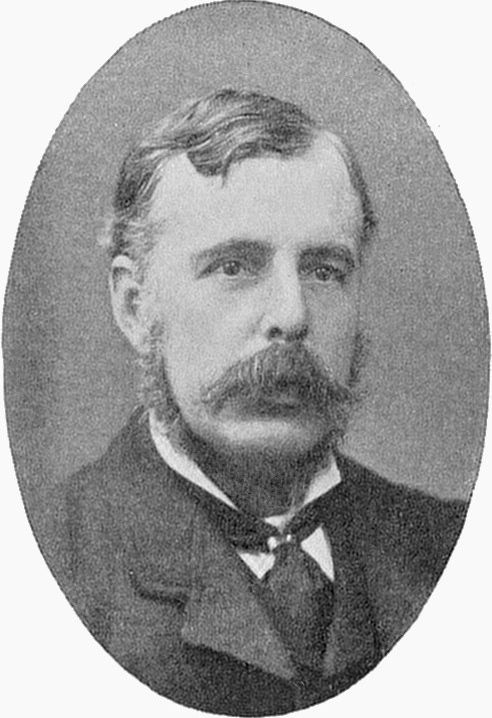
Charles Alcock
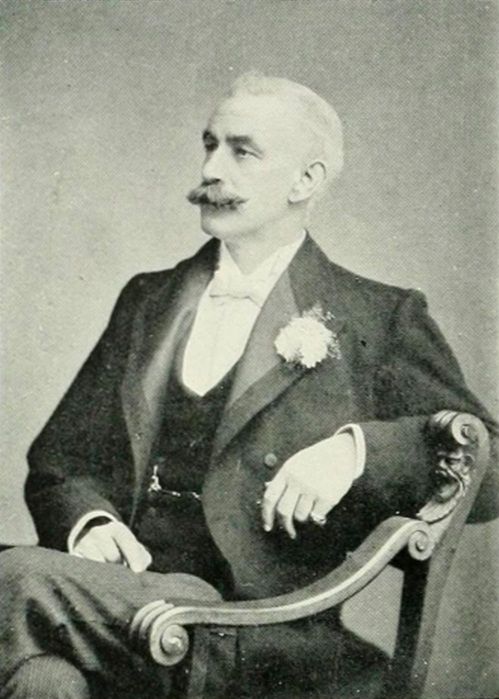
Nicholas Lane Jackson
The two events were an injury plus broken leg and a late goal. With regard to the former England had in 1883 found a good, experienced half-back, who not only slotted in on the left of the 2-2-6 pair the team was then employing but was able to move to centre-half when a switch to 2-3-5 was made the following season. Never mind that he, Stuart MacRae, the half-back in question, was a Scot, a Gaelic-speaking, Highland clan-chieftain, educated largely in Edinburgh but born in India. That he was Empire made him English especially when, with him in the team, results improved against both Wales and Ireland, even if with his home-nation as the opposition there were still only defeats.
And it was in 1884 in the second of these Scottish defeats that MacRae took a knock so against Wales two days later an alternative had to be found, with the assumption that for 1885 the proven regular would be back. But a subsequent broken leg in a club game saw to that. In fact it brought a complete end to his playing career and as a result the alternative would remain in place. It was James Forrest, apparently out of position but well able to play the role that he had observed, that Hugh McIntyre had schooled him in so often.
And with regard to the latter, it took place a little later, on 27th March 1886. Scotland was playing England at Hampden Park. But it was a special England. The elite, invitation-only club Marindin, Alcock and Jackson had founded in 1882 had been Corinthian F.C.. By March 1882 it had already provided three players to the England team. It made little difference. It had been a 5-1 away-loss. Then in 1883 that had become five, the goalie, a half-back, Stuart MacCrae himself, and three of the six forwards, including both centre-forwards. England lost again, this time at home. In 1884 the number fell to three. England lost away, but only by a single goal. And by 1885, the year James Forrest was in the middle of the pitch by now for the fourth time but the first against Scotland and had been joined by four similar others from Midland and Northern clubs, it was down to two. England, at home, improved and drew.
There might have been a pattern emerging, yet in 1886 the number of Corinthians shot up to nine. Forrest was still there with the 'keeper, also from Blackburn, and the the explanation perhaps that Lane Jackson was attempting, backed up the SFA/Queen's Park with a petty demand about Forrest's shirt but curiously not Herbert Arthur's, to make a point, even to regain some control. And it almost worked. England would draw away yet it might have been so different. And the difference proved to be George Somerville, one of the two 2-2-6 centre-forwards but from the sixty-fifth minute working alone as his pairing, Joe Lindsay, had had to leave the field injured.
England had scored in the game's thirty-fifth minute. Scotland pressed to half-time but to no effect. And the game continued much the same into the second half, even after the home team had gone down to ten. But in the eightieth minute Scotland won a corner, the ball was put into front of goal, there was a melee, Sommerville stuck out a toe and the ball trickled through. It wasn't pretty but it was a turning-point.
In the same fixture the following season Somerville was not there. He never won a second cap, abruptly replaced even at club level at Queen's Park; another story. But there were now not nine but just seven Corinthians. England lost at home. Then in 1888 it was five and England finally won but in somewhat special circumstances, in 1889 it was five once more but with Scotland winning and away and in 1890 it was six, the last time there was a majority, yet with just a draw resulting and the decision taken for changee. And how!
The next year, 1891, not only was there no majority the number of Corinthians was actually zero, with the obvious but side-observation being that Marindin was gone, replaced meantime by Arthur Kinnaird. Moreover, victory was England's once more and this time without caveat, with an even bigger win in 1892, 1-4 away, two in a row for the first ever time, with John Goodall, John Goodall from Kilmarnock, scoring an English brace (Another, another story) and but a single Corinthian in the eleven. And that would be the pattern for the rest of the 1890s; none, one or two Corinthians, notably G. O. Smith, albeit that his father was a Scot, and the rest working-class professionals essentially until 1906 and a change then of circumstances.
But let us at this point wind back to that Preston-Upton Park episode. There were other, this time off-field, repercussions, which very quickly had come home to roost. The first was that the FA in London had sided with Upton Park, not least because Sudell openly admitted the charge of paying players on the grounds correctly that, one, everyone around him was doing it as well and, two, probably correctly, it was in any case not against the regulations. On both counts he had points. In terms of the former Preston North End would be expelled from the FA Cup, the irony being that in the next round Upton Park found itself facing and now without complaint well beaten by an almost equally professional and nearby Blackburn Rovers (Preston had 6 Scots, Blackburn 4); the same Blackburn that would reach but lose the final. In terms of the latter it is correct that until 1882 the FAs' rules did not cover professionalism, the very idea being infra dig. But that year it had changed when specifically the Lancashire FA had within the county introduced rules effectively to combat Scottish arrivals, the question being whether they had also been incorporated in the "English" FA's regulations in London or not. The suspicion is not and, if not, Preston's expulsion was invalid.
The second repercussion was that the SFA wrote, or was persuaded to write, a threatening letter to all the Scots footballers believed to be plying their trade South of the Border. It failed, one, because the SFA thought there were for 1884-5 some fifty odd, whereas the real number was about one hundred and it was in any case ignored; after all the largely proletarian miscreants were only continuing to do what had been endemic in their team sport in Scotland before the Scottish Association football even existed.
The third was the setting up of an FA enquiry into professionalism under the chairmanship of Lane Jackson, so no bias there.
And the fourth was to stir Queen's Park and thus the SFA into joining in with the complaint, the same Queen's Park that itself had been able to rebuild and then maintain its position over the previous half dozen seasons by somehow tapping up players from other Scottish clubs. Better half-time oranges perhaps.
Unsurprisingly Lane Jackson's enquiry came down on the side of "amateurism" with compliance demanded from all the teams in the FA Cup including Scottish ones, to which the response from Sudell and Preston, despite an extension of their ban, was a point-blank refusal. But there was more. Preston had all along been talking to other Northern-western and Midland clubs and the result was the tacit approval of the idea for effectively an FA alternative but a professional one, the British Football Association. (Note the word British, which must have scared the SFA rigid).
It was a pivotal moment, made more so by events elsewhere. Sudell was able to threaten the FA in London with schism and therefore loss of control of, by then, more than half of the English game. Moreover, in places where organised club football had not existed previously it was developing, often with Scottish impulsion, ideas, attitudes and players. In the North-East Middlesbrough had been already founded in 1876, Sunderland in 1879 by Ayr's James Allen, West Hartlepool in 1881, Newcastle East End in 1881, Newcastle West End a year later and Darlington St. Augustine that same year and by Edinburgh's James Nolli. Then in London Spurs had been formed in 1882 with one of the three boy-founders, John Anderson, the son once removed of Lochwinnoch, Millwall was formed in 1885 with its first President, William Murray Leslie from the Black Isle and its captain Dundee's Duncan Hean and Arsenal in 1886 by Fifer, David Danskin. Moreover, in Southampton 1885 would see the foundation of what would become today's league club but the start to the game in the city had been by Scottish shipyard workers, their club Southampton Rangers and already in 1878.
Quite simply the result of the British Football Association (BFA) threat was that the FA in London called a Special Conference, where a certain William McGregor of Aston Villa advocated for professionalism, even admitting that Villa paid it players, and the FA backed down. The findings of the Lane Jackson enquiry were overturned, Jackson himself doing a complete "reverse ferret", with now just a residence qualification left in place; and it was ignored. Jackson himself was in 1886 voted off the FA committee, although he was back the following season as the representative of the London Association, which he himself had formed. It meant that Southern England/London's power was broken and, whilst the number of Scots in English football did not increase greatly, the concentration did. Preston would continue to have ten in its squad, Great Lever now nine, Bolton eight, Burnley six, Accrington and Halliwell five, Blackburn and Bury four, each, the Newcastles also four, Sunderland three and on Merseyside Bootle and Everton six each; two thirds of the total in thirteen clubs, all now with wage bills to match.
But the effects were not confined to South of the Border. Whereas there amateurism was in retreat with more to come, North of it the SFA in fact doubled down. Queen's Park, having lost those consecutive FA Cup Finals to Blackburn Rovers led the way and after five Scottish clubs had played in the 1885-6 Britain-wide competition and seven in 1886-7 for the following season a total ban was imposed on the grounds that Scotland's "amateurs" should not be playing England's professionals. It was total cant but might be seen as a backstop against a future BFA and did permanently render the FA Cup English, Welsh and Irish and ultimately English and Welsh only.
William McGregor
However change brings its own problems. Football throughout Britain had been relying on Cup-games, be they national, county or local, and friendlies with the former subject to early defeat and/or walk-over and the latter cancellation at short notice. It meant potentially large gaps in club schedules, therefore no income but now with not just player's expenses but expenses and permanent wages to cover. As a result many of the same clubs that had forced through and/or accepted pay-to-play now found themselves looking into a financial black-hole.
And at this point Aston Villa's William McGregor stepped forward once more, with his confession that everything he knew he learned in childhood and youth in his rural, Perthshire home-village of Braco with how to run a football club presumably no exception.
Sudell's BFA might have been successfully coercive but also a rather blunt instrument. It was a substitute not a progression and the almost three seasons from 1885 had convinced the afore-mentioned McGregor of the necessity of and given him the time to consider a better solution. It was that which he in March 1888 proposed in a letter to his own club and four others and to which he gave the working title of the Association Football Union.
And by those five clubs and others in the North and Midlands MvGregor had his hand bitten off, with a meeting for all FA clubs then organised in London. Ten clubs attended but none was from the South so a second meeting was arranged for Manchester and by the following September his "Union" had become the twelve-team Football League.
It meant that in three years not just the Corinthian experiment had effectively failed but the "posh-boy" trio of Marandin, Alcock and Lane Jackson and been by-passed both in terms of class-attitude and playing ethos not once but twice over. Indeed the League itself soon became paramount, expanding exponentially over the next decade. Furthermore within a few seasons its concept would with the Southern League be adopted by new clubs in the South, which swept aside the old ones, taken up abroad, already in 1891 in Argentina, and everywhere by other sports.
It additionally meant that by 1898 there were not one hundred Scots playing football for money in England but three hundred. And it also caused the whole "posh-boy "trio to be gone, Alcock by 1895, Lane Jackson in 1897 with Marindin already replaced in 1890 by Lord Arthur Kinnaird, still "posh" Public School and certainly rich but a Scottish peer.
Arthur Kinnaird
And meantime football back in Scotland itself was working itself into a major fankle. It was clear the top-flight clubs, Queen's Park included, were finding creative ways to "recompense" their players. It would all come out with the formation of the supposedly still "amateur" Scottish League in 1890, not least due to Queen's Park choosing not to take part because, as had been the case with the FA Cup three seasons earlier, it would have to play professional opposition. Meanwhile the accusations against other clubs flew. Renton, an early advocate of professionalism, was expelled from that first Scottish League for one such and had to win in court against the SFA to be reinstated.Indeed the amateur against professional would prove a bitter pill that Queen's Park would take a full decade to swallow. Moreover, it was a problem that even then had and did not go away, and on both sides of the border. With the boot, the football boot, now well and truly on the professional and not the amateur foot, the latter, quite correctly felt neglected, even resentful. In England it would all come to a head in 1906, as with the formation of the English Amateur Football Alliance, a further schism that was replicated and compounded three years later with, North of the Border, the foundation of the Scottish Amateur Football Association resulting in both juristictions in loss of control of the unpaid game now being added, and permanently, to that of the paid one.
English Amateur Football Alliance
Scottish Amateur Football Association
Back to the SFHG Home page