"So, Jimmy, wuar ya gaen"
or "Foxborough? Where and what's there?"
So, they're telling us it is Boston for the games, ba' et is na'. The city has and has had little or nothing to do with the round-ball game apart from a very brief period in the 1920s with the artificially-created, Boston Soccer club and an eighty-year con itself based on a sixty-year, upper-class try-on.
In 1862 a group of well-to-do preparatory-school pupils, several from outwith the city, had started a football club. The first president was seventeen-year-old Gerrit Miller. It was named Oneida, for a town in up-state New York, and it lasted three years, playing what would became known as the Boston Game.
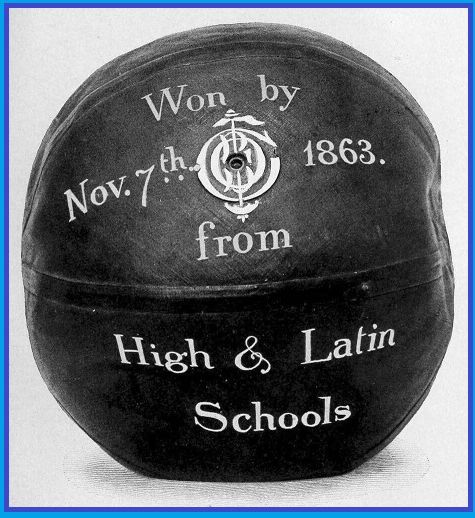
And that might have been it except that just over a decade later in matches in 1874 between the universities of Harvard, from by Boston, and Montreal's McGill the Boston rules were used, then in 1923 a ball said to have been used in original the Oneida games was re-discovered by Miller and prominently placed in a Boston museum and in 1925 the surviving members again of Oneida decided to erect a monument, to themselves, and place it on Boston Common.
But here is the three-fold grift. The early 1920s saw an explosion, a boom of Association football in the United States so, with the Harvard-McGill Game seen as a precursor to American football, the possibility of more kudos still, this time for and from the round-ball game, might well have been a temptation too far. The sudden appearance after sixty years of a ball is remarkable, particularly one in such fine condition, yet apparently untested for date, that of a more or less round one still more remarkable, especially as the ball engraved on Boston Common plinth would be oval. And to top it off there was later revisionism. By the 1980s the monument was weather-worn and our football in the USA was finally beginning a real up-surge. The North American Soccer League had started in 1967. It would lead in 1990 to US requalification after forty years for the World Cup. And meantime the soccer community in the States had paid for a plinth-refurbishment, but with the carving of an oval ball being replaced by that of a round one. That has since been reversed but the intention, as had quite possibly been that of the founders, seems to have been to ride the wave by falsely claiming Oneida played the Association game. It did not, not least because our football did not exist until 26th October 1863, and then in its most developmental form.
So back to next year and where is it that these "Boston" games are to be played. And the answer is Foxborough, in a stadium that can for football, American with the Patriots, World with Revolution, be maxed out to hold between 20,000 and 25,000. It is Pittodrie plus a bit. And where is Foxborough itself? It is thirty miles south of the so-called host-city, making that soubriquet a bit like, for example, Glasgow claiming to be the source of the Scottish Passing-Game, indeed the Scottish-Game, when in fact it was, say, the Vale of Leven. It could never happen, could it? And what football history does Foxborough actually have, with the answer very simply "none". The oval-ball Boston Patriots moved to the town in 1971 and as a result were renamed. The Kraft family, which had made its money from "forest products" bought the club in 1994, founding the round-ball Revolution in 1996, since when it has been largely an under-achiever. In its coming-up-to 30 seasons of existence it has been out of the lower half of whatever table thirteen times, and just three times top of its league. In fact the only extended period when that has not been the case is one with a distinctly Scottish connection.
In 1999, Troon-born Steve Nichol, then thiry-eight, ex. of Ayr, then Liverpool and a twenty-seven time Scottish international left for the United States to play for the Boston Bulldogs, also not from Boston itself but the nursery team to the Revolution. Then in 2000 he stepped up to coach, at the beginning of 2002 did so again, to assistant-coach at the Revolution itself and five months later to head-coach. The club had finished third of four in the Eastern Division. Nichol in his first year took them to first-place and the eight-team play-offs, losing only in the final. Moreover, he was able to sustain good performances until 2010 until a rapid fall-off led to his dismissal in 2011, at which point he has neatly stepped across to commentating.
But outwith slightly flailing Foxborough there are more than just recent stats about. There is history right back to the beginning of the game across The Pond, and it is, fist, closer than the Massachusetts capital and, second, also Scots. Twenty miles to the south of the Gillette Stadium, half an hour by train from Foxborough's neighbouring town, Mansfield, and across the state-line into Rhode Island is Pawtucket. Five miles further on is Providence and five miles more, Johnston. Furthermore, still just in Massachusetts and forty minutes south-east of Foxborough is Fall River and fifteen miles beyond that New Bedford. In the 1920s these last two two towns had been at the core of the US game, as had Pawtucket. Indeed Pawtucket had been there since the turn of the century. Moreover, it and also neighbouring Providence had even been at the heart of the game's first implantation from 1884. In 1893 under the presidency of John Clark and by defeating New York Thistle Pawtucket Free Wanderers had even claimed that year's America Cup, with Fall River teams winning it both the years before and after.
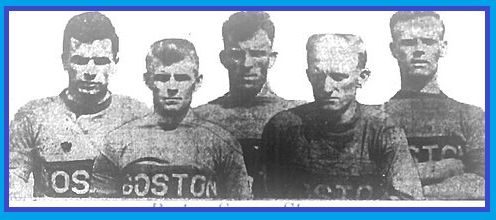
And in all this plus the Boston Soccer Club the Scottish influence was pivotal with this picture of Boston SC's 1920s star-players - Ballantyne, McNab, McArthur, Fleming and McMillan - more indicative than any words. Massachusetts and Rhode Island football was founded by and on Scots. In the decade before the professional game's first collapse from 1930 our New England Trail lists thirty-six, to which can be added the five above.
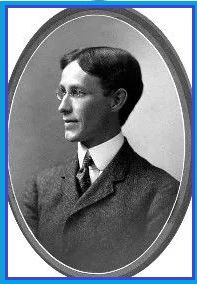
And of the forty-one one, ten would play for the US national team, two even at the 1930 World Cup, two would play for Canada, and seven had already won Scottish caps and three more, Wishaw's Bob McAulay, Glasgow's Danny Blair and Joe Kennoway, would go on to do so. Furthermore, there are earlier pioneers still including the Philosopher-Footballer, Alex Meiklejohn. In his time one of the finest minds in America he had been born in Rochdale with his family on the way from Neilston to Rhode Island. Yet in his younger days and true to his roots, he had played, then as an amateur, centre-half, a super-smart, Scottish centre-half, in Pawtucket's YMCA team before for the year from 1895 acting as the Treasurer of the American Football Association.
Meiklejohn would pass away in 1964 in Berkeley in California but others, contemporary and subsequent, would settle in their adopted towns round-about and die there too. Three more of the earliest, amateur pioneers, Alex Love, Alex Jeffery and William Moore, drawn also to Pawtucket by the Conant Mill that was to be taken on by the Coats thread company of Paisley, are buried in Central Fall's Moshassuck Cemetery. Two later professional ones, Johnstone's James Johnston and Paisley's William Adam, are in Swan Point Cemetery just south of Pawtucket. Four, Airdrie's Geordie Robertson and Robert Perry, Steventon's Andy Auld and Joe Kennoway can be found in Johnston's Highland Memorial Park. Kilmarnock's Charlie McGill lies in Fall River's Oak Grove Cemetery with Tec White, from Airdrie once more, in the Assonet Burying Ground.
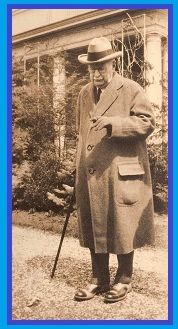
And there is one last Scot to note; one, who could be considered the "Father of American Soccer". He is William Clark, founder and initial captain of the country's first formal team, ONT, Clark's "Our New Thread", formed in 1883 in Kearny, New Jersey. Born in Paisley, the company's base, and clearly with a Scottish love of the game per se, in fact he did not stay long at the footballing helm, eventually following in his father's footsteps as a thread-mill manager. In his case it was to be another owned by the company, when it and Coats, also from Paisley, combined. It would be again in Rhode Island, but in Westerley, on the border with Connecticut and the New York-Foxborough road. And it is there too he would die and is buried, completely un-lauded at least so far.
But here at SFHG we research and remember, so, whilst you are in America in June you might, between the games and fun, perhaps, find the time for a little solemnity and to honour with a visit, flowers or a scarf any or all of our, of your own in a way, of which the historically myopic US Soccer industry seems incapable, either physically or financially. It does not remember it is "No Scots, No Soccer" but we do.