A New Historiography of Scottish (and Scots) Football
- Pivots, Passing-on and Newcastle
Part 2 : (1896-1918)
Foreword
Before this new look, Part 2, at the history of Scottish, and in this case also Scots football is commenced there will of necessity be a long, perhaps over-long introduction preceded by this very necessary acknowledgement. In recent times a blog by Peter Ross has been posted on the Internet. Its content is what is said on the tin. Click here on its title, Scottish League History, to be taken to it and you will find just now an account of that league's first two seasons, which, whilst we might have a few minor quibbles, is actually peerless, on which which we have drawn unashamedly, not least because it has saved us a great deal of time and effort, and from which we quote extensively in setting the scene for the main body of the offering.
Introduction
Without doubt for the Scottish national team the seasons from 1888 to 1896 were, if not entirely a disaster, then certainly a mess. The first one was the year, in which Scotland lost an international for the first time since 1879, so after a decade and twenty-two matches. The points-based win-ratio, which had as a result been 80% plus, was over the next eight to fall to 24%. Just now, post- 2026 World, it is a little over 50%. Only in one period in Scotland's footballing history has it been worse (22%) and it was immediately after the Second World War to 1960, the "glorious" 1950s.
The reasons for the abysmal 1888 showing were mainly internal. But they were not helped by the fact that over the period the most potent English forward, a professional player, was John Goodall (14 appearances in a decade - 1888-1898 - and 12 goals), brought up in Kilmarnock with a mother from the town and a Clackmannanshire soldier-father, who happened to have been serving in London at the time of their son's arrival, and perhaps the most highly-regarded player of the era, the amateur G.O. Smith, (in eight seasons - 1893-1901 - 20 appearances, 11 goals) was also England-born but entirely Scots by blood. His father was an Aberdonian by birth and his mother a Diasporan Bannerman, born in Lancashire but with both her parents from North of the Border.
So what were the problems? The first and most obvious was tactics. In the second half of the 1887-88 season Dunbartonshire's Renton F.C. had, with twenty-one wins in twenty-two games, almost swept everything before it, including being crowned unofficial World Champion. And it had been done so with, as almost every other team around it had adopted the 2-2-5 formation, with a novel variation on the old Scottish 2-2-3-3, 2-2-1-2- 3 with at its core what would become known as the Scottish centre-half or alternatively and more precisely, The Pivot. And for the 1888 the Scottish Football Association in its wisdom decided to drop that new system into the old.
However, it did not work. Scotland lost to England 0-5 at home, 0-4 down at half-time; one from Goodall, one from the centre-forward and three from the left, James Kelly, Renton's Pivot but playing at right-half and the particularly the veteran Walter Arnott at right-back getting roastings.
It was Scotland's first ever home-defeat in sixteen seasons and whilst there was recovery the following season with a 2-3 win in London coming from 2-0 down, ironically this time with not just Goodall but also David Weir, said to have been born in Aldershot but probably Belfast, suggesting again a soldier-father, certainly of Scots parents and seemingly raised in or around Maybole in Ayrshire, there were still problems, indeed two of them, and now also off-pitch.
Both were to do with money, one income and the other not expenditure itself but its descriptor. They were the same as had already been faced across the border but in Scotland were dealt with in reverse order to Down South. League-football arrived in England, or rather in the English North-West and Midlands, in 1888. It came in because it guaranteed heavily-invested, i.e. by then completely professional clubs a game every weekend in a way that knock-out Cup-competitions and friendlies did and could not. West of Scotland football (plus Hearts) was no different and three years later it followed suit, ostensibly on an amateur not a professional basis but one, of which the arch-amateur club, Queen's Park, felt it could not or just-because would not be a part, (at least not yet).
But here we turn to Peter Ross's work and and wind the clock back somewhat. Professionalism had triumphed in England in 1885. The circumstances have been covered in detail in A New Historiography (Part 1). Moreover, within two seasons Scottish clubs were by the SFA, the guiding force of which was still very much Queen's Park, forced by out of the FA Cup on the grounds that it was unacceptable that its "amateur" clubs should have to face paid-to-play players across the border, including, of course, many Scots; to which might be added the rider that, having been both Scotland's only representative and FA Cup Finalists in 1884 and 1885, defeated on both occasions by shamateur i.e. subliminally professional Blackburn Rovers, The Spiders, had in 1885-6 because of domestic fixtures and along a second representative, Third Lanark, had to allow a Second Round walk-over and in 1886-7 was knocked out, indeed trounced at home, in the First Round by equally but now legitimately very professional Preston North End, as now six more teams from North of the Border were included and five progressed further. Indeed Rangers would almost match the Queen's Park exploits of two and three seasons earlier, reaching the semi-final only to lose away to Aston Villa, the eventual trophy winners.
It should have been something to celebrate but the SFA's, and the therefore Queen's Park, was to ban all participation of Scottish club's in the FA Cup from then on. However, the loss of potentially lucrative ties was not without response albeit at first from a different angle and at a lower level. Individual football associations ran their own Cups. They involved major teams playing through the rounds against much smaller clubs and therefore for little revenue. Dunbartonshire was one and in 1888 Renton, as it happened on the way to the World Championship had proposed that it and other clubs a similar status, presumably Dumbarton and Vale of Leven, be granted exemption from the early rounds with the idea unsurprisingly being rejected in a vote but it and its repercussion not going away. For the next six seasons Renton did not take part in the Dunbartonshire Cup at all. And two seasons later it raised the stakes by suggesting the same exemption be applied to the Scottish Cup.
And this action, perhaps even deliberate provocation, has to set in context. Renton was in essence a well-financed company team. Its players worked for one local employer with no record of how much time was allowed for them to train and practice within working-hours but an assumption that it was considerable. But to a large degree its model was unique with at the other end of the spectrum the believers still in amateurism, middle-class clubs in the main but including as figurehead Queen's Park and a swathe of other teams, for example in Edinburgh Hibernian and St. Bernard's, with other approaches inbetween with the small payment plus a regular job the most prevalent.
"It is often reported in the press today that the SFA is a collection of self interested parties with those who shout loudly and often enough getting their way mostly to the detriment of the game as a whole. It was no different 130 years ago as it is today. In the late 1880s and early 1890s there was a clear demarcation between the successful and ambitious clubs (supported by those clubs who had pretensions of joining them) and those who were content to survive and trundle along as social clubs. Presiding over all this was Queen’s Park who believed that as the founders and introducers of association football into Scotland, they were the sole arbiters of all that was good for the game. The battle lines were now drawn."
But it did not stop technically the SFA but very probably in reality The Spiders attempting a spoiler. The chosen reason was professionalism, the club St. Bernard's from Edinburgh, which had applied to join the first season of the Scottish League but had not been elected and was therefore lacking its protection and the sequence was as follows. On 13th September 1890 Queen's Park played St. Bernard's away. It was a 2-2 draw. St. Bernard's goals were scored by John Dorkin and Coombe Hall, the pairing summing up how players were remunerated at the time. Dorkin had a fascinating back-story. His father was English, his mother a British-subject born on Corfu. And he was born on board a ship off Yokohama in Japan, died in Toronto but meantime seems to have joined the Royal Engineers, posted as a draughtsman to Scotland, staying in Leith, before in 1891 Going South to Aldershot, only to be bought out by Southampton F.C.. He was therefore, whilst in Edinburgh, an "amateur" and in England an English "Scots Professor". Coombe Hall on the other hand was was Edinburgh-born, probably already a professional in all but name and would, in any case, within openly weeks be one with Blackburn Rovers.
And the reason for Hall's move probably was that very early in the 1890-91 season St. Bernard's received first a suspension and then a full-blown ban from the Scottish Football Association and therefore from the Scottish game. And here the background gets a little convoluted. The original suspension had been as the result of Scottish Cup game played on 6th September 1890 between St. Bernard's and a local club called Adventurers. It had been a junior club that had recently stepped up to senior level and was staunchly amateur. The result had been a 7-0 win for St. Bernard's but for some reason it had chosen not only to field a Dunfermline player called James Ross but to take him on on the basis of a payment of 10 shillings, plus a necessary job. A skilled worker could earn £2 per week at the time.
that within days of the Queen's Park match St. Bernard's was accused by the Scottish Football Association of paying at least some of its players as professionals and expelled from the Scottish Cup. Its opponents in the First Round, Adventurers, that it had beaten 7-0 were allowed to progress. In fact the Adventurers would make it to the Third Round, to be beaten 12-0 by Leith Athletic, because the club drawn against them away on 27th September in the Second Round refused to travel and was expelled. Coincidentally or not that club was Vale of Leven Wanderers its reason was that because Adventurers played in a public park there would be no gate-money to cover costs.
Now, the accusation that St. Bernard's was professional was very probably correct. But then the same applied to virtually every other club in the top-flight and the Edinburgh club was not going to take it lying down.
The club's ambitions were tested early in the period when, on 30 September 1890, the Scottish Football Association (SFA) expelled St Bernard's from membership for violating amateur rules through concealed professionalism, specifically for offering player James Ross 10 shillings per week to feature in a Scottish Cup tie against Adventurers on 6 September 1890. This infraction, protested by Adventurers and upheld by the SFA, led to an initial suspension until 31 October 1890, but escalated to full expulsion after St Bernard's fielded a side against Renton on 27 September, breaching rules against matches with suspended clubs; an attempt to circumvent the ban via a proxy team, Edinburgh Saints, was ruled invalid as the same entity. Despite the setback, St Bernard's persisted with exhibition matches across Britain, demonstrating resilience and maintaining player cohesion during the suspension.[10]Reinstatement came on 1 May 1891, when the SFA readmitted St Bernard's to membership, enabling their return to competitive play just weeks later, including a 4–3 loss to a Hearts XI on 9 May and a 2–1 defeat to Renton on 21 May. This paved the way for entry into organized league football, as the club joined the newly formed Scottish Football Alliance in the 1891–92 season, a second-tier competition serving as a proving ground for clubs outside the elite Scottish Football League (SFL). In the Alliance, St Bernard's competed against teams like Airdrieonians, Clyde, and Leith Athletic, fostering early rivalries with fellow Edinburgh sides and building competitive experience in a structured format that emphasized semi-professional play.[11][12]
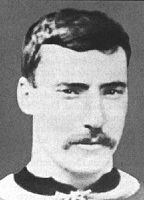
James Cowan
XXXXXXXXXXXXXXXXXXXXXXXXXXXXXXXXXXXXXXXXXXXXXXXXXXXXXXXXXXXXXXXXXXXXXXXXXXXXXXXXXXXXXXXXXXXXXXXXXXXXXXXXXXXXXXXXXXXXXXXXXXXXXXXXXXXXXXXXXXXXXXXXXXXXXXXXXXXXXXXXXXXXXXXXXXXXXXXXXXXXXXXXXXXXXXXXXXXXXXXXXXXXXXXXXXXXXXXXXXXXXXXXXXXXXXXXXXXXXXXXXXXXXXXXXXXXXXXXXXXXXXXXXXXXXXXXXXXXXXXXXXXXXXXXXXXXXXXXXXXXXXXXXXXXXXXXXXXXXXXXXXXXXXXXXXXXXXXXXXXXXXXXXXXXXXXXXXXXXXXXXXXXXXXXXXXXXXXXXXXXXXXXXXXXXXXXXXXXXXXXXXXXXXXXXXXXXXXXXXXXXXXXXXXXXXXXXXXXXXXXXXXXXXXXXX
XXXXXXXXXXXXXXXXXXXXXXXXXXXXXXXXXXXXXXXXXXXXXXXXXXXXXXXXXXXXXXXXXXXXXXXXXXXXXXXXXXXXXXXXXXXXXXXXXXXXXXXXXXXXXXXXXXXXXXXXXXXXXXXXXXXXXXXXXXXXXXXXXXXXXXXXXXXXXXXXXXXXXXXXXXXXXXXXXXXXXXXXXXXXXXXXXXXXXXXXXXXXXXXXXXXXXXXXXXXXXXXXXXXXXXXXXXXXXXXXXXXXXXXXXXXXXXXXXXXXXXXXXXXXXXXXXXXXXXXXXXXXXXXXXXXXXXXXXXXXXXXXXXXXXXXXXXXXXXXXXXXXXXXXXXXXXXXXXXXXXXXXXXXXXXXXXXXXXXXXXXXX
Back to the SFHG Home page